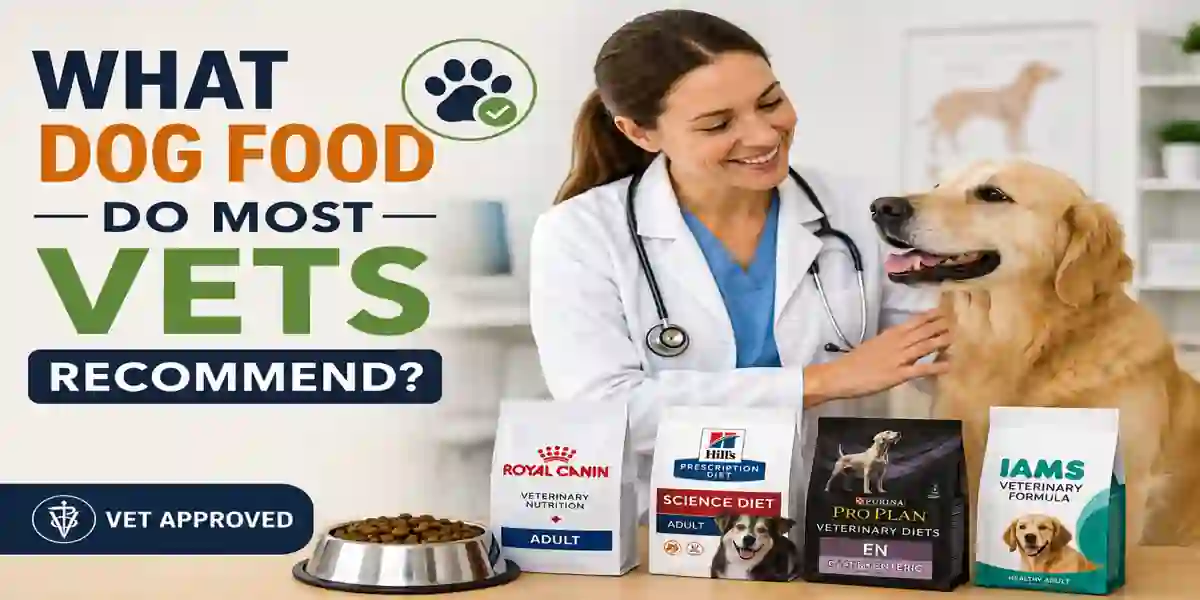
What Dog Food Do Most Vets Recommend? Step-by-Step Guide
So you’re trying to figure out what dog food most vets recommend. It’s one of the first questions every new dog owner asks, and for good reason. Walk into any pet store, and you’ll see dozens of brands, each claiming to be “veterinarian recommended,” or “holistic,” or “premium.” The labels blur together fast.
But when you actually ask your vet, you usually hear the same handful of names. That’s not a coincidence.
This article cuts through the marketing chatter. We’ll look at which brands vets overwhelmingly trust, why those brands earn that trust, and how to apply that knowledge to your own dog’s bowl. Whether you have a healthy adult dog, a senior with arthritis, or a picky puppy, understanding what dog food most vets recommend gives you a solid starting point, not just for feeding, but for your dog’s long-term health.
Why Vets Don’t All Recommend the Same Brand
First, a reality check: vets don’t have a single universal answer. Ask ten different vets what dog food most vets recommend, and you might get ten different shades of the same theme. But that theme is consistent; they recommend brands that invest heavily in research, employ board-certified veterinary nutritionists, conduct feeding trials, and follow the nutritional standards set by the Association of American Feed Control Officials (AAFCO).
Vets are trained to evaluate food based on science, not marketing. They look for:
- Complete and balanced nutrition, the food meets AAFCO nutrient profiles for the dog’s life stage.
- In feeding trials, the recipe was actually fed to dogs under controlled conditions, not just formulated on a computer.
- Quality control, the manufacturer has rigorous safety protocols, ingredient sourcing, and recalls are rare or handled transparently.
- Veterinary expertise, the company has a team of veterinarians and PhD nutritionists on staff.
Brands that check those boxes tend to be the ones vets reach for. And those brands are almost always the big, established players: Royal Canin, Hill’s Science Diet, Purina Pro Plan, Iams, and Eukanuba. That doesn’t mean smaller “boutique” brands are automatically bad.
It just means the evidence behind those recommendations is thinner.
Comparison Table
| Brand | Best For | Vet Recommendation Level |
|---|---|---|
| Hill’s Science Diet | Overall Health | Very High |
| Royal Canin | Breed & Medical Needs | Very High |
| Purina Pro Plan | Everyday Nutrition | Very High |
| Iams | Budget-Friendly Option | High |
| Eukanuba | Active Dogs | High |
What Dog Food Do Most Vets Recommend for Healthy Adult Dogs?
For a typical adult dog with no medical issues, the most common answer is a scientifically formulated, over-the-counter diet from a reputable company. Hill’s Science Diet Adult and Purina Pro Plan Complete Essentials are two of the most frequently cited options. Royal Canin’s Size Health Nutrition line also gets heavy vet endorsement because it tailors recipes to breed size; small, medium, and large breeds have different metabolic needs.
But “most vets” doesn’t mean a single brand wins. In a 2023 survey of practicing veterinarians, the top three brands recommended for healthy adults were Hill’s Science Diet, Royal Canin, and Purina Pro Plan, in that order. The reasons were identical across the board: decades of research, transparent ingredient sourcing, and peer-reviewed studies backing nutrient bioavailability.
Vets also appreciate that these brands offer life-stage-specific formulas. A puppy needs different calcium-to-phosphorus ratios than a senior dog. A large-breed adult needs controlled growth rates to protect joints.
You don’t get that level of specificity from many grain-free or “all-life-stages” boutique diets.
What About Grain-Free and Raw Diets?
This is where the conversation gets tricky. Many owners expect vets to recommend grain-free or raw food because they hear anecdotal success stories. But the veterinary consensus is clear: grain-free diets are not recommended unless a medically diagnosed grain allergy exists (which is rare; true grain allergies affect less than 1% of dogs).
The FDA has been investigating a potential link between grain-free, legume-heavy diets and dilated cardiomyopathy (DCM) in dogs. While the exact cause isn’t fully pinned down, vets err on the side of caution. Most will advise sticking with a food that contains grains like rice, barley, or oats because those ingredients are safe, digestible, and provide energy.
As for raw diets, the American Veterinary Medical Association (AVMA) and the American Animal Hospital Association (AAHA) discourage raw feeding due to risks of bacterial contamination (Salmonella, E. coli) for both pets and the people handling the food. A vet who recommends a raw diet is the exception, not the rule.
So when you ask what dog food do most vets recommend, the answer rarely includes grain-free or raw, unless your dog has a specific medical condition that calls for it.
What Dog Food Do Most Vets Recommend for Medical Conditions?
Here’s where veterinary recommendations become highly specific. If your dog has a health issue, kidney disease, diabetes, allergies, joint problems, or a sensitive stomach, most vets will point you toward therapeutic or prescription diets. These are not the same as over-the-counter food.
They are formulated to manage or treat specific diseases and are only available through a veterinarian or with a prescription.
Hill’s Prescription Diet vs. Royal Canin Veterinary Diet vs. Purina Pro Plan Veterinary Diets
These three dominate the prescription space. Each offers targeted lines:
- Hill’s Prescription Diet offers an extensive range for kidney care (k/d), joint health (j/d), gastrointestinal issues (i/d), and urinary health (c/d).
- Royal Canin Veterinary Diet is well-known for its gastrointestinal low-fat (GI Low Fat) and urinary SO formulas, plus breed-specific veterinary diets.
- Purina Pro Plan Veterinary Diets are strong options for gastrointestinal (EN), urinary (UR), and joint mobility (JM).
Vets don’t have a universal favorite among these three. They choose based on the dog’s specific condition, palatability, and individual response. But if you’re wondering what dog food most vets recommend for a dog with chronic kidney disease, the answer is almost always Hill’s Prescription Diet k/d or Royal Canin Renal Support.
For a dog with food allergies, a novel protein or hydrolyzed protein diet from one of these same brands is the standard first step.
Example: A Dog with a Sensitive Stomach
Let’s say your Doberman has chronic loose stools. You’d start with a highly digestible formula like Royal Canin Gastrointestinal Low Fat or Hill’s i/d. These diets are low in fat, contain prebiotic fibers, and use ingredients that are easy on the digestive tract.
For a breed-specific twist, you can also check out our guide on the best dog food for Doberman with sensitive stomach, it mirrors the veterinary approach for large-breed dogs with GI issues.
Example: A Senior Dog with Arthritis
Older dogs often need joint support. Vets typically recommend a formula enriched with omega-3 fatty acids (especially EPA) and glucosamine/chondroitin. Hill’s Science Diet Adult 7+ and Purina Pro Plan Bright Mind 7+ are common OTC choices, but for advanced arthritis, a prescription diet like Hill’s j/d or Royal Canin Mobility Support might be prescribed. For more targeted advice, our article on the best dry dog food for senior dogs with arthritis breaks down the nutritional specifics.
Thyroid Issues
Dogs with hypothyroidism need balanced iodine levels and a consistent nutrient profile. Most vets prefer a diet that avoids soy (which can interfere with thyroid medication absorption) and provides moderate fat, not too high. Royal Canin Veterinary Diet Thyroid Support and Hill’s Prescription Diet w/d are often used, but the key is managing the dog’s weight and energy levels alongside medication. For more, see our advice on the best dog food for thyroid issues.
What Dog Food Do Most Vets Recommend for Puppies and Large-Breed Dogs?
Puppies are another case where veterinary recommendations are nearly unanimous: feed a large-breed puppy formula if your dog is expected to weigh over 50 pounds as an adult. The reason is controlled growth. Large and giant breeds grow rapidly, and excess calcium or calories can lead to skeletal problems like hip dysplasia or osteochondritis.
Purina Pro Plan Large Breed Puppy and Hill’s Science Diet Large Breed Puppy are the top two recommendations. They contain reduced calcium and phosphorus levels, moderate fat, and precise protein-to-calorie ratios. Royal Canin’s Giant Breed Puppy is also popular for dogs like Great Danes and Mastiffs.
For smaller breeds, the same brands offer age-appropriate formulas. The consensus remains: stick with a science-backed brand that has years of large-breed feeding trial data.
What About “Boutique” and “Human-Grade” Brands?
A growing number of dog owners gravitate toward brands like Orijen, Acana, The Farmer’s Dog, or JustFoodForDogs. These companies market heavily on fresh, human-grade ingredients and limited processing. Do vets recommend them?
Rarely as a first choice, though opinions are shifting.
Veterinary nutritionists point out several concerns with many boutique brands:
- Many do not conduct actual feeding trials; they formulate to meet AAFCO nutrient profiles on paper, but haven’t tested the food in real dogs.
- Some have been linked to higher rates of diet-associated DCM, especially those heavy in legumes, peas, and lentils.
- Label claims like “human-grade” lack a legal definition for pet food, making them marketing terms rather than quality guarantees.
That said, some vets do recommend veterinarian-formulated fresh food brands like JustFoodForDogs (which has a team of DVMs and conducts feeding trials) for dogs with specific health issues. But the average general practitioner will still point you toward Hill’s or Royal Canin for most cases because the evidence base is stronger.
If you’re considering an organic option, especially for a senior dog, we cover the evidence behind the best organic dog food for senior dogs, but it’s worth noting that organic certification doesn’t automatically mean better nutrition for your dog.
How to Choose: A Practical Checklist
If you’re still unsure what dog food most vets recommend for your specific dog, use this checklist when evaluating any brand:
- ✅ Does the food meet AAFCO nutrient profiles for your dog’s life stage?
- ✅ Has the manufacturer conducted actual feeding trials?
- ✅ Does the company employ a board-certified veterinary nutritionist (DACVIM or DACVN)?
- ✅ Is the brand associated with any diet-linked DCM cases? Check the FDA’s list or consult your vet.
- ✅ Can your vet provide a specific recommendation for your dog’s breed, age, and health status?
- ✅ For prescription diets, have you followed a veterinary diagnosis?
If you answer “yes” to the first three, you’re in good company. Those are the same criteria vets use when they make their own recommendations.
Common Myths About Veterinary-Recommended Dog Food
Let’s clear up a few myths that keep coming up when people search for what dog food most vets recommend.
Myth 1: Vets only recommend the food they sell because they make money from it.
Reality: Most vets earn a tiny margin on the food they sell, often less than they’d make on a basic exam. They stock it because they believe in the product. If a vet recommends a brand, it’s almost always based on science, not profit.
Myth 2: Corn and grains are bad fillers.
Reality: Corn is a highly digestible carbohydrate and an excellent source of energy, essential fatty acids, and antioxidants. Vets have no problem with corn in dog food when it’s properly processed. The “fillers” myth was invented by boutique brands to differentiate themselves.
Myth 3: You should rotate proteins or brands to avoid allergies.
Reality: Rotating foods can actually make it harder to diagnose food allergies. Most vets recommend sticking with one well-researched formula unless your dog has a known intolerance. For dogs with digestive issues, a consistent diet is key, we talk about this in our best dry dog food for less poop guide.
FAQ
1. Is there one single brand that all vets agree on?
No. But the overwhelming majority of vets recommend Hill’s Science Diet, Royal Canin, or Purina Pro Plan for healthy dogs. For prescription diets, Hill’s and Royal Canin lead.
2. Do vets recommend grain-free dog food?
Very rarely for routine feeding. Unless your dog has a confirmed grain allergy (diagnosed via elimination diet), vets advise against grain-free diets due to the potential DCM link.
3. Why don’t vets recommend Blue Buffalo or other boutique brands?
Many boutique brands lack feeding trials, do not have board-certified veterinary nutritionists on staff, and some have been linked to diet-related DCM. Vets prefer brands with stronger research histories.
4. What dog food do most vets recommend for senior dogs with joint problems?
Hill’s Science Diet Adult 7+ or Purina Pro Plan Bright Mind 7+ are common OTC choices. For more severe arthritis, a prescription diet like Hill’s j/d or Royal Canin Mobility Support is often recommended.
5. Is raw feeding supported by most vets?
No. Major veterinary organizations (AVMA, AAHA) advise against raw feeding due to bacterial risks. Individual holistic vets may support it, but it is not a mainstream recommendation.
6. Should I buy my dog’s food from the vet clinic?
You can, but you don’t have to. Prescription diets must be purchased from a vet or authorized retailer. For OTC foods, you can buy them anywhere, just verify the batch codes and expiration dates.
7. What if my dog won’t eat the recommended food?
Transition slowly over 7 to 10 days. If your dog still refuses, talk to your vet; they may recommend a different formula from the same brand (e.g., a different flavor or texture) or a different brand within the same nutritional category.
8. How do I know if a food is “vet recommended” versus just marketed that way?
Check the bag for the manufacturer’s feeding trial statement. Look for the WSAVA (World Small Animal Veterinary Association) global nutrition committee guidelines. See if the company lists a veterinary nutritionist on staff.
If they don’t, it’s marketing, not endorsement.
Conclusion
So what dog food do most vets recommend? The short answer is the one that meets strict nutritional standards, has been tested through feeding trials, and is backed by continuous research. For most dogs, that means Hill’s Science Diet, Royal Canin, or Purina Pro Plan for over-the-counter feeding, and one of their prescription lines when health issues arise.
Your vet’s recommendation isn’t about brand loyalty or profit. It’s about giving your dog the best shot at a long, healthy life through nutrition that’s been proven to work. The next time you’re standing in the pet aisle, skip the flashy bag with “veterinarian recommended” in tiny print.
Look for the brand your vet actually uses in their own clinic, and ask yourself if that bag has the science to back it up.
If you need more tailored advice, our breed-specific and health-condition guides (like the best dry dog food for Dobermans) can help narrow down the options. But always start the conversation with your veterinarian, because no article can replace a professional who knows your dog’s health history.