How Many Cans of Wet Food for a Dog? Step by Step
Figuring out exactly how many cans of wet food for a dog you need is a common struggle for pet owners. If you just guess the portions, your dog will likely end up either gaining excess weight or losing essential muscle mass over time. The feeding guidelines printed on the back of the label often create even more confusion.
They use wide weight ranges that do not account for your specific pet's age, daily activity level, or metabolic rate.
Manufacturer specifications indicate that wet food varies drastically in caloric density. A standard 13.2-ounce can ranges anywhere from 350 to 500 kilocalories. You cannot just feed on two cans a day and hope for the best.
You need a reliable mathematical framework to determine the precise daily calories your dog requires.
Quick Answer
Knowing how many cans of wet food a dog requires is simple math. You must calculate your pet's daily calorie needs first. An average healthy adult needs roughly 30 calories per pound of body weight.
A standard 13.2-ounce can holds between 350 and 500 calories. Divide their total daily calories by the calories in one can. This specific number is your daily portion.
Why the Feeding Chart on the Can is Usually Wrong
Most pet owners flip the can over and strictly follow the printed feeding chart. This is often the first mistake in portion control. Companies print these labels to cover the widest possible cross-section of dogs.
The suggested portions are based on unspayed or unneutered adult dogs with active lifestyles.
Most typical house pets have significantly lower energy requirements than these charts suggest. If you follow the label strictly, you will likely overfeed your dog. This excess calorie intake leads directly to canine obesity.
Guidelines from the Association of American Feed Control Officials require basic feeding directions on packaging. They do not mandate precise formulas for every unique lifestyle.
You need to rely on exact calculations instead of generic label charts. When you are choosing a moisture-rich meal plan, precision matters for long-term health. A ten-pound difference in a chart's weight bracket is massive for a small breed.
You must treat the label as a rough starting point rather than a medical rule.
The Short Answer: There Is No Standard "Cans Per Dog" Unit
You cannot standardise a daily can count because dogs have wildly different metabolisms. A young border collie burns calories much faster than a sedentary bulldog of the exact same weight. If you feed them the identical number of cans, the collie will drop weight while the bulldog gets heavy.
Can sizes and recipes also change the math completely? As of 2026, the pet food market offers distinct recipes spanning from lean diet formulas to rich stews. One brand's loaf might contain 400 calories per can.
Another brand's chunky stew might only carry 280 calories in the same physical size.
You must look at the specific energy requirement for your dog. You then match it to the specific energy density of the food you bought. This is especially true when structuring meals for heavy older breeds.
A flat "two cans a day" rule simply does not exist in veterinary nutrition.
Standard Wet Food Can Sizes and Caloric Density
Wet foods come in several standard tin sizes. Understanding the volume of the can is the first step in reading the label correctly. You will typically find four common sizes on the shelves.
Each size holds a vastly different amount of calories.
Smaller tins are generally meant for toy breeds or used as meal toppers. The large tins are designed as complete meals for medium and large dogs. When evaluating nutrient-dense formulations, you will notice that pate textures usually pack more calories than foods suspended in gravy.
Gravy adds a high amount of water weight and lowers the total energy density.
Can Size Common Name Typical Calorie Range (kcal/can)
3.5 oz Small Tray / Pouch 75 to 110 kcal
5.5 oz Cat-Size Can 150 to 220 kcal
12.5 oz Standard Stew Can 280 to 380 kcal
13.2 oz Standard Loaf Can 350 to 500 kcal
You must read the guaranteed analysis panel to find the exact calorie count. Never assume all 13.2-ounce cans are identical. Always verify the kilocalories before you start opening tins and filling bowls.
The 5-Step Formula to Calculate Your Dog's Exact Wet Food Portion
You need to calculate two distinct numbers to get your feeding portion right. First, you calculate how much energy your dog burns. Second, you calculate how to meet that need using the food.
This sequence eliminates all guesswork from your daily routine.
Step 1: Find Your Dog's Accurate Weight in Kilograms
Veterinary math relies entirely on the metric system. You must convert your dog's exact body weight from pounds into kilograms. Do not guess their weight.
Weigh them on a reliable scale to get a true baseline number.
To convert pounds to kilograms, divide their body weight by 2.2. A 50-pound dog weighs exactly 22.7 kilograms. Write this number down so you can use it in the next equation.
Step 2: Calculate Their Resting Energy Requirement (RER)
The Resting Energy Requirement tells you how many calories your dog burns just staying alive. This covers basic bodily functions like breathing and pumping blood. It does not include physical activity or digestion.
The standard veterinary formula for RER is 70 multiplied by the dog's body weight in kilograms raised to the ¾ power. You can easily do this on any smartphone scientific calculator. For a 22.7-kilogram dog, the RER equals roughly 726 calories a day.
Step 3: Apply the Lifestyle Multiplier (MER)
Your dog's Maintenance Energy Requirement accounts for their actual daily activity. You must multiply their RER by a specific lifestyle factor. Neutered adult dogs generally require an RER multiplier of 1.6.
Unneutered active adults need an RER multiplier of 1.8.
If your 22.7-kilogram dog is neutered, you multiply 726 by 1.6. This gives a final daily target of 1161 calories. According to the World Small Animal Veterinary Association, this multiplier must shift if the dog needs to lose weight.
Always be honest about how active your pet actually is.
Step 4: Locate the Kilocalories (kcal) on the Label
Now look directly at the nutrition label on your canned food. Search for the phrase "ME (calculated)" or "Caloric Content". You are looking specifically for the kilocalories per can.
Ignore the kilocalories per kilogram metric. That number is used for bulk manufacturing standards. You only need the kcal per can figure.
Let us say your chosen canned food contains 385 kcal per can.
Step 5: Divide Daily Needs by the Canned Calories
Take your dog's total daily calorie requirement and divide it by the calories in one can. In our example, you divide 1161 total calories by 385 calories per can. The result is 3.01 cans per day.
You would feed this dog exactly three cans over the course of the day. You split this total evenly across their daily meals. Most owners feed twice a day.
This dog would receive one and a half cans in the morning and one and a half cans in the evening.
How to Calculate Portions if You Mix Wet Food and Dry Kibble
Many owners prefer to feed a mixed diet rather than purely canned food. This approach keeps costs manageable for larger dogs. It also provides a variety of textures in the bowl.
You must balance the calories perfectly so you do not accidentally double their food intake.
First, determine the total calories your dog needs daily. Next, decide what percentage of the diet will be wet food. A common ratio is 50 percent kibble and 50 percent wet food.
If your dog needs 1000 calories a day, they need 500 calories from kibble and 500 calories from cans.
Calculate the wet food portion by dividing 500 by the kcal per can. You then calculate the dry kibble portion by dividing 500 by the kcal per cup. Add both of these calculated measurements to setting up the right feeding dish.
This method works brilliantly for finding tender meals for aging pets who struggle to chew straight kibble.
Adjusting the Math for Puppies, Seniors, and Weight Loss
Puppies burn huge amounts of energy as they rapidly grow. Growing pups under four months old often need three times their resting energy requirement. You must feed them smaller portions frequently.
Their small stomachs simply cannot hold large volumes at once.
Once a dog reaches senior status, their energy needs plummet quickly. Older dogs often require multipliers as low as 1.2 or 1.4 times their base requirement. This lower-calorie target is critical when adjusting meals for older pets.
Extra calories turn straight into body fat on a slow metabolism.
Weight loss requires a specific adjustment to the standard formula. Do not calculate the daily calorie formula using your dog's current overweight number. You must calculate the math using their target ideal weight instead.
This ensures they safely drop excess fat while maintaining essential joint muscle mass.
Using the Body Condition Score (BCS) to Fine-Tune Portions Over Time
No mathematical formula is completely flawless. The calculated calorie number is ultimately just a starting point for your dog's diet. You must rely on the Body Condition Score to measure actual daily results.
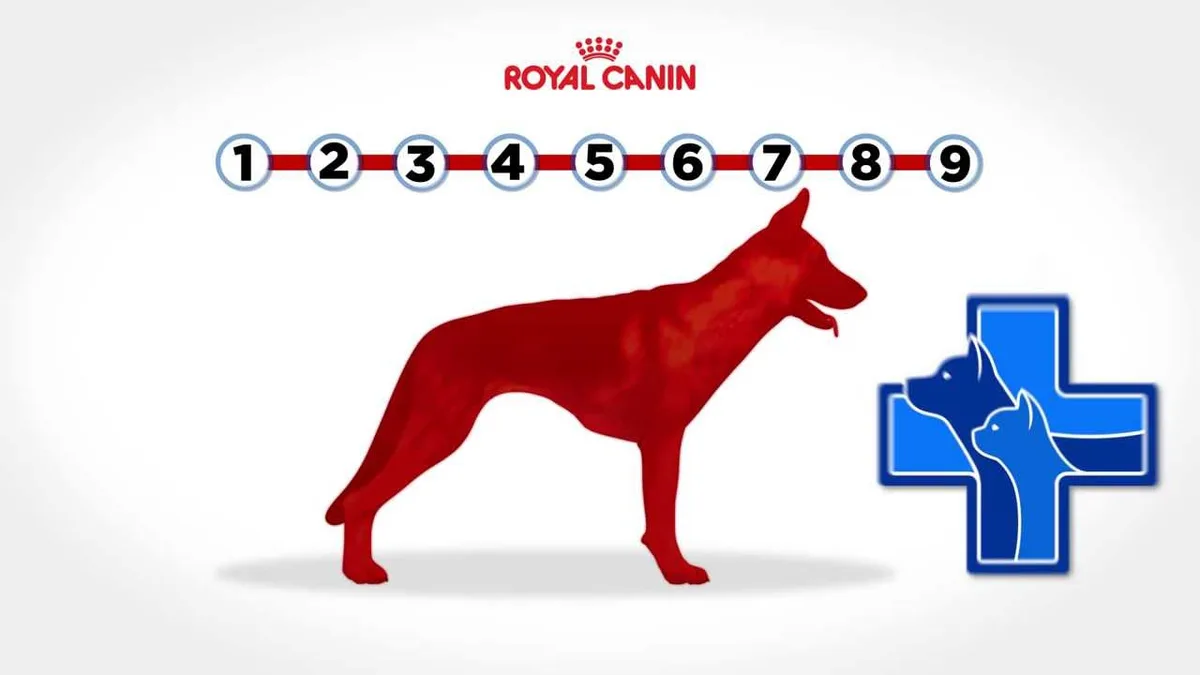
Veterinarians use a visual nine-point scale to assess canine body fat. A score of four or five is generally ideal for most breeds. You should easily feel your dog's ribs without applying deep physical pressure.
You should not actually see those ribs jutting out through their fur.
Look closely at your dog standing directly from above. They should have a clearly defined waistline curving inward behind their ribs. If they look like a solid round cylinder, you likely need to reduce their daily canned food portion.
Adjust their daily caloric intake by ten percent if their weight drifts off target. Wait exactly two weeks and evaluate the visual score again. This visual check is vital when nourishing nursing mothers who rapidly change body composition.
Safe Storage and Handling for Partially Used Cans
Canned food presents a unique spoilage risk that dry kibble completely avoids. Bacteria multiply rapidly once you puncture the sterile tin. You cannot leave open wet food sitting in the bowl for hours.
Per the FDA guidelines on pet food safety, you should discard uneaten wet food after two hours at room temperature.
You must store leftover canned food in the refrigerator immediately. Most meat formulas will stay fresh for three to five days when properly chilled. Use a tight silicone lid to prevent the stored food from absorbing strange fridge odours.
Heavy tin cans can sometimes impart a distinct metallic taste to the food once oxidation begins. Many owners prefer transferring leftover portions into a sealed glass container. Bring refrigerated portions up to room temperature briefly before serving to improve the aroma for picky eaters.
Checking the Label for the AAFCO Nutritional Adequacy Statement
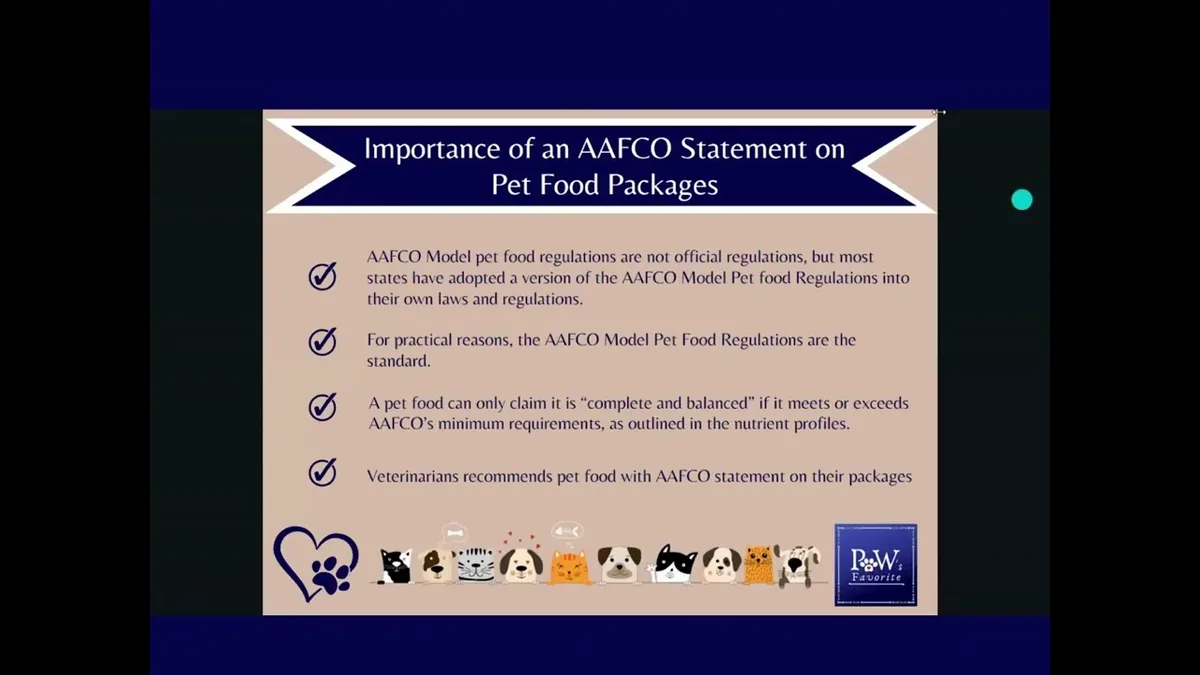
Calorie counts mean absolutely nothing if the food lacks essential nutrients. You must flip the can around and find the nutritional adequacy statement. Look specifically for guaranteed text confirming the diet is "complete and balanced".
If a can says it is strictly for "intermittent or supplemental feeding", it is not a full meal. These specific tins are simply meal toppers or liquid treats. Feeding them as a primary daily diet will cause severe nutritional deficiencies over time.
Always match the adequacy statement to your dog's current life stage. A food formulated for adult maintenance does not have enough calcium for growing puppies. You need a precise nutritional balance when managing sensitive digestive conditions or liver issues.
Follow the label rules closely to protect your pet's long-term organ health.
Frequently Asked Questions
How long can wet dog food sit out?
Wet food contains extremely high moisture. This makes it a fast breeding ground for dangerous bacteria. You should pick up unconsumed food after two hours maximum.
Throw it away if it sits out longer. Wash the bowl thoroughly with hot water and dish soap before the next meal.
Do I need to heat up refrigerated dog food?
You do not technically need to warm it up. However, cold temperatures dull the natural scent of the meat fat. Warming the portion slightly makes it smell much stronger.
This encourages dogs with low appetites to eat readily. Never serve the food hot enough to cause tongue burns.
Can a dog live on a 100 percent wet food diet?
Yes. Your dog can thrive entirely on premium canned food. The food must carry a "complete and balanced" adequacy statement to qualify.
Ensure you monitor their dental health closely. Wet food does not scrape plaque off teeth naturally like crunchy diets do.
Does wet food cause diarrhea in dogs?
Sudden shifts in any diet can easily cause gastrointestinal upset. Wet food is very rich compared to standard dry kibble. You must transition your dog slowly over seven days.
This is especially true when addressing dietary changes for kidney support. Mix the new food in gradually.
Can you freeze leftover canned dog food?
You can freeze wet dog food safely to extend its lifespan. Freezing works extremely well if you open a large can for a tiny breed. Portion the extra food into silicone ice cube trays for easy thawing later.
Freezing might alter the pate texture slightly upon thawing.