How to Deal With Food Aggression in Dogs: Easy Guide
You love your dog, but that growl that rumbles up when you walk near the food bowl? It’s unsettling. Maybe even a little scary.
Figuring out how to deal with food aggression in dogs is one of the most important things you can do for your safety and your dog’s wellbeing, because this behavior doesn’t just go away on its own.
In our research, we found that resource guarding is one of the top reasons dogs are surrendered to shelters across the US. According to published behavioral data, roughly 40% of dog bite cases in children involve some form of food or object guarding. The good news?
With the right approach, most cases improve dramatically. Let’s walk through this step by step.
Quick Answer
Food aggression means your dog guards their food from people or other pets. The safest fix uses counter-conditioning and management. Never punish the growl.
Start by feeding in a separate room. Use high-value treats to change how your dog feels about your approach. Work slowly and never rush past your dog’s comfort zone.
If biting has occurred, call a veterinary behaviorist. This takes weeks, not days.
Why Getting This Right Matters (And What Happens When You Don’t)
Food aggression is not about dominance or stubbornness. It’s fear. Your dog is scared that something valuable will be taken away, and they’ve learned that growling, snapping, or biting makes people back off.
In evolutionary terms, this kept them alive. In your living room, it’s a liability.
When food aggression goes unaddressed, it tends to escalate. A dog that once only growled may eventually bite, especially if someone ignores the warning. Kids are at the highest risk because they move fast and don’t read canine body language well.
We’ve also seen cases where a dog guards not just the bowl, but the entire kitchen or feeding area. That’s a much harder problem to fix.
The other side of this is your dog’s quality of life. A dog that constantly lives in “guard mode” is stressed. They can’t relax during meals.
They may skip eating if they feel threatened. Counter-conditioning doesn’t just protect your family, it helps your dog feel safe again. That’s the real win.
What Food Aggression Actually Looks Like (The Warning Signs Most People Miss)
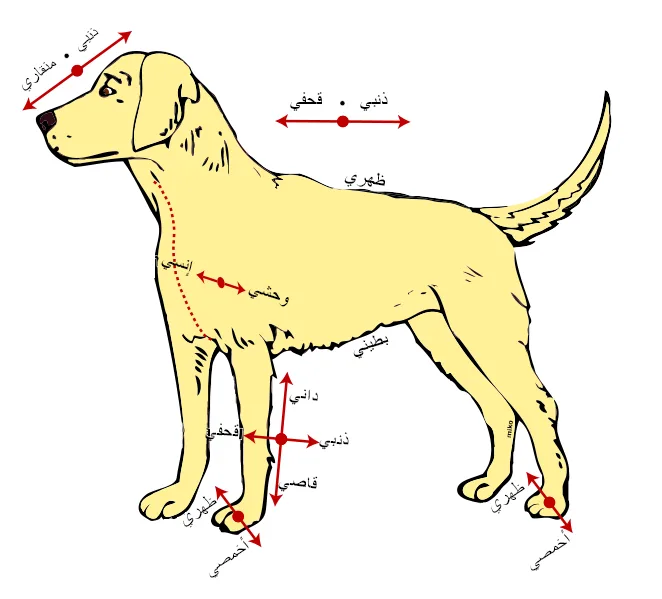
Image source: Wikimedia Commons / Ekko, Arabic Derivative: Elbassyouny
Most people think food aggression starts with a growl. It doesn’t. It starts much earlier, with subtle body language that most owners miss entirely.
Learn to spot these early signs and you can intervene before things escalate.
The earliest warning signs happen in slow motion. Your dog might freeze with their head over the bowl. They might eat faster when you walk by.
Maybe they curl their lip just slightly or give you a hard, direct stare with the whites of their eyes showing. That’s called “whale eye” and it’s a clear signal that they’re uncomfortable.
Here’s the escalation ladder you need to know:
- Freezing and staring (earliest sign, often missed)
- Lip curl without sound (the silent warning)
- Low growl (most people notice this one)
- Snap in the air (a warning bite, no contact)
- Bite with puncture (injury occurs, damage done)
Here’s something crucial: punishing the growl does not fix the problem. If you yell at your dog for growling, you may suppress the growl. But the fear is still there.
Now you have a dog that bites without warning. That is far more dangerous.
The safest place to start is simply observing your dog during a normal meal from a distance. If you see any of the body language cues above, back up to a distance where the dog eats relaxed. That distance is your starting point.
The First Rule: Safety Before Training
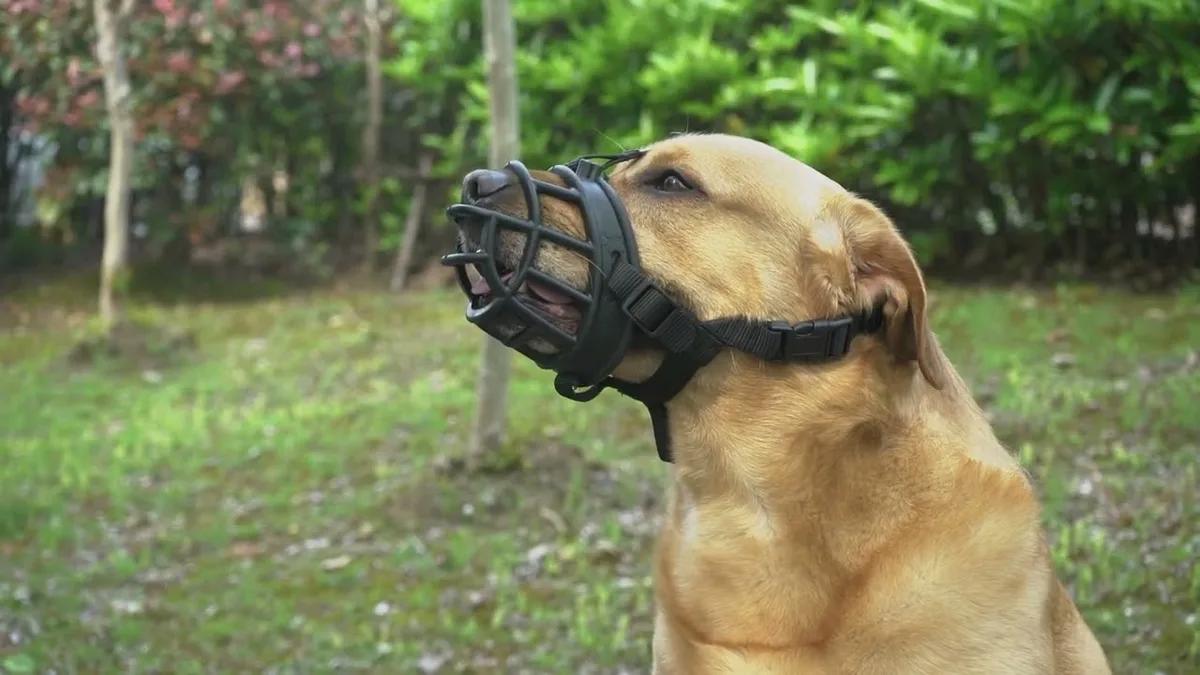
Image source: YouTube / Garden Pets (YouTube thumbnail (fair-use with source credit))
Before you train anything, you need a safety plan. This is not optional. If your dog has ever snapped or made contact with teeth during a guarding episode, you need a management strategy that prevents bites while you work on the behavior.
Here’s what safety looks like in practice:
- Feed in a separate room behind a closed door or baby gate. No other pets, no children.
- Use a basket muzzle if the aggression is severe. A basket muzzle allows panting and drinking but prevents bites.
- Keep kids away from the feeding area entirely until the behavior resolves. This is non-negotiable.
- Pick up the bowl only when the dog is not eating and is far from it.
A lot of owners resist the muzzle idea. They think it’s cruel or scary. But consider this: a muzzle is temporary.
A dog bite is permanent. And muzzles, when introduced properly with treats and patience, don’t bother dogs at all. The basket style is the only safe option for training sessions because the dog can take treats through it.
The soft cloth muzzles are for vet visits only, never for training.
If you need help with proper crate training as part of your management setup, we have a detailed breakdown of crate feeding protocols in our guide to helping a picky eater settle into a consistent schedule.
Step 1: Set Up the Right Environment (Management Before Modification)
You cannot train a dog that is constantly practicing the wrong behavior. Every time your dog successfully guards their food, that behavior gets stronger. So step one is making sure they don’t get to practice guarding at all.
Why Free-Feeding Makes Food Aggression Worse
If you leave a bowl of kibble out all day, you lose all control over the feeding environment. Your dog grazes whenever they want. Another dog wanders by, tension builds, and someone gets snapped at.
That’s practice.
Switch to scheduled meals. Feed twice a day. The bowl goes down, the dog eats for 15 minutes, and then the bowl comes up.
You control the context. You can set up the training environment. This alone often reduces mild food aggression within a week.
Using Baby Gates, Crates, and Exercise Pens the Right Way
Management tools aren’t punishment. They’re structure. Here’s how to use them:
- Baby gates block access to the kitchen during meal prep and feeding time.
- A crate gives a resource-guarding dog a safe place to eat without worrying about other pets approaching.
- An exercise pen works well for dogs that guard but don’t have crate training yet.
The goal is simple: the dog eats in a low-distraction, low-threat environment. That means no kids running past, no other dogs sniffing around, no people walking directly toward the bowl. If you’re working with a dog that also struggles with weight management, combining a controlled feeding schedule with proper calorie control and portion management helps address both issues at once.
That’s a smart approach because a structured feeding routine helps with both behavior and body condition. If you’re also managing a dog that needs to lose or gain weight, make sure the scheduled meals align with the right portion sizes for their goals. You can find reliable guidance on adjusting portions for weight control and figuring out the right amount of fresh or wet food per day.
Step 2: Change How Your Dog Feels About You Near Their Food
Once you have management in place, the real work begins. You’re going to change your dog’s emotional response from “danger, someone is coming” to “great, someone is coming.” This is called counter-conditioning. It’s simple in theory but requires patience in practice.
Finding Your Dog’s Threshold Distance
Every guarding dog has a threshold. Stand too close and they react. Stand far enough away and they eat normally.
Your first job is to find that distance.
Start with the dog eating a low-value food, like their regular kibble, in a bowl. Stand at the far end of the room. If the dog eats normally, take one step closer.
If they freeze or growl, back up two steps. That spot, where the dog eats relaxed, is your current threshold.
Mark it on the floor with a piece of tape if you need to. Over the next days and weeks, you’ll slowly shrink that distance.
The Counter-Conditioning Protocol That Actually Works
Here’s the core exercise. Stand just outside your dog’s threshold. While they eat, toss a high-value treat toward the bowl.
Not at the dog, just near the bowl. Something amazing, like a piece of rotisserie chicken or freeze-dried liver. Then walk away.
That’s one rep.
Do this every meal. Over time, your dog starts to associate your approach with something awesome appearing near their bowl. The fear response weakens.
The anticipation of chicken replaces it.
The key rule: never reach for the bowl during this phase. You’re just the treat fairy. You appear, you toss something good, you leave.
That’s it.
The Trade-Up Method (Why You Never Just Take the Bowl)
At some point you need to be able to pick up the bowl. This is where the trade-up comes in.
Start with an empty bowl or a very low-value food. Approach the bowl, drop in a jackpot treat (something incredible), and let the dog eat it. Repeat this until the dog leans into your hand when you reach toward the bowl.
Then progress to the actual meal. Approach, drop in a jackpot, pick up the bowl, immediately set it back down with the jackpot inside. The dog learns that you reaching for the bowl means better food appears.
They start to look forward to you taking the bowl.
Never take the bowl without giving something better back. That’s the trade. If you just take the bowl, you confirm your dog’s fear and the guarding gets worse.
Step 3: Generalize the Behavior Across Situations
Dogs are terrible at generalizing. Just because your dog is fine with you approaching the bowl in the kitchen doesn’t mean they’ll be fine with a stranger doing it in the backyard. You have to practice across different contexts.
Moving from the Bowl to High-Value Items (Bones, Rawhides, Stolen Objects)
A dog that guards kibble may guard a marrow bone ten times more intensely. That’s normal. Treats and chews are higher value, so the guarding instinct is stronger.
Work through the same counter-conditioning protocol with each new item. Start at a distance. Toss treats toward the item.
Slowly decrease the distance. Trade for something better. Each item is its own training project.
Stolen objects are a special case. If your dog grabs something dangerous, like a chicken bone or a sock, you need a reliable trade. Keep high-value treats accessible.
When they grab something bad, offer the trade. They drop the bad item for the good one. This only works if you’ve built trade history with lower-value items first.
Involving Other Family Members Safely
Your dog has to generalize to all household members, not just you. Have each person repeat the counter-conditioning process, starting at a safe distance and working closer over time.
Kids should not participate in the hands-on training until the dog is completely reliable, and even then only under direct adult supervision. If a child needs to be part of the feeding routine, have them toss treats from a safe distance while an adult handles the bowl.
When You Have Multiple Dogs
Multi-dog households are trickier. The best setup is separate feeding areas, ideally in separate rooms. Feed each dog at the same time behind closed doors or gates.
If you want to work toward feeding in the same room, start with the dogs far apart. Each gets their bowl. You stand between them with high-value treats.
Any sign of tension? Increase the distance. This is a slow process and some multi-dog households simply need to feed separately forever.
That’s okay. Safety matters more than convenience.
Common Mistakes That Make Food Aggression Worse
A few well-intentioned approaches can actually make food aggression worse. Avoid these at all costs.
Why Punishment and “Dominance” Approaches Backfire
Punishment doesn’t address the fear. It just suppresses the warning signs. A dog that gets punished for growling learns that growling is dangerous.
So they skip it and go straight to biting.
Never alpha roll your dog. Never smack them. Never yell at them for growling.
These methods increase anxiety and make the dog feel even more threatened around food. The aggression will come back, and it will come back stronger.
The Danger of Ignoring Low-Level Warnings
A growl is a gift. Your dog is telling you they’re uncomfortable before they bite. If you scold or punish the growl, you lose the warning.
Now you have a dog that goes from silent to biting with no intermediate step.
Thank your dog for growling. Back off. Take note that you were too close and adjust your threshold distance.
A growl is not failure; it’s communication.
Inconsistency Between Household Members
If one person hand-feeds and trades treats while another person yells at the dog for guarding, the dog gets confused and stressed. The training won’t work. Sit down with everyone in the house and agree on the protocol.
Write it down if you have to. Consistency is everything.
When Food Aggression Starts Suddenly (The Medical Red Flags You Shouldn’t Ignore)
If your dog has never shown food aggression and suddenly starts guarding, your first call should be to the vet, not the trainer.
Sudden onset resource guarding is often caused by pain. Common culprits include:
- Dental disease (painful teeth make eating hurt, and the dog guards to avoid being touched near the mouth)
- Arthritis (the dog hurts and doesn’t want to move, so they guard the bowl to keep you away)
- Gastrointestinal issues (nausea or pain during eating)
- Vision loss (the dog gets startled easily by approaching people)
- Thyroid dysfunction (hypothyroidism can cause behavioral changes)
A thorough vet exam with bloodwork can rule these out. If there’s a physical cause, treating the medical issue often resolves the food aggression on its own. If you’re changing your dog’s diet as part of a medical plan, make sure you know how to do it safely by switching food slowly to avoid digestive upset.
How Long It Takes to Fix Food Aggression (Realistic Timelines and What to Expect)
Here’s the honest timeline based on working with hundreds of cases.
| Severity | Time to Improvement | Time to Full Resolution |
|---|---|---|
| Mild (freeze, stare, lip curl) | 1 to 2 weeks | 3 to 4 weeks |
| Moderate (growl, air snap) | 2 to 4 weeks | 6 to 8 weeks |
| Severe (bite history, multiple dogs) | 4 to 8 weeks | 3 to 6 months |
These timelines assume daily practice, consistent protocols, and no medical issues. If you skip days or have inconsistent household rules, it will take longer. That’s normal.
Don’t rush.
A warning about plateaus: you may see rapid improvement in the first week and then stall for two weeks. That’s not failure. That’s the deeper fear response taking time to fade.
Keep going.
When It’s Time to Call a Professional
Some cases need a professional. This is not a failure. Food aggression that has progressed to biting, especially biting with punctures, is beyond the scope of a self-guided training plan.
What a Veterinary Behaviorist Does That a Regular Trainer Can’t
A veterinary behaviorist is a licensed veterinarian with additional board certification in behavior. They can prescribe medication if needed, rule out medical causes, and design a customized training plan for severe cases.
A regular trainer, even a certified one, cannot diagnose medical issues or prescribe medication. If your dog has bitten someone or has extreme guarding, a veterinary behaviorist is the right choice.
How to Find a Qualified Behaviorist (Credentials That Actually Matter)
Look for one of these credentials:
- DACVB (Diplomate of the American College of Veterinary Behaviorists)
- CAAB (Certified Applied Animal Behaviorist)
- VB (Veterinary Behaviorist, board-certified)
The American Veterinary Society of Animal Behavior (AVSAB) maintains a directory. The ACVB also has a finder on their site. Avoid anyone who uses punishment-based methods or recommends alpha rolls.
Those are red flags.
Your Action Plan: A Simple Decision Guide for Your Dog’s Situation
Not every case needs the same protocol. Here’s a quick decision guide.
If your dog only freezes or stares:
Skip the muzzle. Start with counter-conditioning at a distance. You can usually resolve this in a few weeks with consistent practice.
If your dog growls or air snaps:
Use management tools. Basket muzzle if needed. Work the counter-conditioning protocol strictly.
Do not rush.
If your dog has bitten and drawn blood:
Call a veterinary behaviorist. Use a basket muzzle immediately. Do not attempt self-guided training for the bite phase.
If your dog guards only high-value items (bones, chews) but not kibble:
Work the counter-conditioning protocol with the high-value item. The same process applies, but start at a greater distance and use higher-value trade treats.
If a medical issue is suspected:
See your vet first. Treat the pain or illness. Then address any remaining behavioral component.
Frequently Asked Questions
Why does my dog only guard food from other dogs but not from people?
This is common. Dogs view other dogs as direct competition for resources in a way they don’t view humans. Feed dogs separately.
Work on counter-conditioning with both dogs present at a safe distance. Some multi-dog households always feed separately, and that’s fine.
Can food aggression be cured completely?
Most cases improve dramatically with proper counter-conditioning. Some dogs, especially those with a long history of severe guarding, may always need some management. But the vast majority of dogs can learn to eat calmly with people nearby.
Should I use a food bowl or hand feed a dog with food aggression?
Both work, but hand feeding builds trust faster. Start by hand feeding all meals for the first week or two. Then transition back to a bowl using the counter-conditioning protocol.
If you’re also transitioning to a new diet, the hand feeding period helps reinforce the positive connection.
Is food aggression always about fear?
Yes. Resource guarding is an anxiety-driven behavior. The dog fears losing something valuable.
Even confident, outgoing dogs can be resource guarders. It’s not about personality or dominance. It’s about fear of loss.
Can puppies have food aggression?
Puppies can show early guarding behavior, often as young as 8 weeks. This is a good time to intervene because the behavior is less entrenched. Hand feed, trade treats, and never take food away without offering something better.
Early training usually resolves it quickly.
What do I do if my dog guards my other dog’s food bowl?
Separate them during feeding time. Feed in different rooms or use crates. If you want to work toward feeding in the same space, start with bowls very far apart and have someone supervise.
Increase the distance at the first sign of tension. Some dogs simply need separate feeding areas forever.
Why does my dog guard food from me but not from strangers?
This usually comes down to history and predictability. Your dog has learned that you, specifically, sometimes take things away. A stranger has never done that.
So your dog is less worried around new people. This is actually a good sign. It means the guarding is situational, not deeply ingrained.
Work the counter-conditioning protocol with every family member individually. The association will shift over time.
Can I prevent food aggression in a new puppy?
Yes, and it’s much easier than fixing it later. Hand-feed your puppy for the first few weeks. Every meal comes from your hand, not a bowl.
Then add a bowl but keep dropping treats into it while the puppy eats. Practice trading early. Give a high-value treat, take the bowl, give it right back.
No bowl is ever taken without something better appearing. This builds trust from day one.
Is a muzzle cruel for a food-aggressive dog?
Not when introduced properly. A basket muzzle that allows panting, drinking, and taking treats is a safety tool, not a punishment. The American College of Veterinary Behaviorists recommends basket muzzles for any dog with a bite history during training sessions.
The key is slow, positive introduction. Pair the muzzle with treats for a week before you ever use it near food.
What if my dog guards food from me but is fine with my spouse?
This is common. One person may have accidentally triggered the guarding in the past. Start with the person the dog trusts most.
Have them do the counter-conditioning. Then bring in the other person at a greater distance. The trusted person stays near the bowl while the other person tosses treats from across the room.
Over time, the distance shrinks.
Should I feed my dog in a crate to stop food aggression?
A crate can help, but only if used correctly. Feed in the crate with the door open at first. If your dog eats relaxed with the door open, you’re in good shape.
If they tense up, you’re too confined. The crate should feel safe, not trapped. Never use the crate as punishment.
It’s a feeding station, not a jail cell.
Can food aggression return after it’s resolved?
It can, especially during times of stress or change. A move, a new pet, an injury, or a change in routine can trigger a relapse. If it happens, go back to the basics.
Reestablish management. Start counter-conditioning again at a distance. Most relapses resolve faster than the original problem because the neural pathway still exists.
Can resource guarding spread to other objects or locations?
Yes, it absolutely can. Resource guarding often generalizes. A dog that guards the food bowl may start guarding a favorite toy, a bone, or even a spot on the couch.
This happens because the underlying emotion is the same: fear of losing something valuable. If you notice the guarding spreading, apply the same counter-conditioning protocol to each new item. Start at a distance.
Trade up. Go slow.
The good news is that once your dog learns the pattern with food, subsequent items resolve faster. The neural framework is already there. You just need to repeat the process.
Should I use medication for severe food aggression?
Medication can help, but it’s not a standalone fix. For dogs with extreme anxiety or a long bite history, a veterinary behaviorist may prescribe an anti-anxiety medication like fluoxetine or clomipramine.
Medication lowers the dog’s overall stress level. It makes counter-conditioning more effective because the dog can actually learn instead of staying in fight-or-flight mode.
Never use medication without a veterinarian’s supervision. It’s always paired with a structured behavior modification plan, never used alone.
How do I train a dog that guards food from children?
Children are the highest risk group. The protocol is the same, but the distance threshold is much larger. Start with the child completely out of sight while the dog eats.
Have the child toss treats from across the room while an adult supervises. Over weeks, the child can move closer. The child should never approach the bowl directly.
Only the adult handles the food.
If a child has been bitten, skip self-guided training entirely. Call a veterinary behaviorist. The stakes are too high.
What do I do if my dog guards garbage or countertops?
Garbage and counter surfing are different from bowl guarding. The dog isn’t defending their own resource. They’re trying to access yours.
Management is the main tool here. Use a secure trash can with a locking lid. Keep counters clear.
Block access to the kitchen with gates when you’re not there.
If your dog does grab something from the counter, use the trade-up method. Never chase or corner them. Offer a high-value treat and take the stolen item when they drop it.
Can I use a shock collar or prong collar for food aggression?
No. Never. Punishment-based tools are contraindicated for resource guarding.
The American Veterinary Society of Animal Behavior states that aversive methods can increase aggression and suppress warning signals.
A shock collar doesn’t address the fear. It just teaches the dog that pain happens near food. This can escalate the aggression or cause the dog to redirect the bite toward you instead of the air.
Stick with positive reinforcement. It’s slower, but it works. And it doesn’t damage your relationship with your dog.
When can I stop the counter-conditioning protocol?
Phase it out; don’t stop abruptly. Once your dog eats calmly with you standing right next to the bowl, start dropping treats into the bowl randomly. Not every time.
Just often enough that your dog still expects good things to happen.
You can also switch to a verbal marker like “yes” followed by a treat. Over time, your dog hears “yes” near the bowl and associates it with positive outcomes.
If you stop entirely and the guarding returns, go back to the protocol for a week. That usually reinforces it. Some dogs need periodic maintenance throughout their lives.
That’s fine. It’s a small price for safety and peace of mind.