When Should I Stop Feeding My Dog Puppy Food by Age
You open the bag of puppy food every morning and wonder if you’re feeding it too long. Or maybe you’ve heard that switching too early can hurt your dog’s joints, but your pup just hit their first birthday and you’re not sure what to do next.
The question “when should i stop feeding my dog puppy food” is one of the most common sources of confusion for new dog owners. And it makes sense, get it wrong and you risk either stunting development or packing on unhealthy weight. As of 2026, the consensus from veterinary nutritionists and AAFCO guidelines is clear: the answer depends almost entirely on your dog’s expected adult size, not their age alone.
Let’s walk through exactly how to figure it out for your specific dog.
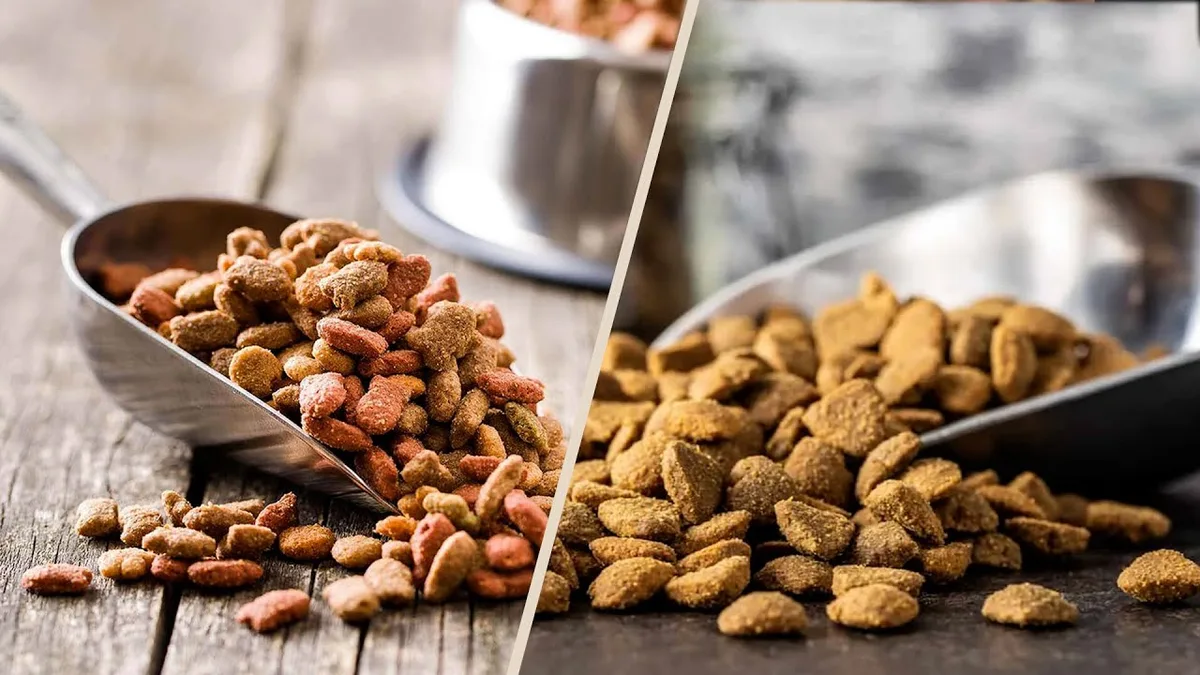
Image source: YouTube / PoofyPaws (YouTube thumbnail (fair-use with source credit))
Quick Answer
Stop feeding puppy food when your dog reaches skeletal maturity. Small breeds mature at 9 to 12 months. Medium breeds mature at 12 to 14 months.
Large breeds need 14 to 18 months. Giant breeds require 18 to 24 months. Use body condition score and your vet’s guidance to confirm readiness.
Never switch based on age alone.
Why This Matters More Than You Think
Puppy food is designed for growth. It’s packed with extra calories, protein, and a carefully calibrated calcium-to-phosphorus ratio that supports bone development. Feed it too long and your dog can become overweight, putting unnecessary strain on growing joints.
Switch too early and you risk depriving your dog of the nutrients needed for proper skeletal formation.

Image source: YouTube / JDK monkeyhanger (YouTube thumbnail (fair-use with source credit))
How growth plates actually work
Your puppy’s bones don’t harden all at once. They grow from soft cartilage areas called growth plates, which sit near the ends of long bones. These plates gradually turn to solid bone as your dog matures.
The process is called growth plate closure.
Until those plates close, your puppy’s skeleton is still developing. Feeding adult food during this window would mean lower calcium and phosphorus levels than what a growing body needs. The result can be weak bones, poor joint formation, and increased risk of conditions like hip dysplasia.
The scary part? You can’t see growth plates with your eyes. They’re only visible on X-rays.
That’s why relying on a calendar date is risky business.
Why breed size is the #1 factor
Small breed dogs mature fast. A Chihuahua might be fully grown by 9 or 10 months. A Great Dane, on the other hand, can keep growing until they’re two years old.
That’s a massive difference in nutritional needs over time.
Here’s how the general timeline breaks down:
| Breed Size | Adult Weight Range | Typical Switch Window |
|---|---|---|
| Small | Under 25 lbs | 9 to 12 months |
| Medium | 25 to 50 lbs | 12 to 14 months |
| Large | 50 to 90 lbs | 14 to 18 months |
| Giant | Over 90 lbs | 18 to 24 months |
These are starting points, not rules. Your individual dog may fall outside these ranges depending on genetics, sex, and whether they’ve been spayed or neutered.
What Makes Puppy Food Different from Adult Food
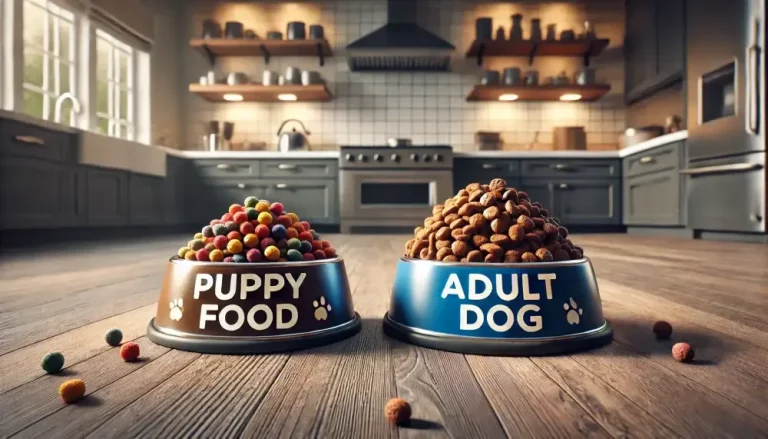
This isn’t just marketing. Puppy food and adult food are formulated differently because the nutritional demands of a growing body are completely different from those of a fully developed one.
Higher calorie density and why that matters
Puppy food packs more calories per cup than adult food. A growing puppy burns through energy like a furnace. Their metabolism is high, their activity level is high, and they’re literally building new tissue every day.
Adult food, by comparison, has fewer calories. That’s intentional. An adult dog doesn’t need the same energy surplus.
If you feed adult food too early, your puppy may not get enough fuel for proper growth. If you feed puppy food too long, your dog can become overweight.
Weight management becomes especially important as dogs approach adulthood. If your dog is carrying extra pounds, switching to a well-balanced maintainance diet helps keep them lean. Our guide on what is the best weight control dog food covers options if you’re worried about your dog’s weight post-transition.
Calcium-to-phosphorus ratio and bone development
This is the big one. Puppy food contains higher levels of calcium and phosphorus compared to adult formulas. These minerals are critical for bone mineralization.
But there’s a catch. Too much calcium can actually harm large breed puppies. It can cause rapid, uneven bone growth that leads to joint problems.
That’s why large breed puppy foods have a slightly lower calcium content than small breed puppy foods. They’re designed to support steady, controlled growth rather than fast growth.
The AAFCO nutrient profile for growth and reproduction sets a maximum calcium level of 1.8% on a dry matter basis. Adult maintenance formulas have a lower requirement. If you switch too late on a large breed dog, you’re potentially exceeding their calcium needs for too long.
Protein and fat levels
Puppy food typically contains 25 to 30 percent protein and 15 to 20 percent fat. Adult food usually drops to 18 to 25 percent protein and 10 to 15 percent fat. The extra protein supports muscle development.
The extra fat provides concentrated energy.
Once your dog stops growing, they don’t need those elevated levels. Excess protein gets processed by the kidneys and liver. While healthy dogs handle it fine, there’s no benefit to feeding puppy-level protein to an adult dog.
Why “all life stages” food complicates the decision
Some dog foods use an “all life stages” label. This means the formula meets AAFCO requirements for both growth and adult maintenance. In theory, you could feed it to a puppy and an adult dog without switching.
In practice, these foods are usually formulated at the higher puppy nutrient levels because they must meet the stricter growth standard. That means they still deliver extra calories, calcium, and protein. Feeding an adult dog an all-life-stages food long term can still lead to weight gain and excess calcium intake.
So even with an all-life-stages food, you’ll likely want to transition to a true adult maintenance formula once your dog reaches maturity.
How to Know Your Dog Is Physically Ready
Instead of guessing based on a birthday, use objective signs to determine whether your dog is ready for adult food.
Body condition score as your real guide
Body condition score (BCS) is a visual and tactile assessment of your dog’s body fat. It’s used by veterinarians worldwide. The scale runs from 1 to 9, with 4 or 5 being ideal.
Here’s what to check:
- Ribs. Run your hands along your dog’s ribcage. You should be able to feel each rib with a thin layer of fat covering them. If you can see ribs clearly, your dog may be underweight. If you can’t feel ribs at all, they may be overweight.
- Waist. Look at your dog from above. You should see a clear indentation behind the ribcage where the waist narrows.
- Belly tuck. From the side, your dog’s abdomen should tuck upward behind the ribcage.
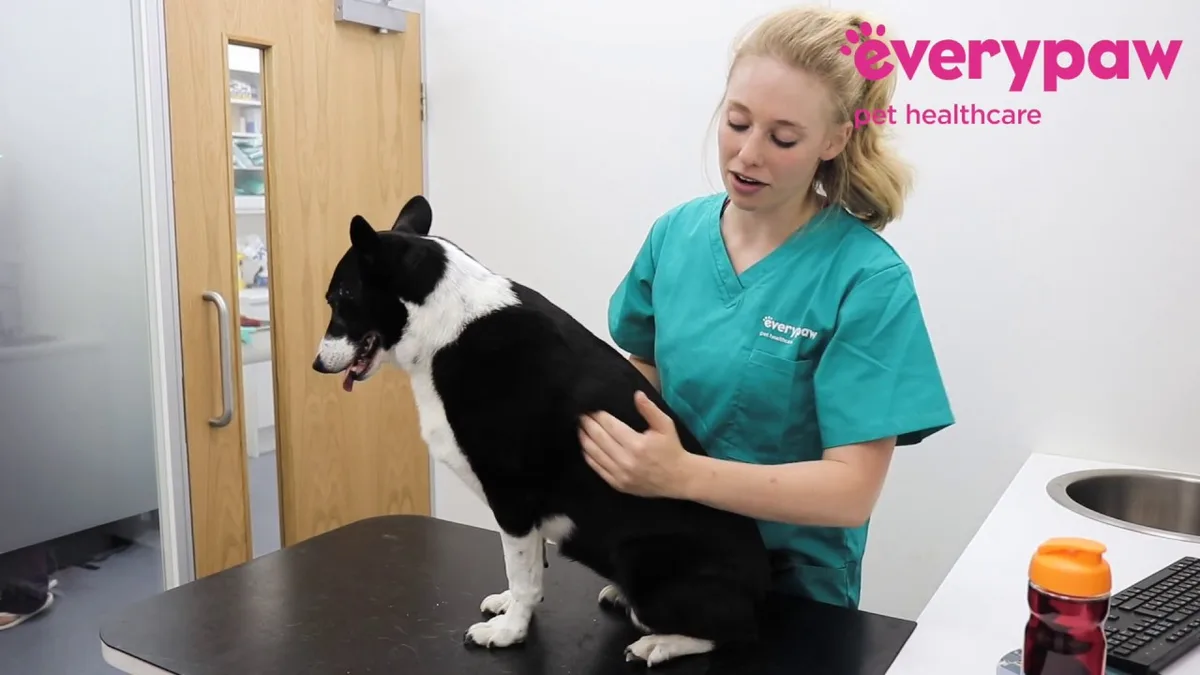
Image source: YouTube / Everypaw Pet Insurance (YouTube thumbnail (fair-use with source credit))
If your dog’s BCS is climbing above 5 while they’re still on puppy food, it’s time to consider transitioning. An overweight puppy is at higher risk for joint problems, regardless of what food they’re eating.
Signs of skeletal maturity you can observe
While you can’t see growth plates, you can observe outward signs that your dog is done growing:
- Height plateaus. Your dog stops getting taller. Their legs stop looking too long for their body.
- Chest broadens. The chest fills out and becomes deeper. This is a late-stage growth sign.
- Paw size stabilizes. Puppy paws look oversized for a reason, they grow before the rest of the body catches up. When paw size matches the rest of the dog, growth is slowing.
These signs suggest skeletal maturity is near, but they’re not definitive. A vet can confirm with X-rays if you want certainty.
Weight plateaus and what they tell you
Weigh your dog every two to three weeks during the growth period. When their weight stays the same for four to six consecutive weeks, they’ve likely reached their adult size. This is a stronger indicator than age alone.
Keep a simple log. Note the date and weight. When the numbers stop moving, it’s probably safe to start planning the transition.
Behavioral cues that aren’t reliable
Your dog acting like a puppy doesn’t mean they need puppy food. Energy level, playfulness, and appetite fluctuations are not reliable indicators of nutritional needs. Some adult dogs are more energetic than some puppies.
Some puppies are lazy.
Base your decision on growth status, not personality.
The Spay/Neuter Complication
This is where a lot of owners get tripped up. Spaying or neutering affects growth, and it changes the timeline for switching foods.
How early alteration affects growth plates
When you spay or neuter a dog before they reach skeletal maturity, you remove the primary source of sex hormones. Those hormones play a role in signaling growth plates to close. Without them, growth plates can stay open longer than normal.
This means a dog spayed or neutered early may actually grow taller than they would have otherwise. Their bones keep lengthening because the closure signal is delayed. This can increase the risk of certain orthopedic conditions like cruciate ligament tears.
Why altered dogs may need to stay on puppy food longer
Because growth plates remain open longer, the dog’s nutritional needs for growth extend beyond the typical timeline. Continuing puppy food until skeletal maturity is confirmed makes sense for these dogs.
However, there’s a balancing act. Altered dogs also tend to have slower metabolisms. They need fewer calories than intact dogs.
If you keep them on high-calorie puppy food for too long, they can gain weight rapidly.
The solution is to work with your vet. They can track your dog’s growth plate closure with periodic X-rays and recommend exactly when to transition.
What your vet should be tracking
A veterinarian monitoring a spayed or neutered puppy should be checking:
- Body condition score at every visit
- Weight trends and growth curve
- Palpation of joints for any swelling or pain
- Radiographs (X-rays) of the growth plates if there’s concern
If your vet hasn’t discussed the spay/neuter timing effect on growth, bring it up at your next appointment. It’s a known factor that many owners, and some vets, overlook.
Step-by-Step: How to Safely Transition
Switching your dog from puppy food to adult food isn’t complicated, but it does require a little planning. A sudden change can upset your dog’s stomach. Loose stools, vomiting, or refusal to eat are common results of a cold turkey switch.
The 7 to 10 day mixing method
Slow and steady wins here. The standard approach is a gradual transition over 7 to 10 days. Here’s what that looks like:
| Day | Puppy Food | Adult Food |
|---|---|---|
| 1 to 3 | 75% | 25% |
| 4 to 6 | 50% | 50% |
| 7 to 9 | 25% | 75% |
| 10 onward | 0% | 100% |
Start with the smallest proportion of adult food on day one. Mix both foods thoroughly in the same bowl. If your dog seems hesitant, try warming the adult food slightly with a splash of warm water to increase the smell.
Some dogs tolerate faster transitions. Others need a full two weeks. The right pace depends on your individual dog’s digestive sensitivity.
Watch their stool and adjust accordingly.
How to adjust portions for adult metabolism
Adult food is less calorie dense than puppy food. That means the serving size may actually increase at first. Don’t panic.
Your dog needs more volume of adult food to get the same energy they were getting from puppy food.
Check the feeding guide on the adult food bag. It will list recommended daily amounts based on your dog’s current weight. Start there and adjust based on body condition score.
After the transition, your dog’s metabolism will gradually shift. They’re no longer burning calories for growth. If you notice weight gain in the first month, reduce portions by 10 to 15 percent.
If they’re losing weight, add a small amount back.
Monitoring stool quality during the transition
Your dog’s poop tells you everything. During the transition, check each bowel movement for:
- Firmness. Stool should be firm but not hard. Soft or runny stool means the transition is too fast.
- Color. Minor changes are normal. Drastic color shifts may indicate an ingredient sensitivity.
- Frequency. More than three or four bowel movements a day during the transition suggests digestive upset.
If you see loose stool, hold at the current ratio for an extra two to three days before increasing the adult food proportion. If diarrhea persists, go back to the previous ratio that worked and try again more slowly.
When to pause or slow down the transition
Some dogs hit a wall. They’re fine at 50 percent adult food, but at 75 percent their stomach rebels. That’s normal.
Pause at the 50/50 ratio for four or five extra days. Let their digestive system adapt before moving forward.
Never push through digestive upset. A stressed gut can develop long term food aversions or chronic loose stool. Slow transitions are better than fast ones.
A two week transition is not a failure. It’s smart management.
If your dog still has digestive issues after a slow transition, consider whether the adult food itself is the problem. Some dogs don’t handle certain protein sources or ingredient blends well. You may need to try a different formula.
Our article on why won’t my dog eat food can help you troubleshoot if your dog goes off their food entirely during the switch.
Common Mistakes Owners Make
Even well intentioned owners mess this up. Here are the most frequent missteps and how to avoid them.
Switching based on the calendar instead of the dog
The internet loves neat timelines. “Switch at one year” is the most common piece of advice you’ll hear. But a Great Dane and a Pomeranian are not on the same schedule.
Using a generic age cutoff ignores breed size, growth rate, and individual development.
Follow your dog’s growth, not a marketing calendar.
Assuming one year works for every breed
The one year rule comes from small breed dogs. Small breeds do often reach maturity around 12 months. But that number gets repeated for all dogs regardless of size.
A Labrador Retriever still has open growth plates at 12 months. A Mastiff is barely halfway done.
If you have a medium, large, or giant breed, ignore the one year mark. Use the breed size timeline from earlier in this guide and confirm readiness with your vet.
Mistaking fat puppy rolls for healthy growth
Puppies are supposed to be a little soft. But there’s a difference between healthy puppy fluff and excess body fat. If you can’t feel your puppy’s ribs without pressing hard, they’re carrying too much weight.
Fat cells release inflammatory compounds. In a growing puppy, that inflammation can interfere with joint development. Keeping your puppy lean during the growth period is one of the most protective things you can do for their long term joint health.
Ignoring the transition period entirely
Sometimes owners just run out of puppy food and open the adult bag. A sudden switch can cause vomiting, diarrhea, and a miserable week for both you and your dog. It’s completely avoidable with a few days of planning.
Buy the adult food while you still have a week’s worth of puppy food left. That way you can transition gradually without any gaps.
Using the same brand for puppy and adult without checking formulas
Brand loyalty is fine. But don’t assume a brand’s puppy food and adult food use the same ingredients. Some brands change protein sources, fat content, and fiber levels significantly between life stages.
Read the ingredient panel and guaranteed analysis before assuming it’s a smooth swap.
What the Research Actually Says
The science behind puppy to adult food transition comes from veterinary nutrition research and AAFCO feeding standards. Here’s what the data really supports.
AAFCO nutrient profiles for growth versus maintenance
AAFCO establishes two primary nutrient profiles for dog food: growth and reproduction (which covers puppies and pregnant or nursing mothers) and adult maintenance. These profiles set minimum and maximum levels for protein, fat, calcium, phosphorus, and other nutrients.
The growth profile requires higher levels across the board. The maintenance profile is formulated for dogs who are no longer building new tissue. Feeding a maintenance profile to a growing puppy risks nutrient deficiency.
Feeding a growth profile to an adult dog risks excess calorie and mineral intake.
Veterinary studies on growth rate and hip dysplasia
Multiple studies published in veterinary journals have linked rapid growth in large breed puppies to increased risk of hip dysplasia. A 1995 study in the Journal of the American Veterinary Medical Association found that Labrador Retriever puppies fed a restricted diet had significantly lower incidence of hip dysplasia compared to those fed free choice.
The mechanism is clear. Rapid weight gain puts mechanical stress on developing joints. Controlled, steady growth gives the skeleton time to form properly.
Puppy food formulated for large breeds is designed to support this controlled growth. Adult food, when introduced too early, can disrupt it.
Why large breeds need controlled growth, not restricted calories
There’s an important distinction here. Controlled growth means limiting calorie intake to prevent excessive weight gain. It does not mean restricting essential nutrients like calcium and phosphorus.
Feeding a low quality adult food to a large breed puppy in an attempt to slow growth can backfire. The puppy may not get enough calcium for proper bone formation. The goal is to feed a high quality large breed puppy food in measured portions.
Not to switch to a lower quality adult food early.
What feeding trials measure
AAFCO feeding trials test whether a food provides adequate nutrition for a specific life stage. A food that passes a growth feeding trial has been tested on growing puppies and found to support healthy development. A food that passes an adult maintenance trial has been tested on adult dogs.
Some foods undergo both trials and earn the “all life stages” label. Others only pass one trial. Always check which feeding trial your chosen food has passed.
It tells you exactly what the food is designed to support.
When to Consult Your Veterinarian
Most healthy puppies transition smoothly with proper timing and gradual changes. But some situations require professional input.
Red flags during growth
Contact your vet if you notice any of these signs during the growth period:
- Limping. Persistent limping in a growing puppy can indicate panosteitis (growing pains) or a developing orthopedic problem.
- Swollen joints. Warm or swollen joints are never normal. They can signal infection or developmental issues.
- Reluctance to move. A puppy who doesn’t want to run and play may be in pain.
- Abnormal gait. Any change in how your dog walks should be evaluated.
These signs don’t necessarily mean something is wrong with your feeding plan. But they warrant a vet visit to rule out underlying issues.
Breed specific growth concerns
Some breeds have known vulnerabilities that affect the transition timeline:
- Dachshunds and other dwarf breeds. Their short legs and long backs are prone to intervertebral disc disease. Maintaining a lean body weight during growth is critical.
- Corgis and other chondrodystrophic breeds. Same disc concerns as dachshunds. Keep them lean and avoid overfeeding puppy food.
- Bulldogs and other brachycephalic breeds. Their unique bone structure and tendency toward obesity means careful portion control from puppyhood onward.
- Giant breeds. Great Danes, Mastiffs, and Saint Bernards are at the highest risk for skeletal disorders. They benefit from a controlled growth protocol overseen by a veterinarian.
Dogs with known orthopedic or metabolic conditions
If your puppy already has a diagnosed condition like hip dysplasia, elbow dysplasia, or a metabolic disorder, don’t guess on the transition timeline. Your vet should direct the plan. They may recommend a specific diet or extended use of a large breed puppy formula.
Mixed breed puppies with uncertain adult size
Mixed breed puppies are harder to predict. If you don’t know the parent breeds, estimate adult size using weight prediction calculators or veterinary evaluation. Monitor growth closely and confirm readiness with your vet rather than assuming a timeline.
If you’re unsure about the right food type for your dog’s specific needs, our step by step guide on what dog food do most vets recommend can help you navigate the options. Your vet is your best resource for breed specific and individual recommendations.
Real-World Scenarios
Sometimes seeing how other owners handled the transition makes it click. Here are a few common situations that show how the principles play out in real life.
The small breed that plateaued at 8 months
A Miniature Poodle owner started wondering about switching when her pup’s weight held steady for three weeks at 11 pounds. The dog was 8 months old. Breed size suggested a 9 to 12 month window, but the weight plateau happened early.
She consulted her vet. The vet confirmed via X-rays that the growth plates had closed earlier than average. The dog was ready for adult food at 8 months.
The owner transitioned over 10 days using the mixing method. No digestive issues occurred.
The takeaway: individual variation matters. Weight plateaus are reliable indicators, even when they fall outside the typical window.
The Labrador that needed to stay on puppy food until 18 months
A Labrador Retriever owner switched to adult food at 12 months based on common advice. Within two months, the dog started limping after exercise. A vet visit revealed the growth plates were still open.
The dog needed to go back to a large breed puppy formula.
The owner switched back to the puppy food and continued it until 18 months. At that point, X-rays confirmed plate closure. The second transition went smoothly.
The limping resolved without lasting damage.
The takeaway: switching too early on a large breed can cause real problems. If you suspect you switched too soon, it’s not too late to go back. Confirm with X-rays first.
The rescue puppy with an unknown birthdate
A rescue owner adopted a puppy estimated by the shelter to be 6 months old. The dog weighed 35 pounds and was still clearly growing. No one knew the exact birthdate or parent breeds.
The owner used the weight plateau method. She weighed the dog every two weeks. After three months, the weight stopped increasing.
She estimated the dog was around 11 to 12 months old at that point and sized as a medium breed. She did a gradual transition over two weeks. The dog did fine.
The takeaway: when you don’t know the age, use growth data to guide you. Weigh regularly and wait for plateaus.
The giant breed on a controlled growth protocol
A Great Dane owner worked closely with a veterinarian from 8 weeks of age. The vet prescribed a specific large breed puppy food with measured portions. The owner weighed the dog weekly and tracked body condition score.
At 12 months, the dog was still below the target BCS of 5 and was still gaining height. The vet advised staying on puppy food. At 20 months, the dog’s growth curves flattened.
X-rays confirmed plate closure. The transition to adult food happened at 22 months.
The takeaway: giant breeds need professional oversight. A controlled growth protocol should be managed by a veterinarian, not guesswork.
Frequently Asked Questions
Can I switch from puppy food to adult food cold turkey?
Cold turkey switching often causes digestive upset like vomiting or diarrhea. A gradual transition over 7 to 10 days is safer and easier on your dog’s stomach. Mix increasing amounts of adult food with decreasing amounts of puppy food each day.
What happens if I switch my puppy to adult food too early?
Switching too early can deprive your puppy of essential nutrients needed for bone and joint development. This increases the risk of skeletal disorders like hip dysplasia. Large and giant breeds are especially vulnerable.
Always confirm skeletal maturity before switching.
Should I feed puppy food to a spayed or neutered dog longer?
Yes, typically. Early spay or neuter delays growth plate closure. Your dog may need to stay on puppy food longer than an intact dog of the same breed.
Work with your vet to track growth plate closure and time the transition properly.
How do I know if my puppy is overweight on puppy food?
Use the body condition score. You should feel your puppy’s ribs with a thin layer of fat. If you can’t feel the ribs, your puppy is likely overweight.
If you can see the ribs clearly, they may be underweight. Adjust portions or consider transitioning to adult food if BCS exceeds 5.
Can I feed adult food to a puppy if it’s labeled all life stages?
You can, but it’s not ideal. All life stages food is formulated to meet the higher nutrient levels required for growth. That means it still delivers extra calories and calcium compared to a true adult maintenance food.
For most owners, switching to a dedicated adult formula is a better choice.
My puppy is 6 months old and already at adult size. Should I switch?
Not necessarily. A dog can reach their adult height before their growth plates close. They may look full grown but still have developing bones underneath.
Use weight plateaus and veterinary confirmation rather than height alone to decide when to switch.
Quick Decision Guide
If you’re still unsure, run through this simple checklist before you switch.
Decision tree: Should I switch yet?
Ask yourself these questions in order:
- Has my dog reached the minimum age for their breed size? (9 months for small, 12 for medium, 14 for large, 18 for giant)
- Has their weight been stable for four to six weeks?
- Is their body condition score between 4 and 5?
- Has my vet confirmed growth plate closure or given the green light?
If you answered yes to all four, it’s time to transition. If any answer is no, wait longer.
Checklist for evaluating readiness
Use this before buying the adult food:
- Weight plateau observed for at least one month
- Ribs easily felt with thin fat cover
- Waist visible from above
- Belly tuck visible from the side
- No limping or joint swelling
- Vet confirms readiness
- Adult food selected and purchased before puppy food runs out
When to trust the bag and when to ignore it
Trust the feeding guide on the bag for portion size recommendations. They’re based on AAFCO testing and calorie density calculations.
Ignore the bag’s suggested switch age. Bag labels use generic timelines for legal compliance, not for individual dogs. Your dog’s breed, size, and development matter more than any printed guideline.
One-sentence rule of thumb for each breed size
- Small breeds: Switch after weight plateaus, usually around 9 to 12 months.
- Medium breeds: Switch after weight plateaus, usually around 12 to 14 months.
- Large breeds: Switch after vet confirmation, usually around 14 to 18 months.
- Giant breeds: Switch only after X-ray confirmed growth plate closure, usually 18 to 24 months.