How to Stop Dog From Eating Cat Food: A Complete Guide
It’s that moment you know all too well. You set the cat’s bowl down, turn around for two seconds, and there’s your dog with their face buried in it, tail wagging like they just won the lottery. If you’ve been searching for how to stop dog from eating cat food, you’re not alone and you’re not dealing with a lost cause.
The fix is real, but it depends on a few things about your specific pets and your home.
The hard truth is that cat food is basically dog crack. It’s packed with roughly 30-50% protein and significantly more fat than standard dog food. That higher calorie density (around 350-500 kcal per cup versus 250-400 for dog food) is exactly what makes it irresistible.
As of 2026, the good news is that there are more practical solutions than ever, from simple elevation tricks to smart feeders that only open for your cat’s microchip. The trick is figuring out which fix fits your situation.
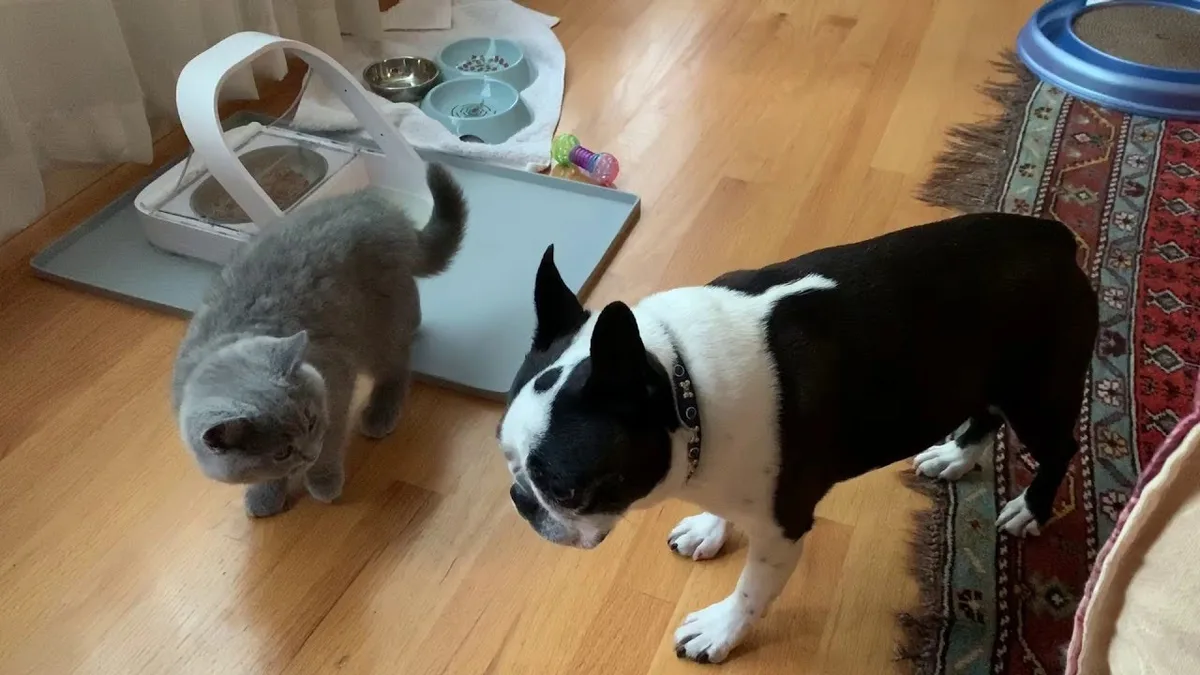
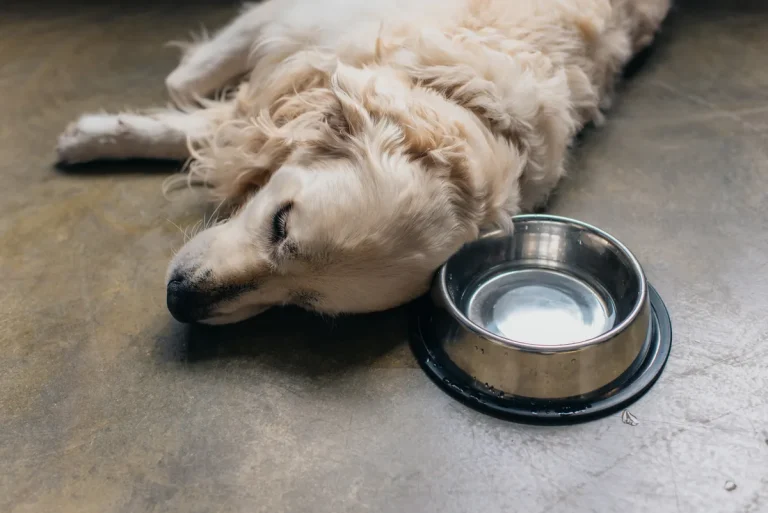
Image source: YouTube / ViralHog (YouTube thumbnail (fair-use with source credit))
Quick Answer
Elevate the cat’s bowl or feed in a separate room. Use a tall baby gate if your dog cannot jump. Install a microchip-activated feeder for persistent dogs.
Train your dog to “leave it” as a backup measure. Switch to scheduled feeding times for both pets. The cheapest solution is elevation.
The most reliable solution is a microchip feeder.
Why This Is a Real Problem (and Not Just Annoying)
A stolen mouthful of cat food here and there is not an emergency. But if your dog makes a habit of it, you are looking at real health risks. Cat food is formulated for a cat’s digestive system, which handles high protein and high fat far better than a dog’s does.
The biggest concern is pancreatitis. Dogs, especially breeds like Miniature Schnauzers, Cocker Spaniels, and Labrador Retrievers, are prone to inflammation of the pancreas when they consume high-fat foods. Cat food easily triggers this.
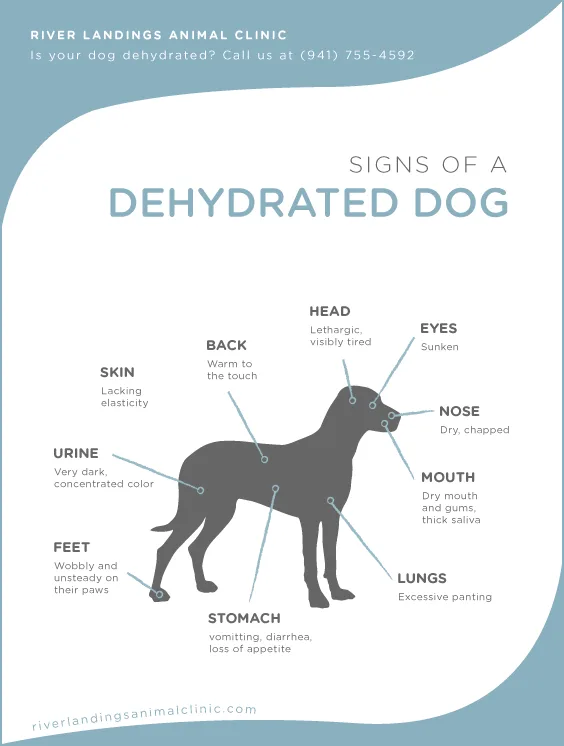
The immediate signs are vomiting, diarrhea, a hunched back, and loss of appetite. The long-term risk is obesity and diabetes, because you are essentially feeding your dog a calorie-dense meal they do not need.
Your dog may also develop a preference for cat food over their own. That sounds silly, but it is real. Dogs are smart about calories.
If they learn that the cat’s bowl tastes better and is easier to access, they will start ignoring their own kibble. This creates a second headache: you now have a picky dog and a stressed cat who cannot eat in peace.
There is also the stress factor for your cat. Cats are creatures of routine. If they associate their feeding spot with being bullied or chased by the dog, they may start skipping meals, eating too fast, or hiding to eat.
That can lead to weight loss, vomiting, or urinary issues from stress.
So no, this is not just an annoyance. It is a genuine household management problem with consequences for both animals. The good news is that it is also entirely solvable.
Decision Branch 1: Can You Elevate the Cat’s Bowl?
This is the simplest and cheapest option. It works for a huge number of households. But it only works if your cat is willing to jump up and your dog cannot reach.
Who this works for
This solution works best when your dog is short-legged, not a jumper, and not particularly determined. Think Dachshunds, Corgis, older Labs, or any dog that cannot easily clear counter height. It also works well for cats who are confident jumpers and do not mind eating on a raised surface.
Minimum safe height
You need to measure your dog’s shoulder height and add at least 6 to 12 inches. A Jack Russell Terrier with a 14-inch shoulder needs a bowl at 20 to 26 inches off the ground. A Labrador with a 24-inch shoulder needs 30 to 36 inches.
Counter height is usually 36 inches, which blocks most dogs. A 48-inch shelf or window ledge is bulletproof for all but the largest and most athletic dogs.
Best elevated spots
- Kitchen island or peninsula (dog cannot access from behind)
- A sturdy shelf bolted to the wall
- A window ledge the cat can reach from a nearby chair or cat tree
- Top of a washing machine or dryer (if the cat can jump up safely)
- A raised cat tree with a built-in feeding platform
Common mistake: dog learns to jump
This is where most people fail. They elevate the bowl to counter height, and their dog figures out how to jump up there within a week. If your dog is athletic, young, or food-obsessed, elevation alone is not enough.
You need to pair it with a barrier or a microchip feeder.
Another mistake is putting the bowl somewhere the dog can reach from below. A shallow shelf at 20 inches is useless if your dog can stand on their hind legs and lick the bowl clean. The bowl needs to be fully out of tongue range, not just out of paw range.
When to skip this option
Skip elevation if your cat is elderly, arthritic, or has any mobility issues. A senior cat who struggles to jump will simply stop eating. Skip it also if your cat is a grazer who eats small amounts throughout the day.
Grazing cats often refuse to jump up for every single snack. In those cases, a microchip feeder or separate room is a better fit.
Decision Branch 2: Is a Baby Gate Enough?
A baby gate is the second line of defense. It physically separates the cat’s feeding area from the dog. When it works, it is elegant and cheap.
When it fails, it fails in frustrating ways.
When a gate works
A gate works best when your dog is small enough that they cannot jump over it, and your cat is agile enough to jump over it or squeeze through it. This is the classic “cat goes over, dog stays under” setup. It works great for a cat who is comfortable jumping and a dog who is not a high jumper.
A pressure-mounted gate in a doorway to a spare bedroom, laundry room, or bathroom is the standard configuration. You put the cat’s bowl in that room, leave the gate closed, and the cat goes in and out as needed.
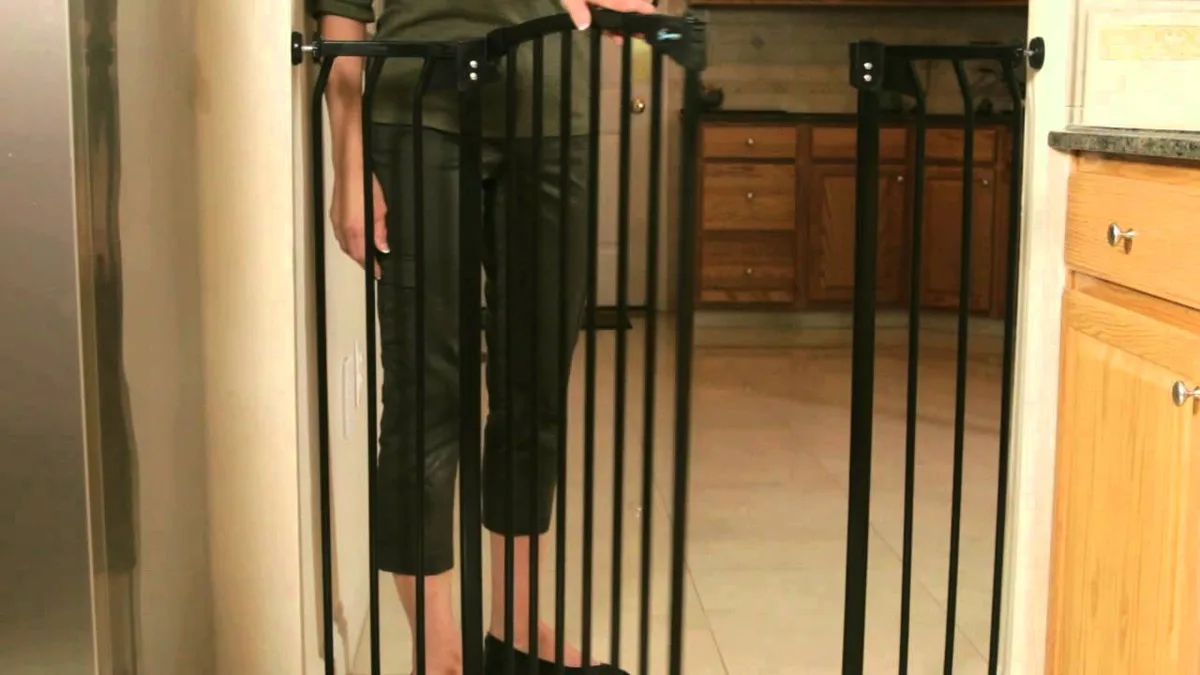
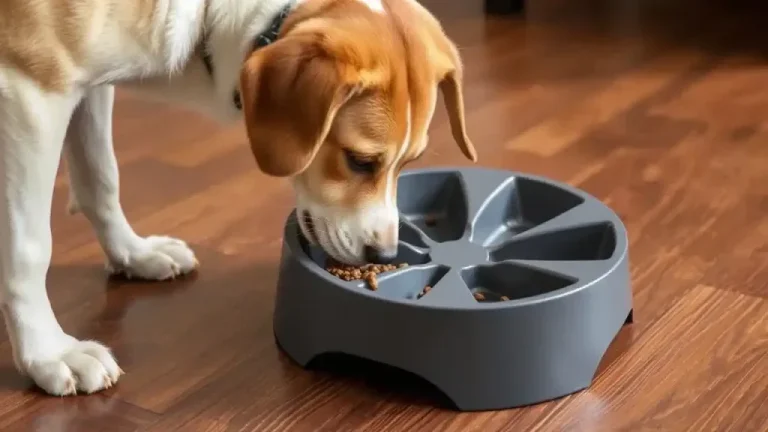
Image source: YouTube / appliancesconnection (YouTube thumbnail (fair-use with source credit))
Gate height and mounting type
Gate height matters more than most people think. A 24-inch gate stops a small dog like a Shih Tzu or a French Bulldog. A 36-inch gate stops most medium dogs like Beagles and Cocker Spaniels.
A 42-inch gate is needed for athletic dogs like Border Collies, Australian Shepherds, and most Terriers.
Pressure-mounted gates are easy to install and leave no marks on the wall. But they are not secure for determined dogs. A strong dog can push them over or wiggle them loose.
Hardware-mounted gates screw into the wall and are far more secure. If your dog is persistent, use a hardware-mounted gate or accept that pressure gates are a temporary solution.
Cat access options
- A cat pass-through door cut into a solid door (with a flap the cat can push through)
- A tall gate with vertical bars spaced wide enough for the cat to squeeze through
- A gate with a small cat door built into the bottom
- A simple open gap at the bottom of the gate that the cat crawls under
The key is making sure the dog cannot also fit through the same opening. Measure your dog’s chest width and compare it to the gap.
Common failure modes
The most common reason gates fail is that the dog learns to jump them. A determined dog will practice jumping the gate every time you are not watching. If your dog clears the gate even once, they have learned that the reward is worth the effort.
At that point, you need a taller gate or a different strategy.
Another failure is that the cat refuses to jump the gate. Some cats, especially older or less confident ones, do not like jumping over barriers. If your cat is stressed by the gate, they may avoid the feeding area entirely.
That defeats the purpose.
Gate vs. cat pass-through door
A cat pass-through door is a better long-term solution for most households. It gives the cat unrestricted access to their food without requiring jumps or squeezes. You can buy a pre-assembled cat door panel or cut a hole in an existing door and install a one-way flap.
The one-way flap lets the cat enter but prevents the dog from following.
Decision Branch 3: Do You Need a Microchip Feeder?
If your dog is persistent and athletic, and you have tried elevation and gates with limited success, a microchip feeder is the nuclear option. It is expensive but it is also the most reliable solution available.
How microchip feeders work
A microchip feeder is a bowl with a lid that stays closed until it detects your cat’s microchip or a RFID tag on their collar. When the cat approaches, the lid opens. When the cat walks away, the lid closes.
The dog can stand right next to the bowl and the lid will not open.
Some models also have a weight sensor option. This means the bowl stays closed unless a certain weight is on the platform. A heavy dog standing on the platform will not trigger it.
A light cat walking onto it will. Weight sensors are less reliable than microchip sensors, especially if your cat is roughly the same weight as your dog.
Best for: determined dogs, busy owners, free-feeding cats
A microchip feeder is ideal for three specific situations.
First, a determined dog who has defeated every physical barrier you have tried. If your dog jumps gates, opens cabinets, or counter-surfs, this is your solution.
Second, a busy owner who cannot supervise every meal. If you leave the house for work and cannot separate your pets, a microchip feeder runs on autopilot.
Third, a cat who is a grazer and prefers to eat small amounts throughout the day. The feeder stays locked except when the cat approaches, so the cat can eat on their schedule without the dog stealing the food.
Real cost and what you are paying for
Microchip feeders typically cost between $150 and $250. That is a significant upfront investment. But compare it to the cost of repeated vet visits for pancreatitis or obesity, and it starts to look reasonable.
The price includes the electronics, the battery-powered lid mechanism, and the programming features.
Most units run on batteries for about 6 to 12 months before needing a replacement. Make sure the model you choose supports your cat’s specific microchip frequency. Most modern pet microchips in North America and Europe operate at 125 kHz or 134.2 kHz.
The SureFeed model supports both frequencies. Some cheaper models only support 125 kHz, so confirm before buying.
Cat’s acclimation period
Most cats adapt to a microchip feeder within 3 to 7 days. You should start by leaving the lid open and placing the cat’s food inside. Let the cat eat from the open bowl for a day or two.
Then activate the lid and show the cat how it opens. You may need to gently guide their face toward the bowl to trigger the sensor.
Some cats are spooked by the lid mechanism. If your cat refuses to approach the feeder, you can remove the lid entirely for a few days and then reattach it. Patience is critical here.
Never force the cat to eat from the feeder.
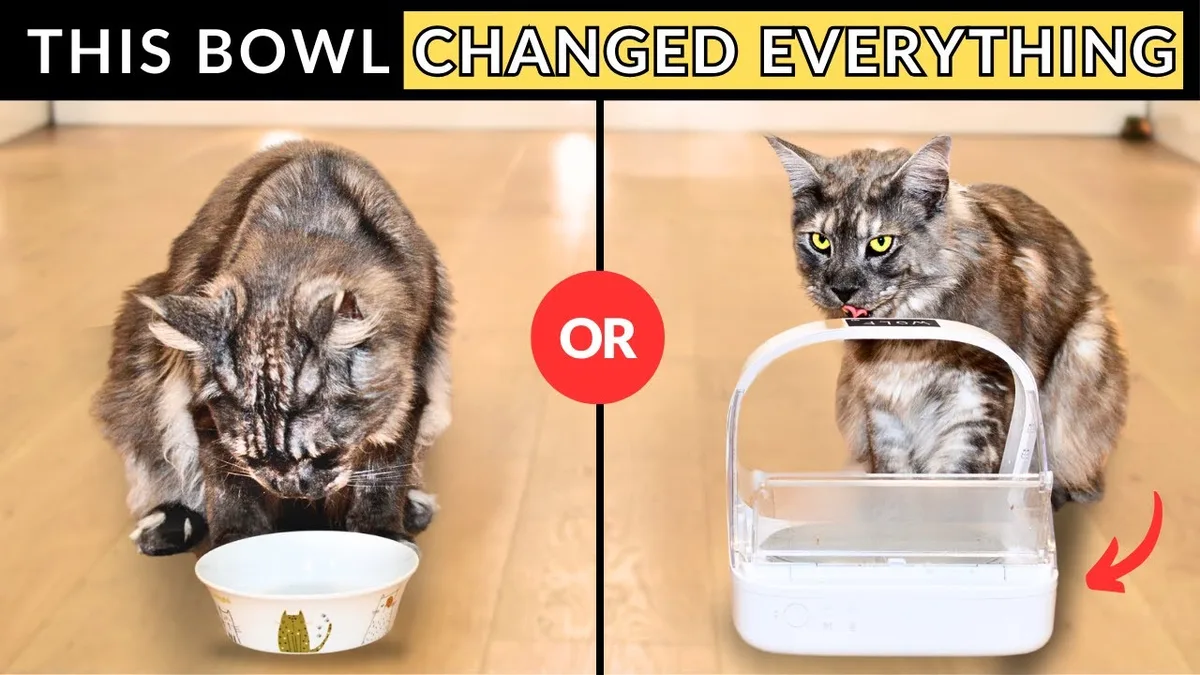
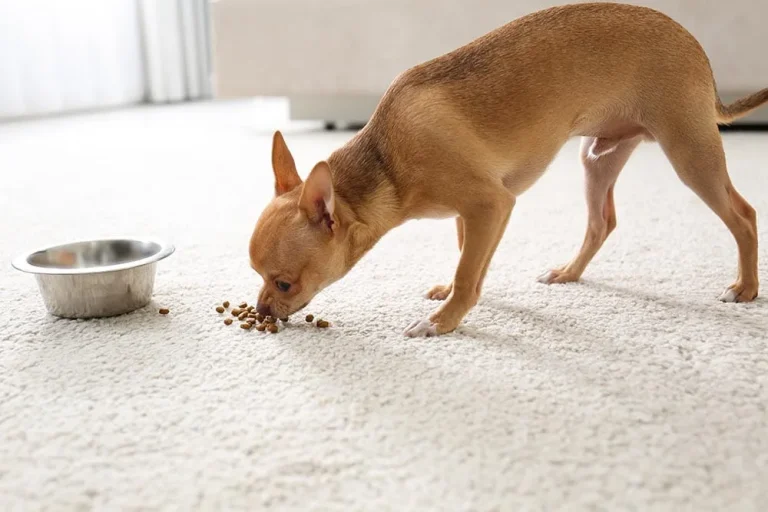
Image source: YouTube / Pepper Projectz (YouTube thumbnail (fair-use with source credit))
Limitation: one bowl at a time
The biggest limitation of microchip feeders is that most models only protect one bowl. If you have two cats, you may need two feeders. Some cats also do not like sharing a feeder with another cat.
If one cat is dominant, they may block the other cat from accessing the bowl.
Some higher-end models allow you to pair multiple bowls to the same microchip, but they are rare and expensive. For a single-cat household, microchip feeders are nearly perfect. For multi-cat homes, you need to plan more carefully.
Decision Branch 4: Should You Change Feeding Schedules?
Sometimes the easiest solution does not involve a product at all. It involves changing how and when you feed both animals. This is the lowest cost option, but it requires discipline and consistency.
Timed feeding both pets
The simplest schedule change is to feed both pets at set times, usually twice a day. You put the dog in their crate or a separate room, feed the cat in another area, and pick up both bowls after 15 to 20 minutes. No food is left out between meals.
This works perfectly if both pets eat their food quickly. It fails if your cat is a grazer who refuses to eat a full portion in one sitting. Grazing cats often become stressed by scheduled feeding and may not eat enough.
How to transition a grazer cat to scheduled meals
Transitioning a grazer cat is not difficult, but it takes about 1 to 2 weeks. Start by leaving food down for 30 minutes, then picking it up. Do this consistently at the same times each day.
Most cats will adjust and learn to eat when food is available.
If your cat refuses to adjust, you can try adding a small amount of wet food to make the meal more appealing. Wet food is more palatable and encourages faster eating. You can also reduce the portion size slightly to increase hunger between meals.
Feeding in separate rooms at the same time
This is the simplest version of schedule changes. Feed the dog in the kitchen and the cat in the bathroom or a spare bedroom. Close the doors so neither animal can access the other’s food.
After 20 minutes, open the doors and let them back out.
The advantage is that it requires no special equipment. The disadvantage is that you must be home for every feeding. If you work irregular hours or travel frequently, this is hard to maintain.
What to do if you work long hours
If you are away for 8 to 10 hours a day, scheduled feeding becomes tricky. The dog can wait for two meals. The cat may need access to food during the day.
Your options are:
- An automatic feeder for the cat that dispenses dry food at a set time in a separate room
- A microchip feeder for the cat that stays locked until the cat approaches
- A combination of timed feeder for the dog and a microchip feeder for the cat
The automatic feeder is the cheaper option, but it does not prevent the dog from eating the dispensed food if the dog can reach it. You still need to place the feeder in a room the dog cannot access.
When schedule changes are not enough
Schedule changes fail when you have a cat who needs to eat frequently. Kittens, senior cats, and cats with medical conditions like diabetes or hyperthyroidism may need small meals throughout the day. Restricting them to two meals can cause health problems.
If your cat has a medical need for frequent feeding, skip the schedule changes and go straight to a physical barrier or microchip feeder. Do not compromise your cat’s health to make feeding more convenient for the dog.
Training Your Dog to Leave the Cat’s Food Alone
Training is not a substitute for physical management, but it is a powerful backup. A dog who understands “leave it” will give you a few extra seconds to intervene when they spot the cat’s bowl. That gap can be the difference between a stolen meal and a controlled situation.
The “leave it” command for food-specific training
Start with a low-value treat in your closed hand. Present it to your dog. When they sniff or paw at it, say “leave it.” The moment they pull back even slightly, mark with “yes” and reward with a different treat from your other hand.
Repeat until your dog reliably pulls back from your closed hand.
Then move to an open palm with the treat visible. Same process. Say “leave it.” The instant your dog hesitates before grabbing, mark and reward.
Gradually increase the difficulty by placing the treat on the floor, then near the cat’s bowl, then eventually with the cat’s actual food.
How long it takes
Realistic timeline: 1 to 3 weeks of daily practice. Some dogs pick it up in a few sessions. Others, especially food-obsessed breeds like Labrador Retrievers or Beagles, need consistent daily work for a full month.
Do not rush the process. Each step must be solid before you move to the next.
Why training alone is not enough
Here is the honest truth. Training works when you are watching. It fails when you are not.
A dog who is alone with an unattended cat bowl will almost always eat the food, regardless of how well they perform “leave it” in a training session.
Training suppresses the behavior temporarily. It does not remove the temptation. If you rely only on training, you will eventually come home to an empty cat bowl and a guilty-looking dog.
Use training as a supplement to physical barriers, not a replacement.
Positive reinforcement vs. scolding
Positive reinforcement works far better than punishment for this specific behavior. Scolding your dog after they have eaten the cat food does nothing useful. The dog cannot connect your anger to the act of eating that happened minutes ago.
They only learn to hide from you when they have done something wrong.
Instead, reward the behavior you want. When your dog ignores the cat’s bowl while you are present, give them a treat and praise. When they walk past the bowl without sniffing it, mark it.
Over time, ignoring the cat’s food becomes a habit that earns rewards.
When training fails
Training fails when the dog’s food drive is extremely high, when the cat food is more rewarding than any treat you offer, or when the dog has already practiced the stealing behavior many times. Each successful theft reinforces the behavior. The more repetitions of stealing, the harder it is to overwrite with training.
If your dog has been stealing cat food for months, skip training as a primary solution and focus on physical management first. You can add training later as a polish, but do not expect it to solve the problem on its own.
Common Mistakes That Sabotage Your Setup
People try solutions, they fail, and they assume the problem cannot be solved. Usually, the failure is not the solution itself. It is one of these common mistakes.
Choosing a gate that is too short
The most common mistake in all of pet management. People buy a 30-inch gate because it looks tall enough when standing next to it. A motivated dog can clear a 30-inch gate with no problem.
Measure your dog’s shoulder height and jumping ability. Add 12 inches. Then buy that gate.
Putting the cat’s bowl somewhere the dog can reach from below
A counter-height bowl is useless if your dog can stand on their hind legs and lick the bowl clean. A shelf at 20 inches is useless. The bowl must be fully out of tongue range.
Test this yourself. Have your dog stand on their hind legs and see how high they can reach. Add 4 inches for safety.
Not securing the gate to the wall
Pressure-mounted gates work fine for well-behaved dogs. They fail miserably for persistent dogs. A determined dog will push, wiggle, and eventually knock the gate over.
Hardware-mounted gates screw into the wall and cannot be moved. If your dog has ever pushed a gate over, switch to a hardware-mounted gate immediately.
Assuming the cat will happily use a new feeder immediately
Cats are creatures of habit. A sudden change in their feeding setup can cause them to stop eating. Always introduce new feeders, new bowl locations, and new barriers gradually.
Leave the feeder open for a few days. Let the cat explore it on their terms. Do not force it.
Overlooking the second food source
Many homes have more than one cat bowl, or multiple locations where cat food appears. You block one bowl, but the dog finds another. Check every room.
Check the counter where you store the bag of cat food. Check the trash can where empty cans go. Dogs are resourceful.
If cat food exists anywhere in the house, they will find it.
What If Neither Pet Will Cooperate?
Some households hit a wall. The cat refuses to eat on counters. The dog jumps every gate.
The microchip feeder spooks the cat. Neither training nor barriers seem to work. You have options.
The cat refuses to eat on counters or in a separate room
Some cats are stubborn about where they eat. They want their bowl on the floor in the kitchen, and they will not eat anywhere else. If this is your cat, you cannot force elevation.
You need to go straight to a microchip feeder or a cat pass-through door.
Alternatively, try a cat tree with a built-in feeding platform. Some cats who refuse a counter will accept a cat tree because it feels like their territory. Position the tree near their usual feeding spot and gradually move the bowl up the tree over several days.
The dog is too tall, too persistent, or too food-obsessed
A Great Dane can eat off any counter. A determined Husky will figure out any gate. A Lab will sell their soul for a mouthful of cat food.
These dogs require the highest level of intervention.
Your best bet is a cat pass-through door that only the cat can fit through. Install it in a solid door to a room that the cat can access freely. The dog literally cannot follow because they do not fit through the opening.
Creative workarounds
- Build a feeding cubby under a cabinet or inside a cabinet with a cat-sized opening
- Use a large wire dog crate as a cat feeding station (cat enters, dog cannot)
- Mount the cat’s bowl on a wall shelf that is physically impossible for the dog to reach
- Use a raised dog bed frame as a barrier (cat eats on top, dog stays underneath)
When to involve a veterinary behaviorist
If your dog’s obsession with cat food is part of a larger pattern of food aggression, resource guarding, or compulsive behavior, a veterinary behaviorist can help. This is rare, but it does happen. Signs include growling at the cat, guarding the cat’s bowl, or refusing to eat their own food unless it is cat food.
A behaviorist can prescribe medication for anxiety-driven food obsession and design a counterconditioning plan. This is a last resort, but it exists for a reason.
Ultimate fallback: supervised feeding only
If no solution works, you feed both pets on a strict schedule with you present. The cat eats in a closed room. The dog eats in their crate.
You pick up all bowls immediately after eating. No food is left out unattended. This works, but it is inconvenient.
You must be home for every feeding and you cannot leave food out when you are away.
It is not ideal, but it is better than letting your dog develop pancreatitis or obesity. And it buys you time to save up for a microchip feeder or install a cat door.
Health Risks: What to Watch For If Your Dog Gets Into Cat Food
Even with the best prevention, accidents happen. You come home to an empty cat bowl and a dog who looks too satisfied. Here is what to watch for and when to worry.
Signs of acute digestive upset
Vomiting and diarrhea are the most common immediate effects. Cat food is richer than dog food, and some dogs vomit within 30 minutes of eating it. A single episode of vomiting is usually not an emergency.
Multiple episodes, bloody vomit, or diarrhea that lasts more than 24 hours requires a vet visit.
Long-term risks
Repeated consumption of cat food increases the risk of pancreatitis, which is inflammation of the pancreas. Symptoms include vomiting, diarrhea, loss of appetite, abdominal pain, and a hunched posture. Pancreatitis can be mild or life-threatening.
If your dog shows these signs after eating cat food, call your vet.
Obesity is the slow burn risk. Cat food is calorie-dense. A medium-sized dog who eats one cup of cat food per day is consuming roughly 400 extra calories.
Over a month, that adds up to noticeable weight gain. Over six months, it can lead to obesity and its complications: joint problems, diabetes, and reduced lifespan.
How much cat food is too much
A single mouthful stolen here and there is unlikely to cause problems. A full bowl of cat food eaten daily is a problem. If your dog eats cat food more than once a week, you need to change your setup.
The most dangerous scenario is a small dog eating a large portion of cat food. A 10-pound dog eating a full cup of cat food is consuming more than their total daily calorie needs in one meal. That can trigger pancreatitis even in a healthy dog.
When to call the vet
Call your vet if your dog vomits multiple times, has bloody diarrhea, shows signs of abdominal pain (whining, hunched back, reluctance to move), or has not eaten their own food for more than 24 hours. Also call if your dog has a pre-existing condition like pancreatitis, diabetes, or obesity.
For a single small theft with no symptoms, you do not need to call the vet. Just monitor your dog for 24 hours and make sure their own feeding schedule stays on track.
Rebalancing your dog’s diet if theft is occasional
If your dog occasionally steals cat food, reduce their next meal slightly to account for the extra calories. If they ate a half cup of cat food, give them a half cup less of their own dinner. This prevents calorie overload and keeps their weight stable.
For dogs on a carefully controlled diet for weight management, even one theft can disrupt their progress. Keep a close eye on their weight and adjust their portion sizes as needed. If you need a structured plan for helping your dog lose weight, our guide on the best weight control dog food options in 2026 covers the key things to look for.
Your Decision Guide: Matching Your Situation to the Right Solution
Here is the straightforward decision framework. Read down the list and stop at the first option that fits your pets and your home.
If your dog is short and not a jumper:
- Elevate the cat’s bowl to counter height or higher
- No need for gates or feeders in most cases
- Cost: $0 (use existing furniture) to $30 (shelf or raised bowl stand)
If your dog is medium-sized but not a jumper:
- Use a 36-inch baby gate in a doorway
- Place the cat’s bowl in the gated room
- Cost: $30 to $100
If your dog is athletic or a jumper:
- Use a 42-inch hardware-mounted gate
- Or install a cat pass-through door
- Cost: $50 to $200
If your dog has defeated every barrier:
- Buy a microchip-activated feeder
- Cost: $150 to $250
If you are on a tight budget:
- Schedule feedings with you present
- Feed the cat in a separate closed room
- Cost: $0
| Situation | Best Solution | Cost Range |
|---|---|---|
| Short dog, non-jumper | Elevate the bowl | $0 – $30 |
| Medium dog, non-jumper | 36-inch baby gate | $30 – $100 |
| Athletic or jumper dog | 42-inch hardware-mounted gate or cat door | $50 – $200 |
| Defeated all barriers | Microchip-activated feeder | $150 – $250 |
| Tight budget | Scheduled feeding with supervision | $0 |
What to try first, second, and third
Start with the cheapest solution: elevation. If that fails, try a gate. If that fails, consider a microchip feeder.
If you cannot afford a feeder, schedule feedings with direct supervision.
When to accept “good enough”
You do not need zero theft. You need controlled, infrequent theft that does not harm either pet. If your dog steals a mouthful of cat food once a month when you forget to close a door, that is acceptable.
If they steal a full bowl every day, that is not.
Focus on reducing the frequency to once a week or less. That is a realistic and achievable goal for most households. Perfect prevention is ideal, but good management is the practical target.
Frequently Asked Questions
Is it dangerous for my dog to eat cat food?
Yes, if it happens regularly. Cat food is higher in protein and fat than dog food. Occasional small thefts rarely cause problems.
Daily or weekly consumption can lead to pancreatitis, obesity, and diabetes. Monitor your dog’s weight and watch for digestive upset.
How do I stop my dog from eating cat food when I am not home?
Use a microchip-activated feeder or feed the cat in a separate room with a door or barrier the dog cannot pass. A baby gate with a cat pass-through door works well. An automatic feeder placed in a closed room is another option.
Do not rely on training alone.
Can I train my dog to stop eating cat food?
You can train a reliable “leave it” command, but training alone is not enough for most dogs. The reward of cat food is too high. Use training as a backup to physical management.
Train when you are present. Use barriers when you are not.
Why does my dog want cat food so badly?
Cat food is significantly higher in protein and fat than dog food. Dogs evolved to seek calorie-dense foods. The smell is also stronger and more appealing.
Your dog is not being bad. They are following their biology.
How do I stop my older dog from eating cat food?
Older dogs often have less energy and lower jumping ability, which works in your favor. Elevating the cat’s bowl to counter height will usually block a senior dog. If your older dog has mobility issues, a baby gate is a better option since they likely cannot jump it.
The biggest risk is that an older dog is more vulnerable to pancreatitis from the high fat content in cat food, so prevention matters even more.
Can my dog get sick from eating cat food once?
A single small theft rarely causes problems. Most dogs handle one mouthful without any symptoms. The risk increases with portion size and frequency.
If your dog eats a full bowl of cat food, you may see vomiting or diarrhea within a few hours. Monitor them closely and call your vet if symptoms persist beyond 24 hours.
What if my cat will only eat on the floor?
Some cats are stubborn. They refuse to eat on counters, shelves, or cat trees. If your cat is a floor eater, you cannot rely on elevation.
Your best option is a microchip-activated feeder. The cat eats from their usual floor spot, and the lid stays locked against the dog. A cat pass-through door into a separate room is the second best option.
Should I feed my dog and cat at the same time?
Yes, feeding them at the same time in separate rooms is an effective strategy. Both animals eat while you supervise. You pick up both bowls after 20 minutes.
This prevents grazing and removes the opportunity for theft. The downside is that you must be home for every feeding. If your schedule is unpredictable, use a microchip feeder or automatic feeder as a backup.
How do I keep my dog out of cat food when I am not watching?
Physical barriers are the only reliable solution for unsupervised periods. A cat pass-through door, a hardware-mounted baby gate, or a microchip feeder all work without your presence. Training fails when you are not there because the reward is too tempting.
Invest in a setup that works on autopilot.
Now I check in on how that approach lands in practice. He keeps the cat’s bowl on a shelf in the laundry room. The cat jumps up, eats, and jumps down.
The dog has zero access. Total cost was nothing.
The third story is from a reader who had a persistent young Lab and a senior cat who would not jump or use a microchip feeder. She installed a cat pass-through door in the door to her home office. The cat eats in the office with the door closed.
The Lab stays out. It took an afternoon of DIY work and cost about $80.
These stories all share one thing. The owners stopped trying to train the dog out of a biological drive and started controlling the environment instead. Once they did, the problem disappeared.