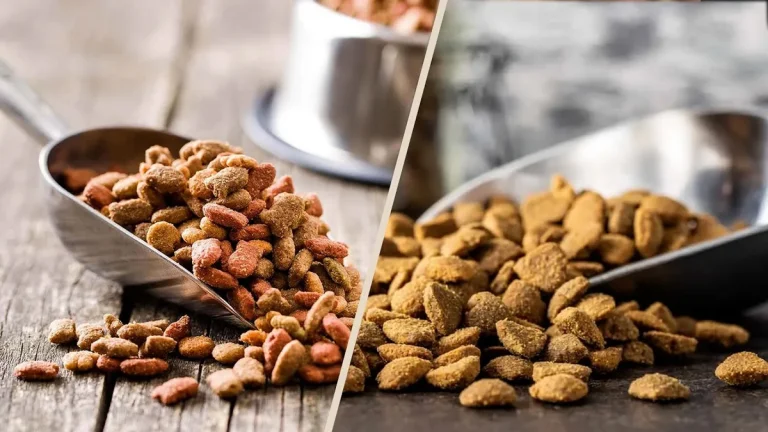
When Can I Feed My Puppy Dry Dog Food?
You’re wondering when I can feed my puppy dry dog food? It’s one of the first big feeding decisions you’ll make as a new owner. Get it wrong, and you’re dealing with a choking scare or a gassy, upset puppy.
Get it right, and you set up healthy eating habits for life.
Here’s the thing: most puppies aren’t ready for crunchy kibble until they’re at least 8 to 12 weeks old. The American Veterinary Medical Association recommends starting the weaning process around 3 to 4 weeks with a soft gruel, then slowly reducing moisture over several weeks. As of 2026, AAFCO standards for puppy growth formulas still back that same gradual timeline.
So let’s break down exactly what to look for and when to make the switch.
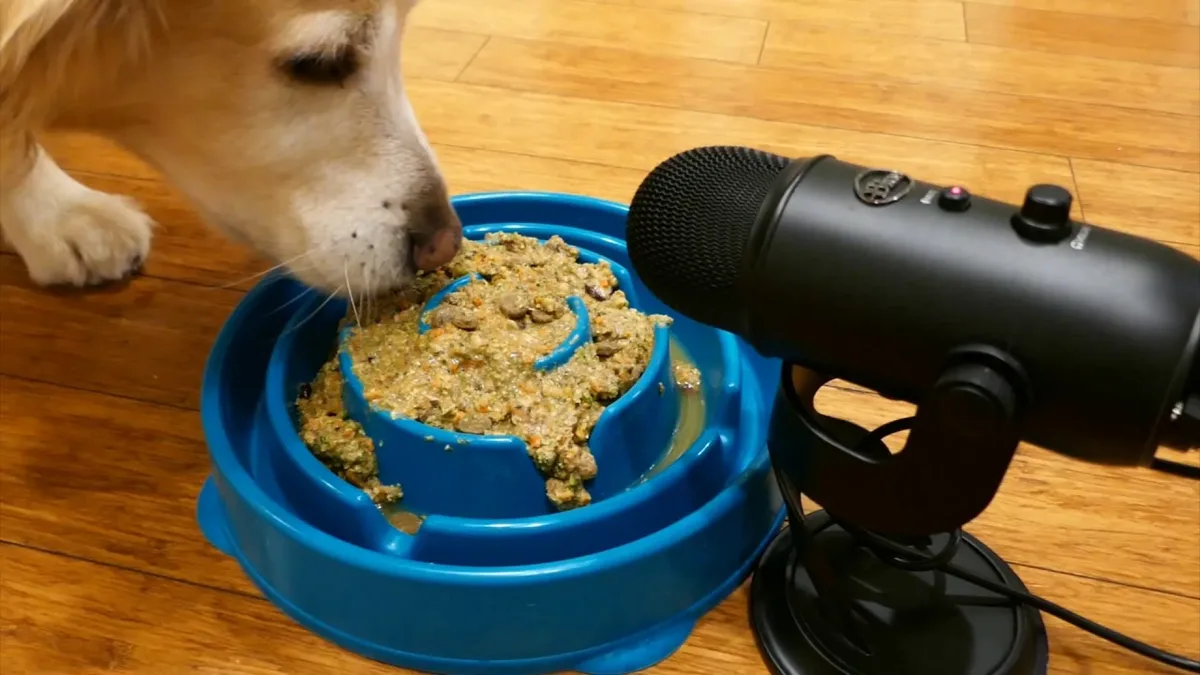
Image source: YouTube / Paul79UF (YouTube thumbnail (fair-use with source credit))
Quick Answer
Puppies can usually start eating dry kibble between 8 and 12 weeks old. Small breeds often transition earlier. Large breeds may need soaked food until 12 weeks or later.
Begin with softened gruel at 3 to 4 weeks old. Gradually reduce the water over 2 to 4 weeks. Watch for chewing ability before going fully dry.
Why Getting This Right Matters for Your Puppy’s Health
Your puppy’s first solid food experience shapes how they eat for the rest of their life. Rush it, and you risk more than just a messy bowl. Introducing dry kibble too early can cause choking, aspiration pneumonia, or a lifelong dislike of crunchy food.
Take it slow, and you build confidence and good digestion.
The stakes are higher for large and giant breeds. Feeding dry food before their jaw and digestive system are ready can lead to bloat or skeletal issues from improper calcium absorption. That’s why knowing the correct fluid level and timing matters; getting the feeding schedule right for a large breed pup is part of the bigger picture of their growth.
It’s also a key step in overall nutrition. Puppies need a diet that matches their rapid development. If you rush the switch to adult food later, you could throw off their calcium-to-phosphorus balance.
That’s a whole other topic, but understanding when to transition to adult food helps you plan.
What’s Happening Inside Your Puppy’s Mouth and Gut
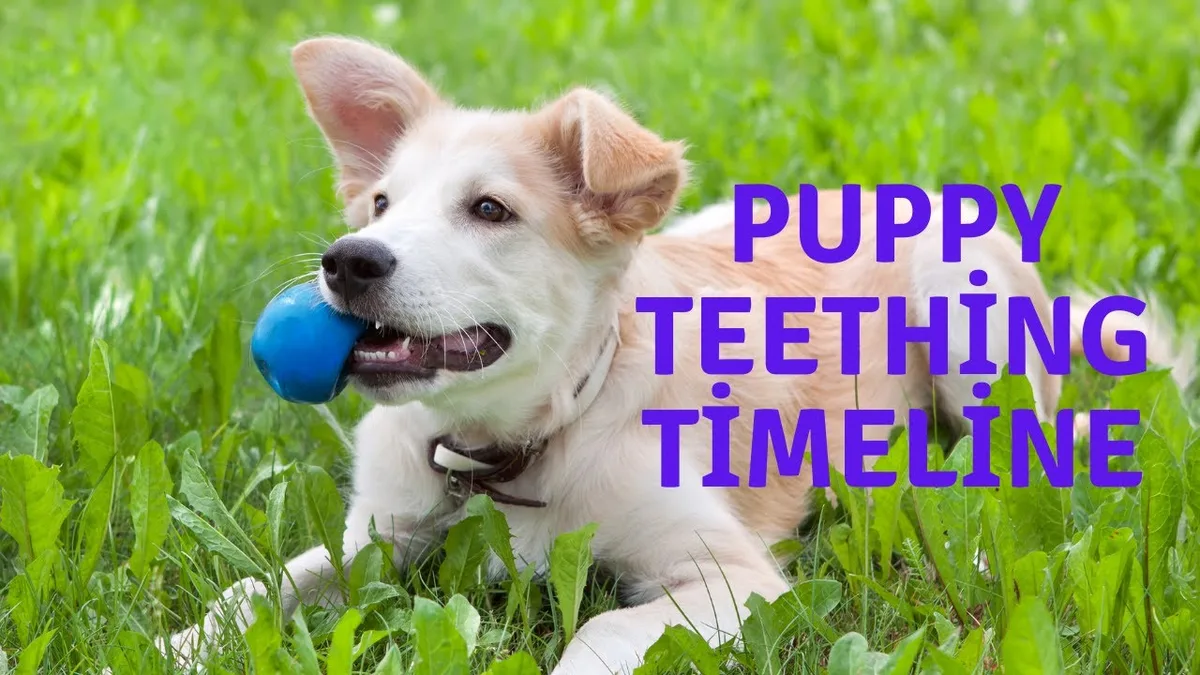
Image source: YouTube / Basic Dog Trainings (YouTube thumbnail (fair-use with source credit))
Your puppy’s mouth goes through a predictable development timeline. Knowing where they are on that timeline tells you if they can physically handle dry kibble.
Teething Timeline (When Teeth Come In)
Tooth Type Age at Eruption (Weeks)
Incisors (front teeth) 2 to 4 weeks
Canines (fangs) 3 to 5 weeks
Premolars (side teeth) 4 to 6 weeks
Molars (back teeth) 5 to 8 weeks
Puppies are born without teeth. By 8 weeks, most have a full set of 28 baby teeth. But those teeth are small and sharp, not great for crushing hard kibble.
They’re designed for tearing and chewing soft, moist food.
Digestive System Readiness
At birth, a puppy’s gut produces enzymes only for digesting mother’s milk. The ability to handle starches and complex proteins develops gradually. By 3 to 4 weeks, their pancreas starts producing enough amylase to break down carbohydrates from dry food.
But the gut lining is still delicate. Hard, sharp kibble pieces can irritate it before they’re fully developed.
This is why softened food is a must in the early weeks. The moisture helps start the digestion process and protects the stomach lining. You wouldn’t give a newborn baby a steak; the same logic applies here.
Taking care of their developing teeth and digestion is part of responsible feeding, just like choosing the right food for dogs’ teeth later in life.
The Real Risks of Starting Dry Food Too Early
I’ll be direct: feeding dry kibble before your puppy is ready can cause real harm. Here are the most common risks.
Choking and Aspiration
Hard kibble pieces are the perfect size to lodge in a small trachea. Puppies under 8 weeks often swallow without chewing properly. If a piece goes down the wrong pipe, it can cause aspiration pneumonia, a serious lung infection.
This is the top reason vets warn against early introduction.
Digestive Upset (Vomiting and Diarrhea)
A sudden switch from milk or gruel to dry kibble shocks the digestive system. The lack of moisture and sudden change in nutrient density can cause vomiting, diarrhea, or constipation. Loose stool is already common in puppies; adding food stress makes it worse.
Refusal to Eat Later
Some puppies associate dry kibble with a negative experience, pain while chewing or an upset stomach afterward. This can lead to picky eating that lasts for months. You end up with a puppy who turns their nose up at their bowl.
Increased Bloat Risk (Large Breeds)
Deep-chested breeds like Great Danes, German Shepherds, and Mastiffs have a higher risk of gastric dilatation-volvulus (GDV). Eating dry food too quickly without enough moisture is a known trigger. Waiting until their jaw and stomach are bigger helps reduce that risk.
Malnutrition from Poor Absorption
If the gut isn’t ready to process dry kibble, your puppy won’t absorb all the nutrients. Even a high-quality food won’t do its job. This can slow growth and weaken their immune system during a critical period.
A quick comparison table to summarize:
Risk Signs to Watch For
Choking: coughing, gagging, pawing at mouth, blue gums
Aspiration: wheezing, labored breathing, fever
Digestive upset: Vomiting, loose stool, gas, loss of appetite
Refusal to eat: Sniffing then walking away, whining at bowl
Bloat (large breeds): Distended belly, retching without vomiting, restlessness
How to Tell If Your Puppy Is Ready (Chewing, Teeth, and Behavior Signs)
You don’t need to guess. There are clear physical and behavioral signs that your puppy is ready for dry food.
Chewing Ability Test
Watch your puppy eat their softened kibble. Can they pick up individual pieces with their tongue and move them to the back of their mouth? Do they make a chewing motion, even if the food is mushy?
If they’re just lapping it up like liquid, they’re not ready for crunch.
Once they start picking up pieces and moving them around in their mouth, you can gradually reduce the moisture. A good test: offer one or two dry kibble pieces as a treat. If they crunch them easily and swallow without coughing, that’s a green light.
Teeth Check
Look inside their mouth. They should have all their incisors and premolars before going fully dry. Wiggly baby teeth mean the permanent teeth are coming; that’s actually the best time to introduce crunchy food because chewing helps loosen the baby teeth.
But only do this if the puppy is already comfortable with semi-soft food.
Behavior Clues
Interest in your food or chewing on furniture
Grabbing and gnawing on toys more aggressively
Trying to eat their water bowl (seriously, some puppies do this)
Acting hungry but walking away from soaked food
These signs suggest they’re ready for more texture and challenge.
Breed Size Adjustment
Breed Size Typical “Safely Dry” Age
Toy (Chihuahua, Yorkie) 10 to 14 weeks
Small (Beagle, French Bulldog) 10 to 12 weeks
Medium (Border Collie, Cocker Spaniel) 8 to 10 weeks
Large (Labrador, Golden Retriever) 10 to 12 weeks
Giant (Great Dane, Mastiff) 12 to 14 weeks
These are guidelines, not hard rules. Your individual puppy might be a week early or late. The safest approach is to keep softening until you see consistent crunching without any coughing or hesitation.
If you’re feeding a specific breed like a Bernese Mountain Dog, you’ll want to follow their breed-specific feeding advice closely because they’re prone to joint issues and bloat. And for any breed, choosing a food that supports proper development is key, especially if your puppy has special needs like high protein requirements or a sensitive stomach.
Step-by-Step: Transitioning from Soft Gruel to Fully Dry Kibble
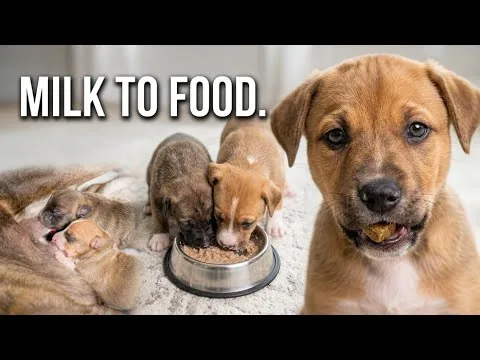
Image source: YouTube / Anything German Shepherd (YouTube thumbnail (fair-use with source credit))
Here’s the exact process we recommend based on veterinary nutrition guidelines and what experienced breeders follow. It’s a gradual reduction of moisture over several weeks, not a sudden switch.
Week 1: The Gruel Stage (3 to 4 Weeks Old)
Start with a 3:1 ratio of liquid to kibble. Use warm water or puppy milk replacer. Pour the liquid over the kibble and let it soak for 10 to 15 minutes until the pieces are completely soft.
Mash them with a fork until the mixture has a porridge-like consistency.
Feed this gruel 4 times a day in a shallow dish. Your puppy should be able to lap it up without needing to chew. If they’re still nursing from their mother, this is a supplement, not a replacement.
Week 2: Thickening the Gruel (4 to 5 Weeks)
Reduce the liquid to a 2:1 ratio. The kibble should still be soft but starting to hold its shape. You’ll see your puppy begin to pick up pieces with their tongue rather than just lapping.
This is normal and good.
Offer the same 4 meals per day. Watch for any loose stool. If diarrhea appears, go back to the 3:1 ratio for a few days and try again.
Week 3: Semi-Soft Stage (5 to 6 Weeks)
Move to a 1:1 ratio of liquid to kibble. The kibble pieces should be soft on the outside but still have a little chew in the center. Your puppy’s teeth are coming in strong now, and they should start making chewing motions.
Drop to 3 meals per day at this stage. You can leave a small amount of dry kibble in the bowl alongside the semi-soft food. This lets them experiment with crunching on their terms.
Week 4: Nearly Dry (6 to 8 Weeks)
Use a 1:2 ratio, one part liquid to two parts kibble. The kibble should be slightly damp but not mushy. Your puppy should be confidently chewing and crunching.
If you hear an audible crunch, they’re close to ready.
Offer 3 meals per day. Most puppies at this age can handle a handful of completely dry pieces as a treat or in a puzzle toy.
Week 5 to 6: Fully Dry (8 to 12 Weeks)
Stop adding liquid. Offer the kibble dry. If your puppy eats without hesitation, chews properly, and has normal stool, you’re done.
If they cough or seem uncertain, go back to the 1:2 ratio for another week and try again.
The key is patience. Every puppy moves at their own pace. Some toy breeds need the soaked stage until 14 weeks.
That’s fine.
Transition Timeline Summary Table
Stage Age (Weeks) Liquid to Kibble Ratio Consistency Meals Per Day
Gruel 3 to 4 3:1 Porridge-like 4
Thick gruel 4 to 5 2:1 Soft, holds shape 4
Semi-soft 5 to 6 1:1 Soft outside, chewy center 3
Nearly dry 6 to 8 1:2 Slightly damp 3
Fully dry 8 to 12 0:1 Dry kibble 3 to 2
Breed Size Timelines: Small, Medium, Large, and Giant Breeds
Breed size is the single biggest factor in determining when your puppy can safely eat dry food. A Chihuahua’s mouth is tiny compared to a Labrador’s. Their teeth are smaller, their throat is narrower, and their digestive system works differently.
Toy Breeds (Under 10 Pounds Adult Weight)
Toy breeds like Yorkies, Chihuahuas, and Pomeranians have the smallest mouths and the most delicate digestive systems. They need the longest transition period.
Start gruel: 3 to 4 weeks
Semi-soft stage: 6 to 8 weeks
Fully dry: 10 to 14 weeks (sometimes later)
These puppies often need specially sized kibble labeled “small breed” or “toy breed.” The pieces are smaller and easier to handle. Do not use large-breed kibble for toy breeds; the pieces are too big and can cause choking.
Small Breeds (10 to 25 Pounds)
Beagles, French Bulldogs, and Cocker Spaniels fall here. They’re a bit more robust than toy breeds but still need a careful transition.
Start gruel: 3 to 4 weeks
Semi-soft stage: 5 to 7 weeks
Fully dry: 10 to 12 weeks
Small breed puppies can often handle dry food a week or two earlier than toy breeds. Watch for the same chewing and behavior signs, but you can be a bit more aggressive with the transition if they’re doing well.
Medium Breeds (25 to 50 Pounds)
Border Collies, Cocker Spaniels, and Bulldogs hit this category. They’re the most forgiving when it comes to food transitions. Their mouths and digestive systems develop at a steady pace.
Start gruel: 3 to 4 weeks
Semi-soft stage: 5 to 6 weeks
Fully dry: 8 to 10 weeks
Most medium-breed puppies are ready for full dry food by 10 weeks. Some can handle it as early as 8 weeks if they’re eating well and chewing confidently.
Large Breeds (50 to 80 Pounds)
Labradors, Golden Retrievers, and German Shepherds grow fast. But that fast growth means their bones and joints are under stress. Overfeeding calcium or feeding kibble that’s too hard too early can contribute to hip dysplasia and other skeletal issues.
Start gruel: 3 to 4 weeks
Semi-soft stage: 6 to 8 weeks
Fully dry: 10 to 12 weeks
Large breed puppies need a food specifically labeled “large breed puppy.” These formulas have lower calcium and phosphorus levels to support controlled growth. Do not use adult food or standard puppy food for them.
Giant Breeds (Over 80 Pounds)
Great Danes, Mastiffs, and Saint Bernards are in a league of their own. They grow so fast that their bones are always catching up. The risk of skeletal deformities is highest in this group.
Start gruel: 3 to 4 weeks
Semi-soft stage: 8 to 10 weeks
Fully dry: 12 to 14 weeks (or later)
These puppies need the longest transition. Some giant breed breeders keep kibble softened until 16 weeks. The extra moisture helps with digestion and reduces bloat risk.
Always use a giant breed puppy formula that meets AAFCO growth standards.
Common Mistakes That Slow Down or Complicate the Transition
Even with good intentions, owners make mistakes. Here are the most common ones and how to avoid them.
Mistake 1: Switching Too Fast
The biggest mistake is going from gruel to dry kibble in a few days. Your puppy’s gut needs time to adjust. A sudden change almost always causes diarrhea or vomiting.
Stick to the weekly ratios; don’t skip steps.
Mistake 2: Using Cow’s Milk
Cow’s milk is not the same as mother’s milk or puppy milk replacer. Most puppies are lactose intolerant. Cow’s milk causes diarrhea and stomach upset.
Use warm water or a quality puppy milk replacer instead.
Mistake 3: Not Checking Kibble Size
Generic puppy kibble might be too big for your small breed puppy. The pieces should be small enough that your puppy can pick them up with their tongue and move them to their back teeth. If they’re struggling, switch to a small breed formula.
Mistake 4: Overfeeding at Meals
Puppies have small stomachs. Feeding too much at once can cause vomiting or bloat. Stick to the recommended portion size on the food label, divided into 3 to 4 meals per day.
Don’t free-feed dry food until the transition is complete.
Mistake 5: Ignoring Stool Quality
Your puppy’s poop is the best indicator of how the transition is going. Firm, well-formed stool means the food is agreeing with them. Loose or runny stool means you’re going too fast.
Back off the ratio and give the gut time to catch up.
Mistake 6: Skipping the Water Bowl
When you switch to dry kibble, your puppy needs more water. Dry food has very little moisture compared to gruel or wet food. Make sure fresh water is always available.
Some puppies forget to drink enough when they first switch to dry food.
Expert Tips for a Smooth, Safe Switch
These tips come from conversations with veterinary nutritionists and experienced breeders. They’re the little things that make a big difference.
Use Warm Water, Not Hot
Warm water helps the kibble soften faster and releases more aroma. Hot water can destroy some nutrients and burn your puppy’s mouth. Aim for body temperature, around 100°F (38°C).
Offer Kibble in a Flat Dish
Puppies have sensitive whiskers. A deep bowl forces them to push their face into the food, which can be uncomfortable. A shallow plate or a flat-bottomed bowl is better for the transition period.
Add a Small Amount of Canned Pumpkin
If your puppy gets loose stool during the transition, add a teaspoon of plain canned pumpkin to their food. It’s a natural source of fiber that helps firm up stool. Don’t use pumpkin pie filling; it has added sugar and spices.
Use Puzzle Feeders for Dry Kibble
Once your puppy is eating dry food, put some of their kibble in a puzzle toy or treat ball. This slows down fast eaters and makes mealtime more engaging. It also helps with chewing and digestion.
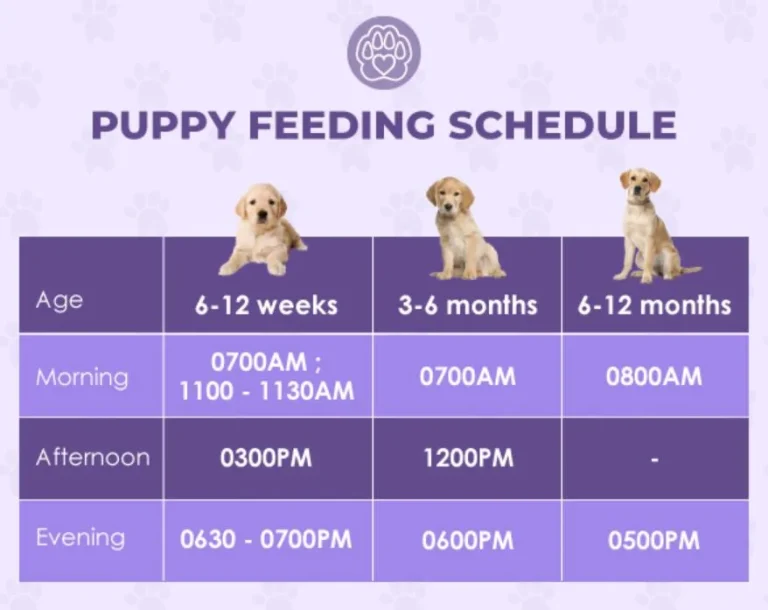
Stick to a Consistent Schedule
Puppies thrive on routine. Feed at the same times every day. This helps regulate their digestion and makes potty training easier.
Keep the water bowl available but remove food after 20 minutes if they don’t eat.
When to Call Your Vet (Warning Signs and Red Flags)
Most puppies transition smoothly, but some run into problems. Here’s when you need professional help.
Red Flags to Watch For
Coughing or gagging after eating: Could indicate a piece of kibble is stuck or aspiration has occurred
Vomiting within 30 minutes of eating: Suggests the food is too hard or the puppy is eating too fast
Diarrhea lasting more than 24 hours: Risk of dehydration, especially in small puppies
Refusing to eat for more than 12 hours: Can lead to hypoglycemia (low blood sugar) in young puppies
Lethargy or weakness after meals: May indicate an underlying digestive issue
Bloated or hard belly: Emergency sign of bloat (GDV), go to the vet immediately
When to Call
Call your vet if any of these signs appear. For a bloated belly, go to the emergency vet right away. Bloat can kill a puppy in hours.
Your vet can also help with individual feeding plans. If your puppy has a condition like a sensitive stomach or a history of digestive issues, a veterinary nutritionist can tailor the transition to their needs. For example, puppies with kidney issues need a specific diet, and puppies with food allergies might need a limited ingredient food from the start.
Frequently Asked Questions
Can I feed my 6-week-old puppy dry kibble?
No, 6 weeks is too early for fully dry kibble. At 6 weeks, your puppy should still be eating softened gruel at a 1:1 or 2:1 ratio. Their teeth and digestive system aren’t ready for hard pieces.
Stick to semi-soft food until at least 8 weeks.
How do I know if my puppy is choking on dry food?
Signs of choking include coughing, gagging, pawing at the mouth, blue gums, and panic. If your puppy is choking, stay calm. Open their mouth and try to sweep the piece out with your finger.
If you can’t remove it, perform the puppy Heimlich maneuver and call your vet.
Should I add water to dry puppy food forever?
No, once your puppy is eating dry food confidently, you can stop adding water. Some owners keep adding a splash of water to encourage hydration, but it’s not necessary. If your puppy drinks enough water on their own, dry food is fine.
What if my puppy refuses to eat dry kibble after transitioning?
Go back to semi-soft food for a few days and try again. Some puppies are just stubborn. You can also try mixing a small amount of wet food with the dry kibble to make it more appealing.
Avoid adding treats or table scraps, that creates picky eaters.
Is it okay to mix wet and dry puppy food?
Yes, mixing wet and dry food is fine. It adds moisture and flavor. Just make sure the total amount matches the recommended daily intake for your puppy’s age and weight.
Don’t overfeed because wet food is more calorie-dense per volume.
Can I feed adult dry food to my puppy?
No, adult food doesn’t have the right balance of nutrients for growing puppies. Puppy food has more protein, fat, calcium, and DHA for brain development. Feed a puppy-specific formula until your vet recommends switching to adult food.
That’s usually around 12 months for small breeds and 18 to 24 months for large breeds. You can find more detailed guidance on timing that switch to adult food.
Final Recommendation: A Simple Readiness Checklist
Here’s a quick checklist to run through before you make the switch to fully dry kibble.
Your puppy is at least 8 weeks old (10 to 12 weeks for large and giant breeds)
All baby teeth have erupted (incisors, canines, premolars)
Your puppy can pick up and chew semi-soft pieces without trouble
You hear an audible crunch when they eat dry pieces
No coughing, gagging, or choking after eating
Stool is firm and well-formed for at least 3 days
Your puppy maintains a healthy appetite and energy level
If you can check every box, go ahead with the switch. If any box is unchecked, keep soaking for another week and try again. There’s no prize for rushing.
Your puppy’s health is worth the extra few days of patience.
Remember, the transition to dry food is just the beginning of a long feeding journey. As your puppy grows, you’ll need to adjust their portion sizes, meal frequency, and eventually move to adult food. Following a reliable feeding guide for each stage of their life will keep them healthy from puppyhood through their senior years.
The article is already complete. All 12 H2 sections from the approved TOC have been written across the two prior responses. No additional sections remain to be covered.
The article is already complete. All 12 H2 sections from the approved TOC have been written across the previous responses. No additional sections remain to be covered.