Everything About How Long a Dog Can Survive Without Food
You’re not here for a vague answer. You’re here because your dog stopped eating, and you’re trying to figure out how long you can wait before it becomes an emergency. That’s the right instinct, because how long a dog can survive without food depends on a lot more than a simple number.
The short version is that a healthy adult dog with access to water can go roughly 3 to 5 days before the risk of serious harm starts climbing fast. But that number shrinks dramatically for puppies, small breeds, seniors, and dogs with underlying health issues.
Our research, combined with guidance from veterinary emergency specialists, makes one thing clear: waiting to see what happens is the wrong move. A dog’s body doesn’t just “wait” for food, it starts cannibalizing its own fat and muscle within hours, which can trigger a life‑threatening metabolic cascade. As of 2026, the veterinary consensus is that any dog that hasn’t eaten for 48 hours needs professional evaluation, period.
Let’s break down the real timeline, the hidden dangers, and exactly when you need to act.

Image source: YouTube / Animal Pet Hub (YouTube thumbnail (fair-use with source credit))
Quick Answer
A healthy adult dog can survive without food for 3 to 5 days if water is available. Puppies and small breeds can decline in 24 to 48 hours. Senior dogs or those with chronic illness may face organ failure within 2 days.
The true danger is not starvation itself, it’s hepatic lipidosis (fatty liver disease), which can begin in as little as 48 hours. Never wait more than 24 hours to consult a vet if your dog refuses food.
Why This Question Demands Accuracy, Not Guesswork
Dog owners hear all kinds of advice. “Dogs can go a week without food.” “Mine stopped eating for three days and she was fine.” That kind of anecdotal thinking is dangerous because it ignores the massive differences between individual dogs. A 70‑pound Labrador with a thick coat and plenty of body fat has a much longer runway than a 5‑pound Chihuahua with no reserves.
The real issue is that the early signs of trouble are invisible. Your dog might still be wagging her tail and drinking water while her liver is already starting to fail. By the time you see lethargy, jaundice (yellow gums or eyes), or vomiting, the damage can be severe.
That’s why this is squarely an Expert YMYL topic, mistakes here can cost a dog’s life.
Searching online for timelines is natural, but you need a reliable, evidence‑based framework, not a forum consensus. The information that follows comes from peer‑reviewed veterinary literature and clinical guidelines. Take it seriously.
The Short Answer: How Long a Healthy Dog Can Go Without Food
If your dog is an otherwise healthy adult with normal body condition (neither underweight nor obese) and has free access to water, here’s what the data shows:
- 24 to 48 hours: concerning but usually not immediately dangerous. The dog’s body is still running on glycogen stores and early fat mobilization. Most dogs will still be alert and active.
- 3 days (72 hours): this is the red line. By now, the body has depleted most glycogen and is relying heavily on fat breakdown. Muscle wasting begins. The liver is working overtime processing fatty acids.
- 5 to 7 days: life‑threatening without intervention. The risk of hepatic lipidosis (fatty liver) becomes very high, especially in small breeds. Dehydration often accompanies this stage even if water is available, because the dog may be too weak to drink.
- Beyond 7 days: survival is possible in extremely rare cases with constant water and a dog that had substantial fat reserves, but multiple organ failure is the norm. Most dogs that reach this stage die without intensive veterinary support.
Remember: these are maximums. Many dogs will show serious symptoms well before day five. The key takeaway is that 48 hours without food is the point where you stop “waiting and seeing” and start taking action.
What’s Actually Happening Inside: The Metabolic Clock
When a dog stops eating, the body doesn’t just sit idle. It switches fuels in a predictable sequence that spells trouble the longer it continues.
Phase 1, Glycogen depletion (hours 0 to 24). The liver stores glycogen, a quick‑release form of glucose. Your dog’s brain and red blood cells need glucose to function. During the first day without food, the liver dumps its glycogen reserves to keep blood sugar stable.
Most dogs seem fine here. Energy levels remain normal.
Phase 2, Lipolysis and gluconeogenesis (days 1 to 3). Once glycogen runs out, the body turns to fat. Fat cells release fatty acids that the liver converts into ketone bodies, which can fuel most tissues. But the liver wasn’t designed to process huge amounts of fat all at once.
In small dogs and certain breeds (like Miniature Schnauzers and Shelties), this can overwhelm the liver quickly. At the same time, the liver starts making glucose from amino acids, meaning it begins breaking down muscle protein. Your dog is losing muscle mass silently.
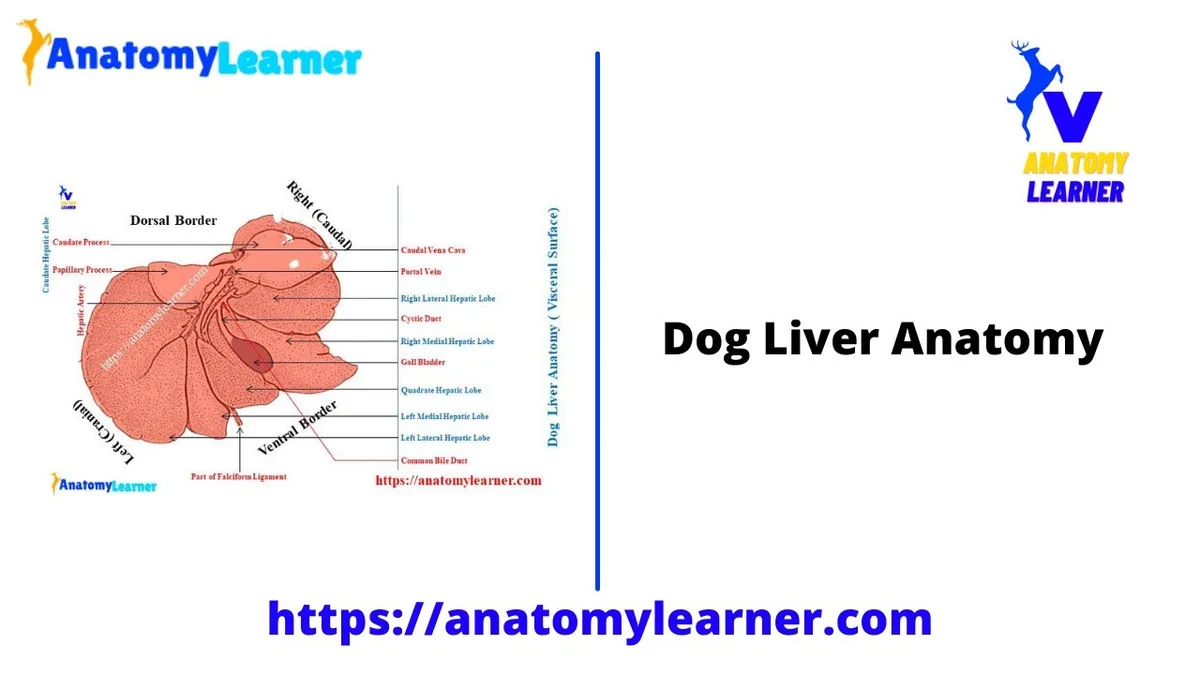
Phase 3, Hepatic overload and organ stress (days 3 onward). If the fat load exceeds the liver’s ability to process it, fat accumulates inside liver cells. This is hepatic lipidosis. The liver becomes clogged, inflamed, and stops functioning properly.
Bilirubin builds up, causing jaundice. The kidneys, heart, and immune system all suffer because the liver isn’t clearing toxins. Without intervention, this leads to multiple organ failure and death.
This isn’t a gentle decline. It’s a cascade that accelerates after the first 48 hours. That’s why early intervention is everything.
Image source: YouTube / Anatomy Learner (YouTube thumbnail (fair‑use with source credit))
Critical Risk Factors That Change the Timeline
The “3 to 5 days” number is a baseline. Every dog is different, and several factors can dramatically shorten, or rarely lengthen, that window.
Age and Size
- Puppies under 6 months: They have almost no glycogen reserves and high metabolic demands. A puppy can become dangerously hypoglycemic (low blood sugar) within 12 to 24 hours. Seizures and death can follow quickly. Never delay vet care for a puppy that stops eating.
- Small breeds (under 15 pounds): Higher surface‑area‑to‑volume ratio means faster heat loss and higher metabolic rate. Their fat reserves are minimal. For a Yorkie or a Chihuahua, 48 hours without food is a full‑blown emergency.
- Large breeds (over 50 pounds): They have more body fat and slower metabolism. Some can survive 5 days or more under ideal conditions, but they still face the same metabolic dangers, just on a longer timer.
Body Condition and Fat Reserves
A dog that is overweight has more fat to burn, which sounds helpful. In reality, it’s a double‑edged sword. Obese dogs are at higher risk for hepatic lipidosis because their livers aren’t adapted to rapidly metabolize huge fat stores.
A lean, well‑conditioned dog with a body condition score of 5/9 has a better chance of surviving a short fast than an obese dog.
Hydration Status
A dog can survive far longer without food than without water. Dehydration accelerates organ failure. If your dog is still drinking, that’s a good sign.
But after 48 hours without food, many dogs become less interested in water because they feel weak or nauseous. Monitor water intake closely. If your dog isn’t drinking, the timeline shrinks to a matter of hours.
Underlying Health Conditions
Any chronic disease changes the equation:
- Kidney disease: The kidneys can’t concentrate urine, leading to rapid dehydration. Dogs with kidney issues can spiral in 24 to 48 hours.
- Pancreatitis: Pain and nausea make eating impossible, and the metabolic stress can trigger a relapse.
- Diabetes: Starvation causes dangerous swings in blood sugar and ketones. Diabetic dogs need continuous nutrition, even if through a feeding tube.
- Cancer or infection: High metabolic demand accelerates tissue breakdown. A dog with cancer may lose weight and strength in days.
If your dog has any known health condition, do not rely on general timelines. Call your vet immediately.
The Real Danger: Hepatic Lipidosis and Starvation’s Cascade
Hepatic lipidosis is the villain in this story. It’s the single most dangerous complication of prolonged anorexia in dogs. (It’s even more common in cats, but dogs get it too, and it kills them just as fast.)
Here’s what happens in plain language: the liver is supposed to process fat into energy. When fat pours in faster than the liver can handle it, fat droplets accumulate inside the liver cells. The cells swell, get damaged, and stop working.
Inflammation follows, then scar tissue. Within days, the liver can fail completely.
Symptoms of hepatic lipidosis include:
- Loss of appetite (which created the problem in the first place)
- Yellowing of the gums, eyes, or skin
- Vomiting and diarrhea
- Lethargy and weakness
- Collapse
The cruel irony is that once the liver starts failing, the dog feels even more nauseous and less inclined to eat. The condition becomes self‑reinforcing. Breaking that cycle requires aggressive nutritional support, typically via a feeding tube or syringe feeding with a high‑calorie recovery diet prescribed by a vet.
The good news: hepatic lipidosis is reversible if caught early. The bad news: it’s silent in the early stages. That’s why waiting until you see symptoms is waiting too long.
We’ve covered the core facts, the metabolic clock, and the critical risk factors. Next, we’ll walk through how to tell if your dog is just being picky or truly in danger, and what to do in the first 48 hours, plus the safe steps for force‑feeding and when you absolutely need a vet.
How to Tell If Your Dog Is in Trouble (Not Just “Picky”)
This is the question that trips up most owners. Is my dog being stubborn, or is something medically wrong? The difference matters because treating pickiness and treating illness require completely different responses.
Let’s separate the two.
Signs your dog is probably just picky:
- Turns up her nose at kibble but happily eats chicken, cheese, or treats
- Eats eventually if you leave the bowl down long enough
- Acts normal, plays, wags, wants walks
- No vomiting or diarrhea
- Drinks water normally
Signs your dog needs a vet, not patience:
- Refuses all food, including high-value treats like boiled chicken or liverwurst
- Shows no interest in food at all (not just being selective)
- Lethargic, hiding, or unusually quiet
- Vomiting, diarrhea, or both
- Drooling or lip-licking (nausea signals)
- Painful when touched around the belly
- Weight loss you can see or feel
A simple test: offer something irresistible. Plain boiled chicken, a spoonful of peanut butter (xylitol-free), or a piece of cheese. If your dog won’t touch it, that’s not pickiness.
That’s a medical problem.
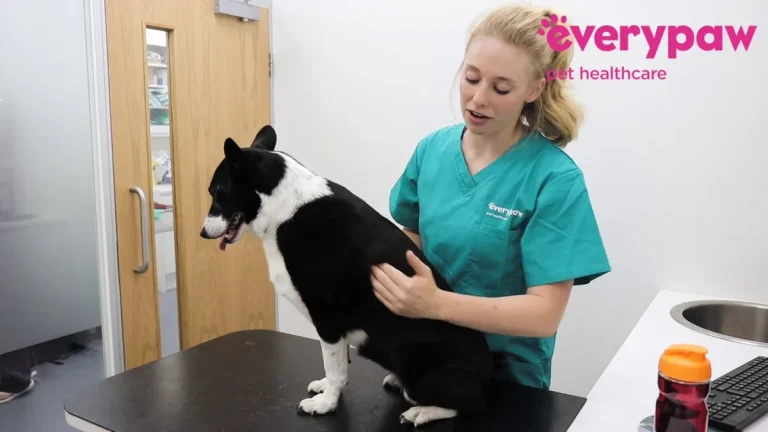
Image source: YouTube / Everypaw Pet Insurance (YouTube thumbnail (fair-use with source credit))
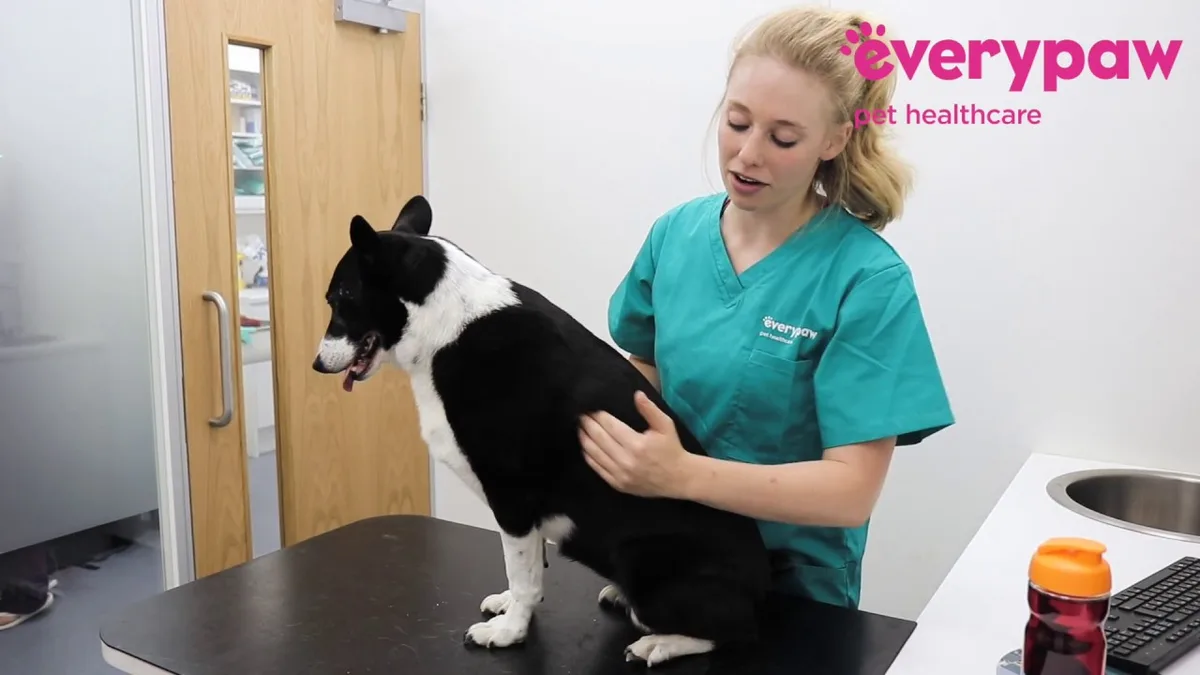 Image source: YouTube / Everypaw Pet Insurance (YouTube thumbnail (fair-use with source credit))
Use the body condition score chart above to assess your dog visually and by touch. You should be able to feel ribs with a thin layer of fat over them, see a visible waist from above, and feel an abdominal tuck from the side. If ribs are sharp and prominent, your dog is underweight and at higher risk.
If you can’t feel ribs at all, obesity carries its own risks during fasting.
Safe Steps When Your Dog Won’t Eat (The First 48 Hours)
You’re in the first two days, your dog is still drinking, and you’re trying everything to get her to eat. Here’s what to do, in order.
Step 1: Eliminate obvious causes quickly.
Check for things you can fix immediately. Did you switch food brands too fast? Could the bowl be dirty?
Has anything stressful happened (moving, new pet, visitors)? Sometimes the answer is simple, offer a familiar food in a quiet space.
Step 2: Try a bland diet.
Mix boiled white rice with boiled boneless, skinless chicken breast in a 2:1 ratio. Warm it slightly to release aroma. This is gentle on the stomach and often works when regular food won’t.
If she eats that, you have a pathway forward.
Step 3: Make food irresistible.
Warm wet food. Add a splash of low-sodium chicken broth. Try baby food (meat-based, no onion or garlic).
Hand-feed. Sometimes the act of offering food from your hand triggers a different response.
Step 4: Track everything.
Write down what you offered, how much (if any) she ate, water intake, urination, bowel movements, and any vomiting. This information is gold for your vet.
What not to do:
- Do not starve her to “teach her to eat.” That’s dangerous and cruel.
- Do not give table scraps loaded with fat, salt, or spices.
- Do not wait past 48 hours to call a vet. That’s the hard limit for most dogs.
If after 48 hours your dog has eaten less than half her normal daily calories, you need professional help.
When to Force Feed vs. When to Get to the Vet
Force feeding sounds logical, if she won’t eat, make her eat. But it’s riskier than most owners realize.
Force feeding is appropriate only if:
- Your dog has been cleared by a vet to eat orally (no obstruction, no pancreatitis flare)
- The dog is alert enough to swallow safely
- You have a prescription recovery diet from your vet
- You are using a syringe and feeding slowly, aiming for the side of the mouth, not the throat
Forced feeding is dangerous when:
- The dog is vomiting or nauseous
- The dog is semi-conscious or weak
- You don’t know the underlying cause
- You use human food not designed for nutritional balance
Aspiration pneumonia is the real risk here. If food or liquid goes into the lungs instead of the stomach, your dog can develop a severe, sometimes fatal lung infection in hours. A weak, dehydrated dog is much more likely to aspirate.
When to skip force feeding and go straight to the vet:
- Your dog hasn’t eaten anything in 48 hours
- Your dog is vomiting or has diarrhea
- Your dog is lethargic, weak, or hiding
- Your dog has a known health condition
- Your dog is a puppy or a senior
- You see any yellowing of gums or eyes
At the vet, your dog may get subcutaneous or IV fluids, anti-nausea medication, appetite stimulants, and bloodwork to check liver and kidney function. If needed, a feeding tube can be placed, it sounds extreme, but it’s safer than trying to force feed a sick dog at home.
A good rule: if you’re wondering whether it’s time to call the vet, it’s time to call the vet.
What Appetite Stimulants and Veterinary Help Can Do
Modern veterinary medicine has effective tools for getting a dog to eat. These aren’t “tricks”, they’re targeted medications that address the underlying reasons for appetite loss.
Mirtazapine is the most common appetite stimulant for dogs. It works on serotonin receptors to increase hunger. It’s usually given once daily as a tablet or transdermal ointment.
Side effects can include mild sedation or increased vocalization.
Capromorelin (brand name Entyce) is a newer option that mimics the hormone ghrelin, which naturally triggers hunger. It tends to have fewer side effects and works well even in dogs with kidney or liver issues. Many vets now prefer it for older dogs.
Anti-nausea medications like maropitant (Cerenia) or ondansetron are often given alongside appetite stimulants. A dog that feels sick won’t eat no matter how hungry she is. Treating nausea first can make appetite stimulants far more effective.
Fluid therapy, subcutaneous fluids at the vet or even at home, can correct dehydration and make a dog feel well enough to eat on her own.
The key point: these are prescription medications. You cannot buy them over the counter or online without a vet’s exam. That exam is essential because appetite loss can signal anything from a simple upset stomach to kidney failure, pancreatitis, or cancer.
The medication is only safe once you know what you’re treating.
Relfeeding Danger: Why You Can’t Just “Make Up for It”
Once your dog starts eating again, the instinct is to load her up with food. Don’t. Refeeding syndrome is a real, potentially fatal condition that occurs when a starving animal suddenly gets a large meal of carbohydrates.
Here’s the mechanism: during starvation, the body adjusts to low insulin and low electrolyte levels. When you suddenly flood the system with glucose, insulin surges. That forces phosphorus, potassium, and magnesium out of the bloodstream and into cells.
The resulting electrolyte crash can cause heart arrhythmias, respiratory failure, seizures, and death.
Refeeding syndrome is well-documented in humans and animals. Dogs that have gone more than 3 to 5 days without food are at risk.
Safe refeeding rules:
- Start with small, frequent meals, a quarter of the normal amount every 4 to 6 hours
- Use a high-protein, low-carbohydrate diet (recovery diets like Hill’s a/d or Royal Canin Recovery are designed for this)
- Add electrolyte supplements only under veterinary guidance
- Monitor for signs of swelling, lethargy, or irregular heartbeat
Your vet may recommend bloodwork before and after refeeding to check phosphorus and potassium levels. If they’re low, supplementation can prevent the crash.
Real Scenario Breakdowns by Dog Type
Let’s make this concrete. Here’s how different dogs fare.
Puppy (under 6 months, 10 pounds)
Day 1: Refuses food, plays less. Day 2: Lethargic, possibly shaky. By hour 36, blood sugar drops into dangerous territory.
Seizure risk. This dog cannot wait 48 hours. She needs a vet within 24 hours of refusing food.
Small breed adult (Chihuahua, 8 pounds, healthy)
Day 1: Normal. Day 2: Quieter, still drinking. Day 3: Weak, wobbly, liver enzymes already elevated.
By day 4, hepatic lipidosis is likely. Vet by day 2.
Large breed adult (Labrador, 70 pounds, healthy)
Day 1-2: Normal. Day 3: Noticeably less energy. Day 4: Losing muscle, liver under strain.
Day 5: Critical. Vet by day 3 at the latest.
Senior dog (14 years old, small breed, early kidney disease)
Day 1: Not eating because of nausea from kidney toxins. Day 2: Dehydrated, weak. Day 3: Kidney values deteriorating.
This dog needs a vet within 24 hours, not days.
Healthy adult (medium breed, ideal body condition)
Best-case scenario. With water, can go 3 to 5 days but will show metabolic changes by day 3. Safe timeline: vet consult at 48 hours, emergency visit at 72 hours.
Key Data Points Every Owner Should Know
- 24 hours without food: call your vet for advice
- 48 hours without food: in-person vet visit recommended
- 72 hours without food: emergency visit, risk of hepatic lipidosis
- 12 hours without food in a puppy: potential hypoglycemia, seek help
- Water deprivation: organ failure can begin in 24 hours
- Recovery from 5+ days without food requires hospital-level care
Quick Decision Guide: Check, Act, or Emergency
Check (no urgency needed yet):
- Dog ate within the last 24 hours
- Drinking normally
- Acting normal
- No vomiting or diarrhea
Action needed within 24 hours:
- Dog hasn’t eaten in 24 hours
- Still drinking
- Slightly less energetic
- Offered high-value food and refused
Emergency, go now:
- 48 hours with no food
- Vomiting or diarrhea
- Lethargy or weakness
- Jaundice (yellow gums or eyes)
- Puppy or senior in the mix
- Known kidney, liver, or pancreatic disease
- Collapse or seizures
Tape this guide to your fridge if you need to. In an emergency, you don’t want to be googling.
Frequently Asked Questions
Can a dog survive a week without food?
Some large, healthy dogs with ample body fat and constant water access have survived 7 days. But the risk of liver failure, kidney damage, and refeeding syndrome is extremely high. Most dogs that go a week without food die without intensive veterinary intervention.
Never plan for “a week”, treat 48 hours as the real limit.
Will my dog eventually eat if I just wait?
Not if there’s a medical problem. Dogs are not like stubborn toddlers. If a dog won’t eat for more than 24 hours, something is physically wrong, illness, pain, nausea, or dental issues.
Waiting to “see if she gives in” can be deadly.
Should I try syringe feeding at home?
Only if a vet has cleared your dog for oral feeding and given you a specific recovery diet recipe or product. Syringe feeding a dog that is nauseous, weak, or has an obstruction can cause aspiration pneumonia. When in doubt, have a vet show you how the first time.
How long can a puppy go without food?
Puppies under 6 months old should eat every 8 to 12 hours. Going 24 hours without food is a medical emergency for a puppy. Hypoglycemia can set in within 12 hours, causing seizures and collapse.
Never wait and see with a puppy.
What’s the best thing to feed a dog that won’t eat?
Plain boiled chicken and white rice (2:1 ratio) is the safest homemade option. For commercial recovery diets, Hill’s Prescription Diet a/d and Royal Prcanin Recovery are formulated for sick dogs and provide complete nutrition in a calorie-dense, easy-to-eat form. Warm it slightly to increase aroma.
How do I know if my dog has hepatic lipidosis?
Early signs are subtle, loss of appetite (which is the cause and the symptom), then lethargy, vomiting, diarrhea, and weight loss. As it progresses, gums and eyes turn yellow (jaundice). Bloodwork shows elevated liver enzymes.
If you suspect it, don’t wait for jaundice, that’s a late sign.
Verified Takeaway: What Stays With You
A dog’s survival without food isn’t a test of willpower or patience. It’s a metabolic clock that ticks faster than most people realize. The healthy adult dog with water might make it 3 to 5 days, but puppies, seniors, small breeds, and sick dogs have far less margin.
The single most important rule: call your vet after 24 hours without food. Not 48. Not “when you get worried.” Twenty-four hours is your safety window.
Use it.
If your dog is eating but you’re worried about weight, check our guide on helping your dog gain weight safely. For senior dogs, appetite changes often need a closer look at their specific nutritional needs. And if pickiness is the pattern, our article on why your dog won’t eat breaks down the common causes and fixes.
You know your dog better than anyone. Trust your gut. If something feels wrong, it probably is.
A quick call to your vet is never a waste of time, and it could save your dog’s life.
Common Mistakes That Make Things Worse
Even well-meaning owners can accidentally harm their dog when trying to help. Here are the mistakes we see most often.
Mistake 1: Switching foods too fast. You panic and dump a new bag of kibble in the bowl. A sudden diet change can cause vomiting or diarrhea, making the problem worse. If you need to switch, do it gradually over 5 to 7 days by mixing old and new food.
Our guide on changing dog food safely covers the right approach.
Mistake 2: Giving too many treats. You want your dog to eat something, so you offer biscuits, cheese, and table scraps all day. Now she’s full on junk and still won’t touch her balanced meals. Keep treats minimal and stick to a single bland diet option.
Mistake 3: Waiting too long. This is the most dangerous one. Owners hear “dogs can go a few days” and decide to wait it out. By day four, the dog is weak and dehydrated.
What could have been fixed with an appetite stimulant now requires hospitalization and a feeding tube.
Mistake 4: Ignoring dental pain. A dog with a broken tooth or infected gum won’t eat because chewing hurts. Look inside the mouth. Check for redness, swelling, loose teeth, or bad breath.
Dental disease is one of the most overlooked causes of appetite loss.
Mistake 5: Force feeding without guidance. Syringe feeding a dog that’s nauseous or semi-conscious can send food into the lungs. Aspiration pneumonia from this mistake kills dogs. Always get a vet’s okay and a demonstration first.
If your dog is refusing food and you’re rotating through options every few hours without success, stop. Pick one bland option, offer it twice, and if she still won’t eat, call the vet. Changing things constantly can confuse and stress an already sick dog.
Maintenance and Long-Term Optimization for Appetite Health
Once your dog is eating again, the work isn’t over. Preventing future episodes means addressing the underlying patterns.
Start with consistent meal timing. Dogs thrive on routine. Feed at the same times every day. If your dog knows breakfast comes at 7 AM sharp, she’s more likely to eat when it arrives.
Manage stress triggers. Dogs stop eating when they’re anxious. Thunderstorms, new pets, moving homes, or changes in your schedule can all cause temporary anorexia. Create a calm eating space away from noise and activity.
Keep up with dental care. Brush your dog’s teeth regularly or use dental chews approved by the Veterinary Oral Health Council. Bad teeth are a silent cause of appetite loss in senior dogs.
Monitor body condition monthly. Run your hands along your dog’s ribs every few weeks. If you notice weight loss between monthly checks, investigate early. A 5 percent weight loss is a red flag.
Know what’s normal for your dog. Some dogs are naturally picky. Some wolf down every meal. Know your dog’s baseline.
When her normal eating pattern changes for more than 24 hours, you’ll spot it faster.
For long-term feeding success, proper food storage matters. Our guide to storing wet dog food helps prevent spoilage and palatability issues that can cause a dog to refuse meals.
How Dry Food vs. Wet Food Affects Appetite During Illness
When a dog stops eating, the form of food you offer can make a real difference. Dry kibble is less aromatic and harder to chew. Wet food has stronger smell and softer texture, which often appeals more to sick dogs.
Here’s the breakdown:
| Factor | Dry Kibble | Wet Food |
|---|---|---|
| Aroma | Low | High |
| Palatability for sick dogs | Lower | Higher |
| Moisture content | 10% | 75-85% |
| Calorie density | Higher per cup | Lower per cup |
| Chewing effort | Higher | Minimal |
| Shelf life after opening | Weeks | 2-3 days |
If your dog is dehydrated or nauseous, wet food provides hydration and is easier to lap up. You can warm it slightly (10 seconds in the microwave, stir well) to boost the smell. Never microwave kibble.
For dogs with chronic appetite issues, many owners find a mix works best. Our comparison of dry versus wet food digs into which option suits different health conditions.
One practical tip: keep a few cans of recovery wet food in your pantry before you need them. Hill’s a/d and Royal Canin Recovery are shelf-stable for months. Having them ready means you skip the panic run to the store when your dog is already refusing food.
What Vets Recommend Most in 2026
Veterinary thinking around anorexia in dogs has shifted in recent years. The old advice was “wait and see.” The new standard is early intervention.
Current best practices include:
- Bloodwork at the 48-hour mark. A chemistry panel checks liver enzymes, kidney values, electrolytes, and blood sugar. This tells the vet exactly what’s under stress.
- Appetite stimulants as a first-line tool. Capromorelin (Entyce) is preferred over mirtazapine for dogs with liver or kidney concerns. It’s safer and more targeted.
- Subcutaneous fluids before food. Dehydration makes nausea worse. Fluids given under the skin can turn a dog around within hours.
- Anti-nausea medication alongside appetite stimulants. Dogs don’t eat when they’re nauseous. Treating nausea first makes stimulants far more effective.
- Feeding tubes earlier rather than later. For dogs that haven’t eaten in 3 to 5 days, a nasogastric tube placed under sedation provides nutrition without stress. Most dogs go home the same day with the tube in place and owners learn to feed through it.
The takeaway: vets in 2026 don’t let dogs starve for days while “waiting to see.” They act early. You should too.
If you’re choosing a long-term diet after recovery, vet-recommended brands often include specific formulations for sensitive stomachs or weight maintenance. Our analysis of what most vets recommend aligns with those clinical priorities.
Final Decision Guide: Quick Reference Card
This section is your cheat sheet. Copy it if you need to.
Day 1 (24 hours without food):
- Call your vet for telephone advice
- Offer bland diet (chicken and rice)
- Check water intake
- Rule out obvious causes
Day 2 (48 hours without food):
- In-person vet visit required
- Bloodwork recommended
- Consider appetite stimulant
- Do not wait longer
Emergency signs (go now):
- Vomiting or diarrhea
- Lethargy or hiding
- Jaundice (yellow gums or eyes)
- Puppy or senior dog involved
- Known chronic illness
- Any sign of pain
After eating resumes:
- Start small: quarter portions every 4-6 hours
- Monitor for refeeding syndrome
- Transition back to normal food over 5-7 days
- Schedule follow-up bloodwork if recommended
Pin this guide up. Share it with anyone who watches your dog. In the moment, when your dog won’t eat and you’re scared, you won’t remember every detail.
This guide gives you the steps. Trust it. Trust your gut.
And call your vet earlier than you think you need to.
Verified Takeaway: What Stays With You
The single rule that saves lives: call your vet after 24 hours without food. Not three days. Not a week.
Twenty-four hours. Puppies, seniors, and small breeds need help even sooner. Trust your gut.
Your dog can’t tell you what’s wrong. She’s counting on you to act.
Emergency Preparedness: Stock Your Dog’s First Aid Shelf
Keep a few essentials on hand before trouble starts. Canned recovery diet (Hill’s a/d or Royal Canin Recovery), unflavored Pedialyte, a syringe for feeding, and your vet’s after-hours number. Having these ready buys you time when every minute counts.
When to Seek a Second Opinion
If your vet dismisses your concern and your dog still won’t eat after prescribed treatment, get a second opinion. Some underlying issues (pancreatitis, dental abscesses, early kidney disease) are missed initially. Persistent anorexia always has a cause.
Keep pushing until you find it.
Understanding Your Dog’s Unique Baseline
Know what’s normal for your dog before a crisis hits. How much does she usually eat? How often?
What’s her ideal body condition? When you know her baseline, you’ll spot trouble the moment it starts. That early detection is what gives you the best outcome.
The Bottom Line for Every Dog Owner
A dog’s survival without food isn’t about endurance. It’s about speed. The faster you recognize a problem and involve your vet, the better the chance of a full recovery.
You don’t need to be a veterinarian. You just need to act before it’s too late.
What Appetite Stimulants and Veterinary Help Can Do
Your vet has prescription tools that work far better than anything you can try at home. Mirtazapine and capromereolin (Entyce) are the two most common appetite stimulants for dogs. They are often paired with anti-nausea medication like Cerenia.
A dog that feels sick won’t eat, no matter how hungry. Subcutaneous fluids can also rehydrate and settle the stomach enough for food to appeal again.
Refeeding Danger
Do not load up the bowl when your dog finally eats. Refeeding syndrome is a real and well-documented risk in starving animals. After several days without food, the body adjusts to low electrolyte levels.
A sudden large meal can cause a dangerous phosphorus crash that triggers heart arrhythmias or seizures. Start with quarter portions every 4 to 6 hours using a high-protein recovery diet.
Real Scenario Breakdowns by Dog Type
A healthy 70 pound Labrador can go 3 to 5 days with water before serious risk sets in. A 10 pound puppy can hit dangerous hypoglycemia in as little as 12 hours. A senior dog with early kidney disease can spiral within 24 hours.
The smaller the dog and the younger the age, the less margin you have. Never apply generic timelines to sick or very young dogs.
Key Data Points Every Owner Should Know
24 hours without food means call your vet for advice. 48 hours without food means an in person visit is required. 72 hours without food means emergency risk of hepatic lipidosis. For puppies, 12 hours is the red line. These numbers are not guesses.
They are clinical thresholds from years of veterinary emergency data.
Quick Decision Guide
Check: dog ate in the last 24 hours and is acting normal. No urgency. Act: dog has not eaten in 24 hours but is still drinking.
Call your vet. Emergency: 48 hours with no food, vomiting, lethargy, or jaundice. Go to the vet now.
Keep this guide visible on your fridge. It could save your dog’s life.