Can Dogs Eat Cooked Onions in Food? Safety Guide
You’re standing over the stove, finishing a pot of stew, and your dog is giving you those eyes. The kind that say, “I haven’t eaten in three whole hours and I’m basically starving.” You’re about to scrape a few spoonfuls into their bowl before you remember something you half-read once. Can dogs eat cooked onions in food?
The answer is no. Full stop.
Cooked onions are just as toxic to dogs as raw ones. Heat doesn’t neutralize the harmful compounds. In fact, the problem isn’t whether the onion is raw, sautéed, or caramelized.
It’s the dose, your dog’s size, and how quickly you act after they’ve eaten it. As of 2026, veterinary toxicology guidelines remain consistent on this: allium toxicity is a genuine medical emergency that sends thousands of dogs to emergency clinics every year.
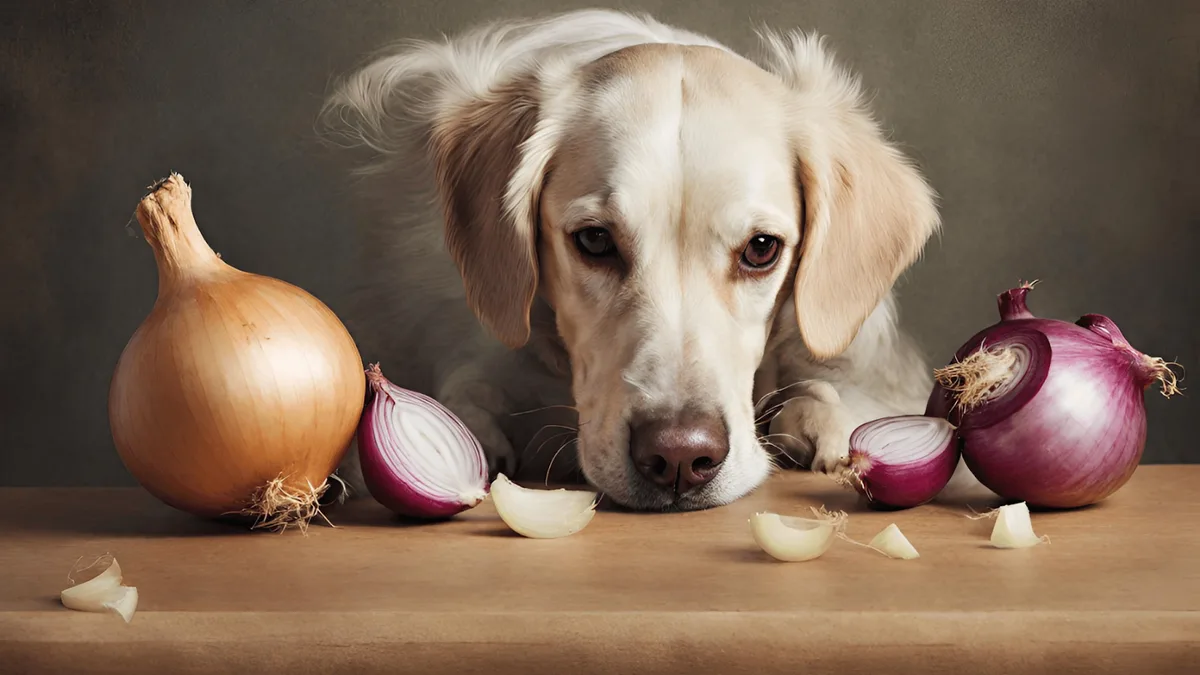
Image source: Web (Bing) / volharddognutrition.com (Web image (fair-use with source credit))
Quick Answer
No, dogs cannot eat cooked onions in food. Onions contain N-propyl disulfide, which damages red blood cells. This includes raw, cooked, dehydrated, and powdered forms.
Even small amounts can cause hemolytic anemia. Call your vet immediately if your dog eats any onion.
Why Onions Are Toxic to Dogs: The Science Made Simple
Onions belong to the allium family, along with garlic, leeks, chives, and shallots. All of them contain organic sulfur compounds. The most dangerous one for dogs is called N-propyl disulfide.
Here’s what happens inside your dog’s body. When they chew and digest onion, this compound gets absorbed into their bloodstream. It then attacks hemoglobin, the protein inside red blood cells that carries oxygen.
The damaged cells clump together and form what vets call Heinz bodies.
Your dog’s immune system sees these damaged cells as garbage. It starts destroying them, faster than the bone marrow can produce replacements. That’s hemolytic anemia.
Red blood cell count drops, oxygen delivery falls, and the organs start struggling.
The tricky part? Cooking doesn’t break down N-propyl disulfide. It’s remarkably heat-stable.
So whether you’re feeding your dog a bite of roasted chicken with onion seasoning or a spoonful of French onion soup, the toxic compound is still fully active.
One more critical point. Cats are even more sensitive than dogs. But dogs are significantly more likely to eat onions because they’ll eat just about anything.
If you have a four-legged garbage disposal like we do, this matters.
Is It the Onion Itself or the Form That Matters? The Dose Reality
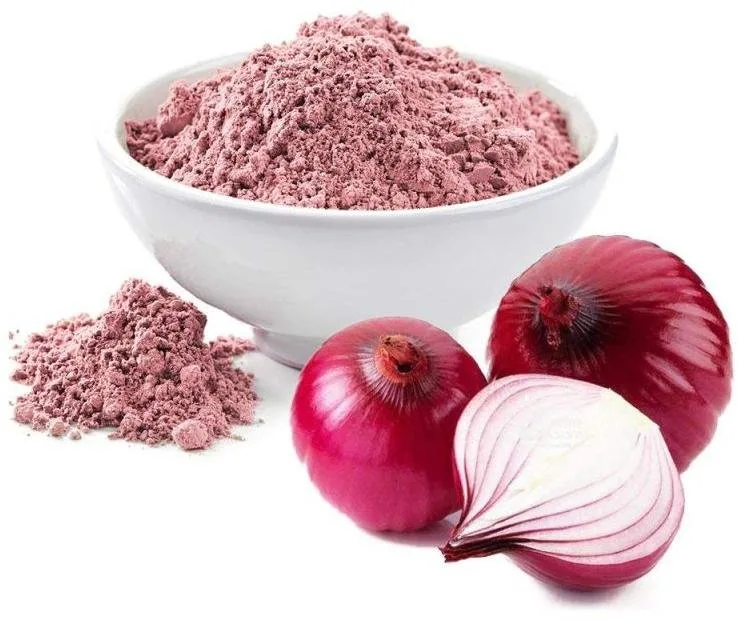
Image source: Web (Bing) / exportersindia.com (Web image (fair-use with source credit))
The form of onion changes how much toxin your dog ingests, but all forms are dangerous. The difference comes down to concentration.
| Form of Onion | Water Content | Relative Toxicity | Typical Exposure |
|---|---|---|---|
| Raw onion | ~89% water | Lower per gram | Table scraps, garden digging |
| Cooked onion | Variable | Slightly more concentrated | Soups, stews, casseroles |
| Dehydrated flakes | Very low | Highly concentrated | Seasoning blends, dried soups |
| Onion powder | Almost none | Most toxic per gram | Processed foods, rubs, broths |
Here’s why this matters practically. A tablespoon of fresh chopped onion weighs around 10 grams. The same tablespoon of onion powder packs the concentrated punch of an entire bulb.
Manufacturer specifications and food regulations require onion powder to be listed on ingredient labels. But it hides under names like “onion powder,” “dehydrated onion,” or simply “natural flavoring” in some processed foods.
The toxic dose for dogs is roughly 15 to 30 grams of fresh onion per kilogram of body weight. Let’s put that into real numbers. For a 10 kilogram (22 pound) dog, that’s between 150 and 300 grams of fresh onion.
That’s roughly one medium to one large onion.
But here’s where people get confused. That dose is the threshold for severe clinical toxicity. Smaller amounts can still cause mild symptoms, especially in sensitive dogs.
And onion powder is so concentrated that a few teaspoons can hit the toxic threshold for a small dog.
Our research suggests you shouldn’t try to calculate a “safe” amount. There isn’t one. Some dogs show symptoms at lower doses.
Others seem fine until suddenly they’re not. Individual sensitivity varies significantly.
Dog Size vs. Onion Amount: A Danger Scale That Actually Helps
Let’s be practical. You need a reference point for how much onion is dangerous. This table uses average values from veterinary toxicology literature.
But remember, these aren’t a green light to test the limits.
| Dog Weight | Example Breed | Toxic Dose Range (fresh onion) | Equivalent to |
|---|---|---|---|
| 5 kg (11 lb) | Chihuahua, Pomeranian | 75-150 g | Half to one small onion |
| 15 kg (33 lb) | Beagle, Cocker Spaniel | 225-450 g | 1-2 medium onions |
| 25 kg (55 lb) | Labrador, Golden Retriever | 375-750 g | 2-4 medium onions |
| 35 kg (77 lb) | German Shepherd, Boxer | 525-1050 g | 3-5 medium onions |
Now factor in onion powder. It’s roughly 10 times more potent by weight than fresh onion. That’s because most of the water has been removed, leaving the concentrated toxic compounds behind.
A single teaspoon of onion powder weighs about 2.5 grams. For a 5 kilogram dog, just a tablespoon of onion powder could potentially reach a harmful dose.
Here are the primary risk factors that move the needle:
- Age: Puppies and senior dogs have lower tolerance.
- Breed: Japanese breeds like Akitas and Shiba Inus are reportedly more sensitive to allium toxicity.
- Existing health issues: Dogs with anemia, kidney disease, or liver problems are at higher risk.
- Other alliums: Garlic, leeks, and chives have similar effects. They all add to the total toxic burden.
- Repeated exposure: Small amounts over days can accumulate and become dangerous.
If you’re unsure whether the amount your dog ate is dangerous, err on the side of caution. Call your vet or a pet poison control hotline. The cost of a phone call is nothing compared to an emergency hospital stay.
And if you’re managing your dog’s diet carefully, you’ll want to keep their regular food consistent. We’ve covered how much food to feed by weight if you need a reference for proper portions.
Hidden Onions: The Sneaky Foods Most Dog Owners Overlook
Most dog owners know not to hand their dog a whole onion. The real danger is the onion that’s hiding inside something else. The bite of stir-fry.
The leftover sauce. The gravy you were going to pour over vegetables.
These are the foods that send dogs to the emergency vet:
- Soups and stews: French onion soup is the obvious one. But any broth-based soup likely contains onion for flavor.
- Baby food: Some jarred baby foods contain onion powder as a flavor enhancer. This surprises a lot of pet owners.
- Store-bought broths: Many chicken and beef broths list onion as an ingredient. Check the label before using it on your dog’s food.
- Gravies and sauces: Onion is a base ingredient in countless gravies, marinades, and simmer sauces.
- Seasoned meats: Deli meats, sausages, meatloaf, and rotisserie chicken often contain onion powder.
- Casseroles and prepared dishes: Anything with mixed ingredients can hide onion. That includes stuffing, pot pies, and rice dishes.
- Salad dressings and dips: Onion powder appears frequently in ranch, French, and other creamy dressings.
- Pizza toppings: Cooked onions on a slice of pizza are still toxic.
The challenge with hidden onions is that you don’t know the exact amount. That makes it much harder for your vet to assess the risk. If your dog ate a bowl of stew, you can’t count the individual onion pieces.
You have to assume the worst.
Here’s a practical tip. Make a habit of reading ingredient labels before sharing any human food with your dog. If the word “onion” appears anywhere, don’t share it.
That includes onion powder, dehydrated onion, onion salt, and onion flakes.
For processed foods, the FDA requires ingredient labeling. But manufacturers can use vague terms like “spices” or “natural flavors” without listing onion specifically. If you’re not sure, don’t risk it.
Many dog owners switch to feeding their dogs a homemade diet to avoid this problem entirely. If you’re considering that route, check out our guide on the highest protein dog foods for balanced meal ideas that don’t rely on human leftovers.