Mastering How Many Pounds in a Cup of Dog Food
If you're trying to work out how many pounds in a cup of dog food, the honest answer is that it depends on the food itself. There's no single number that fits every bag on the shelf. A cup measures volume, while a pound measures weight, and those two things only line up if you know the density of what you're scooping.
Here's the scale of the problem. A standard US cup holds 8 fluid ounces of water, but that same cup holds roughly 3 to 5 ounces of dry kibble by weight. Per US customary conversions, that lands somewhere between 0.19 and 0.31 pounds per cup.
Below, we'll show you how to pin down the exact figure for your dog's food.
Quick Answer
A cup of dry dog food weighs roughly 0.19 to 0.31 pounds. That's about 3 to 5 ounces by weight. The exact figure depends on the kibble's density.
Check your bag's label for a weight-per-cup figure. If it's missing, weigh one level cup yourself.
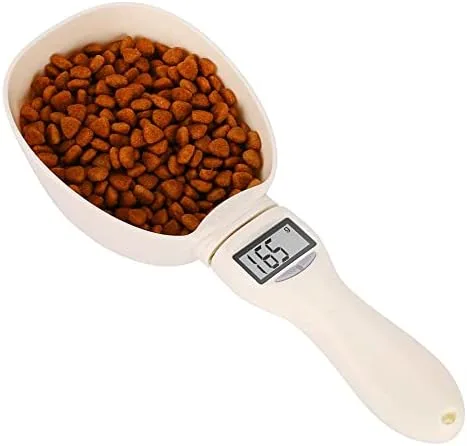
Image source: Bing (Web (fair-use with source credit))
Why a Cup of Dog Food Isn't a Pound (And What It Actually Weighs)
A cup of dog food is not a pound, and it's rarely even close. Most dry kibble lands between 3 and 5 ounces per cup, which is well under the 16 ounces in a pound. Only a very dense food would ever hit that mark.
The confusion comes from mixing up fluid ounces and weight ounces. A fluid ounce measures volume, and a weight ounce measures mass. Water happens to weigh about 8 ounces per cup, so people assume kibble does too.
It doesn't.
Kibble is mostly air between the pieces. That empty space changes how much a cup can hold. Crush the same food into powder and you'd fit far more weight into the same cup.
So when someone asks how many pounds are in a cup, the real answer is a range, not a fixed number. In our research, most mainstream dry foods sit in that 0.19 to 0.31 pound window. Smaller kibble usually weighs more per cup because it packs tighter.
This matters more than most owners realize. If you're switching between formulas, the same scoop size can deliver very different calorie loads. For a dog that turns his nose up at new food, portion accuracy gets even trickier.
What Determines How Much a Cup of Kibble Weighs
Several factors push the weight per cup up or down. None of them are random, and most are printed somewhere on the packaging.
- Kibble size. Small pieces settle closer together, so a cup holds more weight. Large pieces leave bigger gaps.
- Kibble shape. Flat, disc-shaped pieces stack densely. Round or irregular shapes leave more air.
- Density of the recipe. Formulas with more fat and meat meal tend to be heavier than grain-heavy ones.
- Moisture content. Dry kibble sits around 10 percent moisture. Even small shifts change weight.
- Coating. Fat sprays and flavor coatings add a little weight to every piece.
- How you scoop. A packed cup weighs more than a level one. Shaking the cup settles the kibble and adds weight too.
Manufacturer specifications often list a weight-per-cup figure right on the bag or the brand's site. That number is your best starting point. If the label only gives kcal/cup, you can still work out portions, just in calories rather than grams.
One thing owners miss is batch variation. Two bags of the same food can differ slightly. It's usually minor, but it's another reason a kitchen scale beats a scoop for consistency.
If your dog has a sensitive stomach, steady portions help avoid upsets during transitions.
How to Find the Exact Weight for Your Dog's Food: A Step-by-Step Workflow
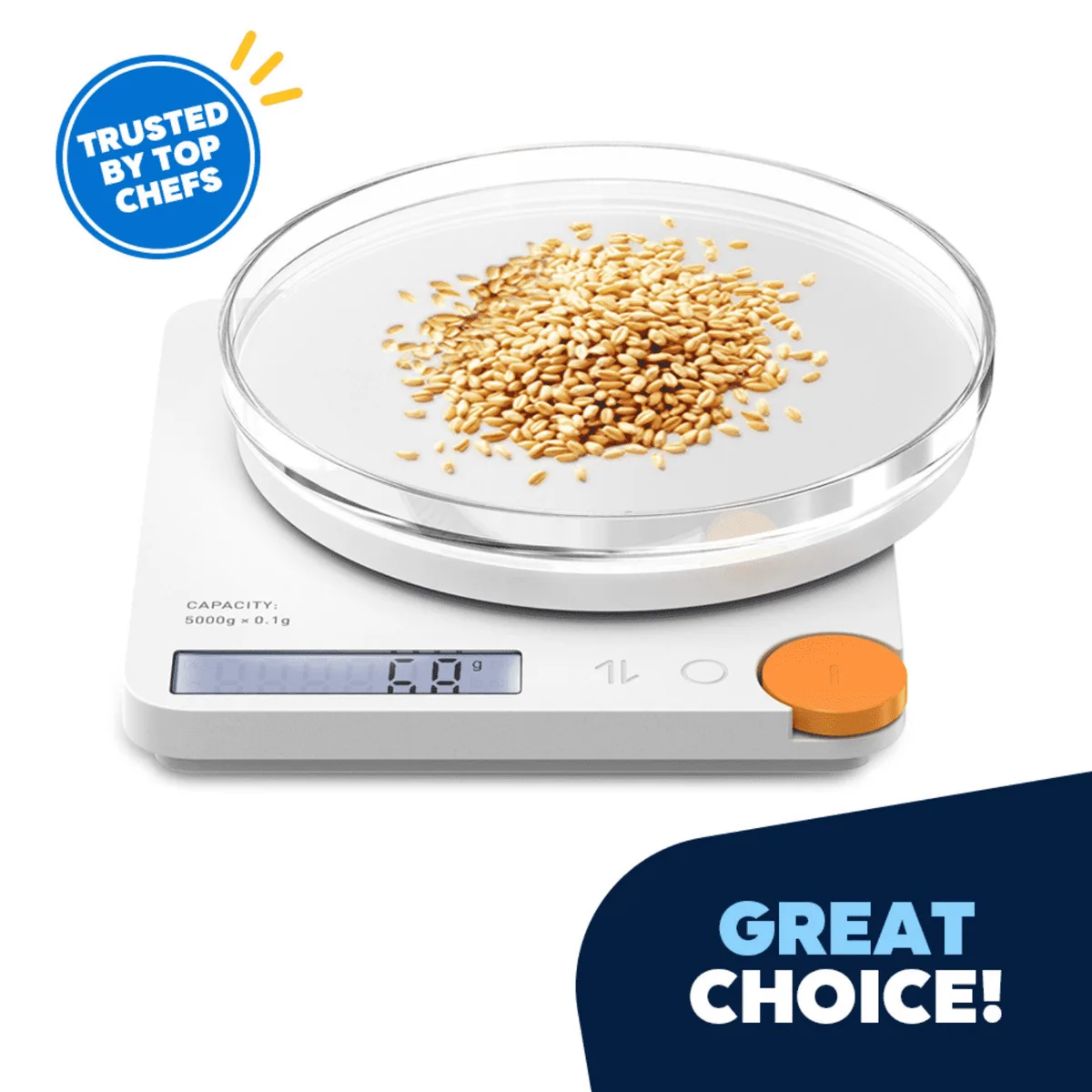
Image source: Web (Bing) / walmart.com (Web image (fair-use with source credit))
This is the workflow we recommend for anyone who wants a real answer instead of a guess. It takes about five minutes.
- Check the bag first. Look for a "weight per cup" or "grams per cup" statement. If it's there, you're done.
- Grab a digital kitchen scale. Any standard model works. Look for one that reads in grams and ounces.
- Place your measuring cup on the scale. Press the tare button to zero it out. The tare function removes the container's weight from the reading.
- Scoop and level. Fill the cup, then sweep a flat edge across the top. Don't pack it down.
- Weigh the cup. Write down the number in ounces or grams.
- Repeat two more times. Average the three readings. Kibble settles unevenly, so one scoop can mislead you.
- Convert to pounds. Divide ounces by 16. If you weighed in grams, divide by 453.592.
- Find cups per pound. Divide 16 by your ounces-per-cup figure.
If you measured 4 ounces per cup, that's 0.25 pounds per cup, or 4 cups per pound. Those are clean, useful numbers for planning bag duration and daily cost. If your dog is on a weight-loss plan, a board-certified veterinary nutritionist can confirm your target portions.
Measuring Cup vs. Kitchen Scale: Which Should You Use for Dog Food?
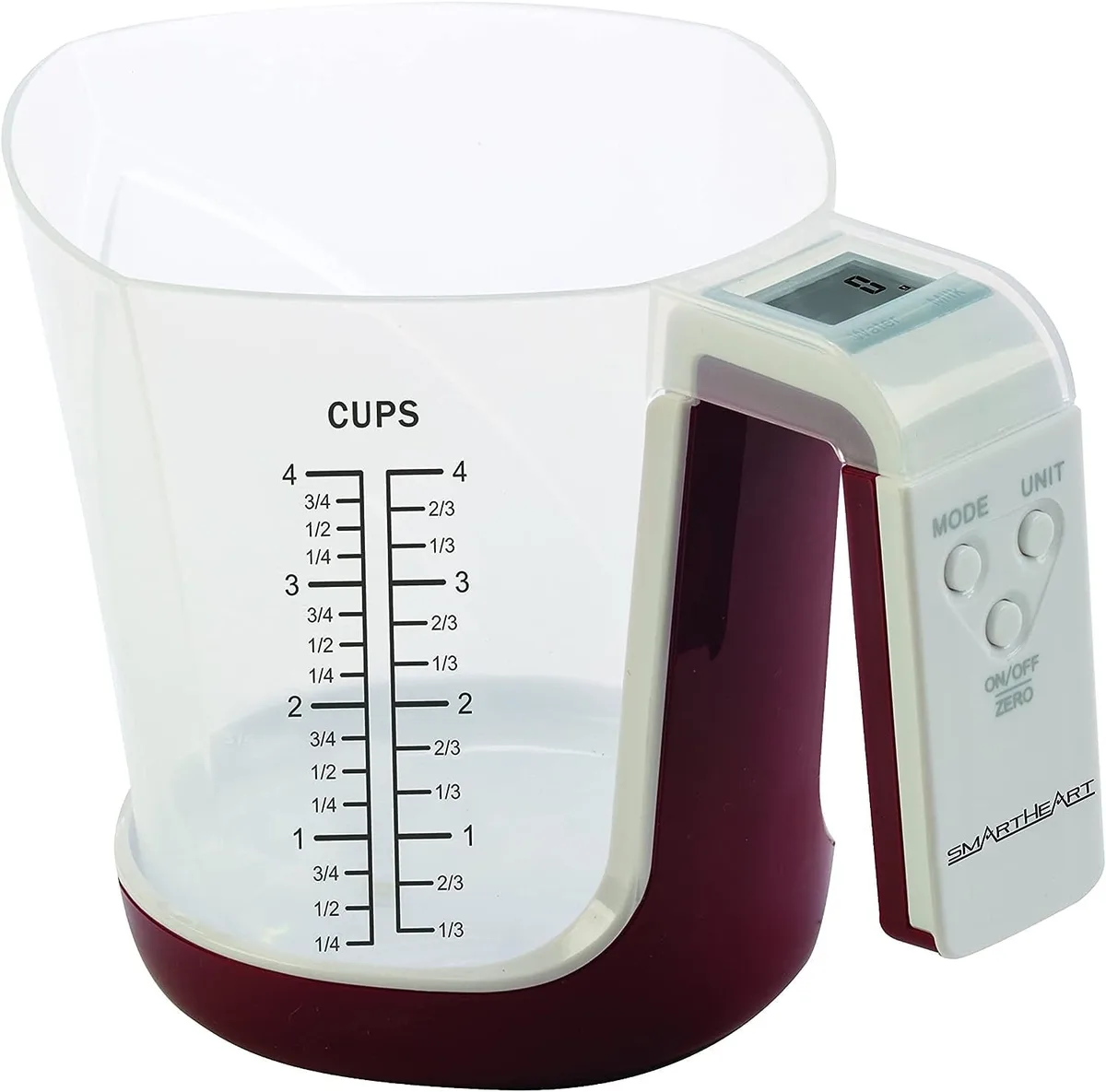
Image source: Web (Bing) / walmart.com (Web image (fair-use with source credit))
Use a kitchen scale if you want accuracy. Use a measuring cup if you want speed and your dog is healthy and stable. That's the short version.
| Factor | Measuring cup | Kitchen scale |
|---|---|---|
| Accuracy | Low to moderate | High |
| Speed | Fast | Slightly slower |
| Cost | A few dollars | $10 to $25 |
| Best for | Healthy, stable-weight dogs | Weight programs, medical diets |
Cups have one big weakness: they measure volume, not weight. Scoop loosely one day and firmly the next, and you can easily swing the portion by 20 percent or more. Over months, that adds up.
Scales remove the guesswork. You weigh the food, not the air around it. The trade-off is a little extra time and a small upfront cost.
For most healthy adult dogs, a level cup is fine as long as you're consistent. If your dog is overweight, on a prescription diet, or a growing large-breed puppy, weigh the food. Growth and weight issues leave little room for error.
Typical Cup Weights for Dry Dog Food: Ounces, Grams, and Cups per Pound
These figures reflect common dry kibble across mainstream brands. Treat them as a starting range, not a guarantee. Your specific bag may sit slightly outside it.
| Weight per cup | Pounds per cup | Cups per pound |
|---|---|---|
| 3 oz (85 g) | 0.19 lb | 5.3 cups |
| 4 oz (113 g) | 0.25 lb | 4 cups |
| 5 oz (142 g) | 0.31 lb | 3.2 cups |
That 4-ounce row is the one most owners remember. It gives you the familiar rule of thumb: about 4 cups per pound of dry dog food. It's a handy shortcut, but it only holds when your kibble actually weighs 4 ounces per cup.
Here's what the range means in practice. A 30-pound bag holds somewhere between 96 and 160 cups, depending on density. That's a big spread.
If you're comparing cost per day between two brands, weigh a cup from each before you do the math.
As of 2026, most major manufacturers publish weight-per-cup data online or on the bag. AAFCO labeling rules also require calorie statements on many products, which gives you a second way to compare. For dogs with medical conditions, your vet's portion targets should always override a generic table.
Common Measuring Mistakes That Throw Off Your Dog's Portion
Most portion errors come down to a handful of habits. Fix these and your cup-to-pound math gets a lot more reliable.
- Using a liquid measuring cup. These are sized for fluids. A dry cup with a flat rim gives a truer read.
- Packing the kibble. Pressing or shaking the cup adds weight. Level it with a knife edge instead.
- Reaching for a coffee mug. Mug volumes vary wildly. You have no real idea what you're feeding.
- Scooping from deep in the bag. Kibble compacts under its own weight. Stir it first, then scoop.
- Forgetting to tare. If you weigh with the bowl on the scale, zero it out first.
- Eyeballing it. "About a cup" drifts over time. Small errors stack up across weeks.
- Ignoring treats. Treats carry calories too. A few biscuits can add 20 percent to the daily total.
- One scoop for two dogs. Different sizes need different amounts. Measure each bowl separately.
That last one bites multi-dog homes hardest. A large dog and a small one sharing a scoop size means one ends up overweight and the other stays hungry.
If your dog has a touchy digestive system, portion swings hit harder. The same goes for fussy eaters, where an overfilled bowl can put them off completely. Consistency solves both problems.
When to Ask Your Vet (And Why Portion Accuracy Matters)
Ask whenever your dog is young, overweight, or on a prescription diet. For a healthy adult at a stable weight, a level cup and a rough conversion are usually fine.
Here's when professional input genuinely matters:
- Puppies, especially large breeds. Overfeeding during growth can affect joint development.
- Weight-loss programs. Your vet sets a calorie target, and you hit it with weighed portions.
- Prescription diets. These are dosed by calories, not scoops.
- Medical conditions. Diabetes, kidney disease, and thyroid issues all shift calorie needs.
- Unexplained weight change. Losing or gaining without a diet change deserves a check.
Vets work in calories, not cups. That's the key shift. Your bag lists kcal/cup or kcal/kg, and your vet calculates a daily target from your dog's weight and body condition score.
From there, you divide the target by the food's calorie density. If your dog needs 500 kcal a day and the food has 400 kcal per cup, that's 1.25 cups daily. Weigh it once and you have an exact portion.
With puppies, what young dogs need changes fast. Recheck portions every few weeks. Renal care formulas and other medical diets should never be adjusted on your own.
Per federal pet food oversight, many products must carry a calorie statement. Use it. It's the most reliable number on the bag, and it's checked against weights and measures standards.
Frequently Asked Questions
How many pounds is 1 cup of dog food?
Roughly 0.19 to 0.31 pounds, or about 3 to 5 ounces by weight. The exact figure depends on kibble density. Small, dense kibble weighs more per cup.
Large, airy pieces weigh less. Weigh a level cup for your specific food.
Is 8 ounces of dog food the same as a cup?
No. Eight ounces by weight is half a pound. A cup of kibble usually weighs 3 to 5 ounces.
The 8-ounce confusion comes from fluid ounces, which measure volume, not weight. Water weighs 8 ounces per cup. Kibble doesn't.
How many cups are in a 30-pound bag of dog food?
It depends on density. At 4 ounces per cup, you get about 120 cups. Lighter kibble at 3 ounces per cup pushes that toward 160 cups.
Heavier kibble at 5 ounces per cup drops it to roughly 96 cups.
Do I need a kitchen scale to measure dog food?
Not always. A level cup works for a healthy adult dog at a stable weight. A scale is better for puppies, weight programs, and prescription diets.
It removes the guesswork from how kibble is made and how tightly it settles.
Why does my dog's food weigh differently than the last bag?
Batch and formula variation. Recipe changes, kibble size tweaks, and coating differences all shift density. Two bags of the same brand can differ slightly.
That's normal, but it's a good reason to recheck your portion after opening a new bag.