
How Many Cups Are in a Pound of Dog Food?
If you’ve ever stared at a half-empty bag of kibble and wondered how many cups in pound of dog food, you’re not alone. The honest answer is that it depends on the food itself. A pound of one kibble can measure closer to three cups, while another lands near five.
There’s no universal number hiding on the label.
Here’s the part most feeding charts skip. A standard US measuring cup holds 8 fluid ounces, which is a volume measure, not a weight one. Per FDA labeling rules, every bag must state calories per cup and per kilogram, and that calorie line is what actually tells you how much to feed.
Let’s walk through the variables and the math.
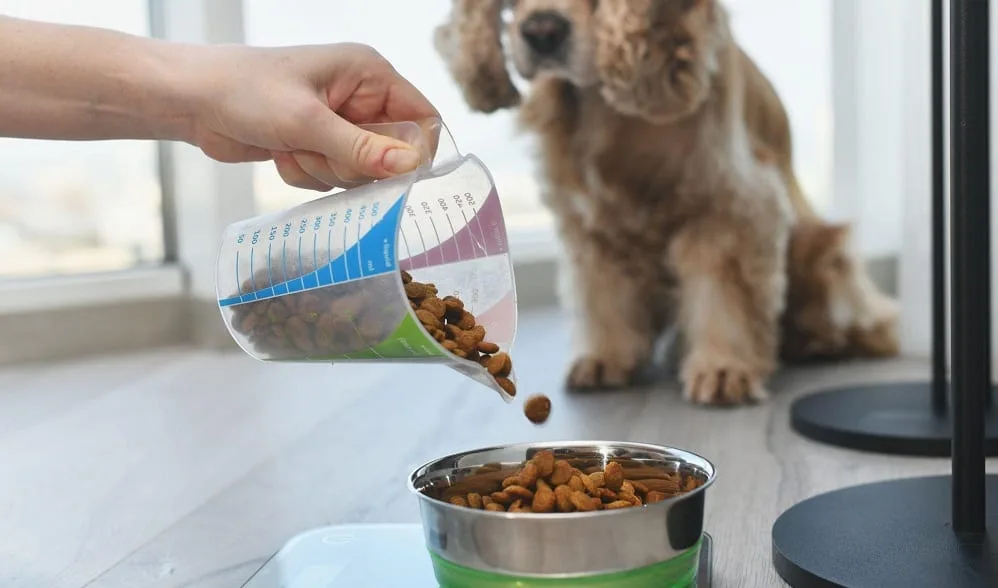
Image source: Web (Bing) / acmecanine.com (Web image (fair-use with source credit))
Quick Answer
Most dry dog food gives you roughly 3 to 5 cups per pound. So how many cups in pound of dog food really depends on the kibble. Wet food lands closer to 1.5 to 2 cups.
Density and kibble size change the number. Weigh the food for accuracy.
Why “How Many Cups in a Pound of Dog Food” Has No Single Answer
A pound is a weight. A cup is a volume. That mismatch is the whole problem in one line.
Kibble isn’t a liquid, so it doesn’t fill space the same way water does. Two foods can weigh the same and measure completely differently, because one has denser nuggets and less trapped air. In our research across major brands, cups per pound landed anywhere from about 2.8 to 5.5 depending on the formula.
What a standard cup actually measures
A US cup equals 8 fluid ounces, or about 236.6 milliliters. That’s a volume standard, not a weight one. When a label says “one cup” of kibble, it means the amount that fills that cup, not 8 ounces on a scale.
Most kibble weighs 3.5 to 5 ounces per cup. So a 16-ounce pound divides out to roughly 3.2 to 4.6 cups. That range alone explains why one flat number never works.
Why the bag never lists cups per pound
Manufacturers list feeding amounts in cups and calories, not weight-to-volume conversions. Per FDA labeling rules, the calorie statement must appear as kcal per cup and kcal per kilogram. That’s the number that actually drives portioning.
So instead of converting pounds to cups, you’re better off starting with calories, then working backward to a scoop size. It sounds fussier, but it’s far more accurate.
The 4 Variables That Change Cups Per Pound
Four things move the number more than anything else: food form, kibble size, density, and moisture. Change one and your cups per pound shifts.
| Food form | Typical cups per pound | What drives it |
|---|---|---|
| Dry kibble | 3 to 5 | Low moisture, lots of air gaps |
| Wet or canned | 1.5 to 2 | 75 to 85% water, heavier per cup |
| Raw frozen | 2 to 3 | Dense, high moisture |
| Freeze-dried | 4 to 6 or more | Very light until rehydrated |
Kibble size and shape
Small breed kibble packs more pieces into a cup, which usually means more weight per cup. Large, chunky nuggets leave bigger gaps, so a cup weighs less. A chunky formula can sit near 3 cups per pound, while a tiny-bite formula pushes past 4.5.
Shape matters too. Flat discs stack and settle. Round balls roll and leave voids.
Density and the air gap problem
Density is just weight per unit of volume. Scoop straight from a freshly opened bag and you get one weight. Shake the bag first and the kibble settles, so the same cup holds more food.
That’s why a settled bag can quietly add 10 to 15% more calories per scoop. Your dog doesn’t notice. The waistline does.
Moisture content
Water is heavy. Wet food is mostly water, which is why a pound of canned food measures far fewer cups than a pound of kibble. If you’re feeding a diet designed for a delicate digestion, that moisture difference also affects how full your dog feels after a meal.
Formula type and life stage
Puppy formulas, weight-management diets, and prescription foods all vary in density. Feeding young dogs still growing means more calories per pound of body weight, so the cups add up fast even when the food itself is light.
How to Find Your Dog Food’s Real Cups-Per-Pound
This is the part that replaces guesswork with a repeatable routine. Follow it once and you’ll have your own conversion number for that specific bag.
Step 1: Check the calorie statement
Look for kcal per cup or kcal per kilogram on the label. If it only lists kcal/kg, divide by 2.2046 to get kcal per pound. Then divide by your cups per pound estimate to get kcal per cup.
Step 2: Weigh one cup
Zero your kitchen scale with an empty cup on it. Scoop, level it off, and weigh. Write down the number in ounces.
Step 3: Do the math
If one cup weighs 4 ounces, then 16 divided by 4 gives you 4 cups per pound. If it weighs 3.2 ounces, you’re closer to 5 cups. That single weigh-in beats any chart.
Step 4: Set the daily portion
Use the calorie target for your dog’s ideal weight, then divide by kcal per cup. A 30-pound dog needing about 700 kcal a day, on a 360 kcal per cup food, gets roughly 1.9 cups daily.
If your dog is gaining or losing weight
Adjust by 10% at a time and recheck body condition every two weeks. If ribs are hard to feel, cut back slightly. If you can see hip bones, add a little.
AAFCO’s nutrient profiles set the minimums, but your dog’s ribs tell you whether the portion is right.
Measuring by Weight vs Volume: When to Use a Kitchen Scale or a Cup
Both methods work. They just solve different problems.
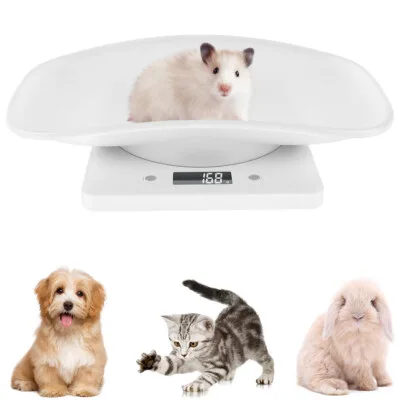
Image source: Web (Bing) / ebay.com.au (Web image (fair-use with source credit))
| Method | Best for | Watch out for |
|---|---|---|
| Measuring cup | Quick daily feeds, dry kibble | Packing, settling, scoop size drift |
| Kitchen scale | Weight loss plans, wet food, mixed diets | Needs a gram or ounce setting |
When a cup is good enough
Healthy adult dogs on a stable diet do fine with a level cup. Use a real measuring cup, not a coffee mug or a random scoop from the pet store bin. Those can run 20% off in either direction.
When to switch to a scale
Switch if your dog is on a weight-loss plan, has diabetes, or eats a prescription diet. Switch if you’re mixing wet and dry, since wet food volume is nearly meaningless. And switch if you’re softening dry kibble with water, because added liquid changes the volume without changing the calories.
Weigh in grams if you can. A 5-gram error is tiny. A 0.5-ounce error is not, especially in small breeds.
A small dog eating a 0.2-ounce overage every meal can gain real weight over a month. A great Dane won’t notice it at all. That’s the trap with volume.
The error scales with how small your dog is.
For wet food, treat the scale as mandatory. Cans vary in how much water they hold, and a cup of pate weighs wildly different from a cup of shredded in gravy. Weigh the portion in grams and log it once.
After that, you’re just repeating a number.
Common Mistakes That Throw Off Your Dog’s Portions
Most feeding problems trace back to one of five habits. Fix them and your portions get consistent fast.
Mistake 1: Using a coffee mug or a random scoop
A mug can hold 10 to 12 ounces, not 8. If you’ve been scooping with one, you may be overfeeding by 25% or more. Use a real measuring cup or a kitchen scale.
Mistake 2: Packing the kibble
Pressing food into the cup adds weight without adding visible volume. Scoop loose, then level with a flat edge. Never tap the cup on the counter to settle it.
Mistake 3: Trusting the bag’s cups-per-day chart blindly
Those charts are starting points, not prescriptions. They assume a specific calorie density and a generic activity level. Your dog is neither.
Mistake 4: Forgetting treats and toppers
Treats count. So do mix-ins, toppers, and table scraps. A few biscuits a day can add 20% to your dog’s calories without touching the bowl.
Mistake 5: Free-feeding and guessing
Leaving food out all day makes it impossible to know how much your dog actually ate. It also makes picky eating worse. Switch to timed meals and you’ll finally see real intake.
A quick fix list
- Weigh one cup of your kibble once.
- Write that number on the bag with a marker.
- Measure meals instead of scooping by eye.
- Recheck the number every time you switch formulas.
- Track body condition monthly, not just weight.
Get these right and cups per pound stops being a mystery. It becomes a number you already know for your dog’s food.
If your dog eats dry kibble
Grab a real measuring cup and level it off. Most kibble runs 3 to 5 cups per pound. Small, dense nuggets push toward 5.
Chunky, airy kibble lands closer to 3. If you’re managing weight, skip the cup and use a scale instead, especially for dogs under 20 pounds.
If your dog eats wet or canned food
A pound of wet food measures roughly 1.5 to 2 cups. Pate is denser than shredded in gravy, so the number moves. Don’t scoop wet food by volume unless the label specifies it.
Weigh in grams and track calories per can.
If your dog eats raw frozen
Expect 2 to 3 cups per pound. Raw diets are dense and hold moisture, so they’re heavier per cup than kibble. Portion by weight, not scoops.
A small kitchen scale handles this best, especially when you’re managing a sensitive stomach and need consistent meals.
If you’re mixing wet and dry
Count the calories from each, not the cups. Feed half the daily calories as kibble and half as wet. A 400 kcal-per-cup kibble plus a 350 kcal-per-can wet food splits cleanly if you do the math once.
If you’re feeding freeze-dried or dehydrated
These are light until rehydrated. A pound can measure 4 to 6 cups or more. Always follow the rehydration ratio on the bag before you portion.
The one rule that beats every chart
Weigh your dog’s food once in grams, write the number on the bag, and use that as your baseline. Recheck after every formula change. Cups per pound is a starting estimate.
Your scale is the real answer.
Frequently Asked Questions
How many cups are in a 30-pound bag of dog food?
A 30-pound bag holds roughly 90 to 150 cups of dry kibble. That range comes from density differences between formulas. Divide the bag weight in pounds by the cups-per-pound figure for your specific food.
A 4-cups-per-pound kibble gives you 120 cups in that bag.
Does a pound of wet dog food equal the same cups as dry?
No, not even close. Wet food contains 75 to 85% water, so it’s much heavier per cup. You’ll get about 1.5 to 2 cups per pound of wet food, versus 3 to 5 cups for dry.
Weigh wet food in grams for accuracy.
How many cups should I feed my dog per day?
It depends on your dog’s weight, age, and activity level. A 30-pound adult dog typically needs 1.5 to 2.5 cups of dry food daily, split into two meals. Check your food’s kcal per cup and match it to your dog’s calorie needs.
Adjust by 10% if weight drifts.
Is it better to measure dog food by weight or volume?
Weight is more accurate every time. Volume shifts with kibble size, settling, and scoop shape. If your dog is on a weight-loss plan or has special dietary needs, a kitchen scale in grams removes all the guesswork.
How many cups is 1 pound of raw dog food?
Plan on 2 to 3 cups per pound. Raw food is dense and moist, so it packs more weight into each cup than kibble. Always portion raw diets by weight, not scoops, and follow the manufacturer’s feeding guide for your dog’s target weight.
Why do different dog foods have different cups per pound?
Kibble density, nugget size, and ingredient composition all vary by brand and formula. A dense, small-kibble food packs more weight per cup. An airy, large-nugget food packs less.
That’s why no single cups-per-pound number works across every bag.


One Comment