How Long Does a Dog Eat Puppy Food? Complete Guide
Most dogs stay on puppy food until they reach physical maturity, usually around 9–24 months depending on breed size.
There’s no single age when every dog stops eating puppy food. How long a dog eats puppy food depends on breed size, growth rate, and body condition, not a fixed calendar date. Ask ten owners, and you’ll hear everything from eight months to two years.
A toy breed may be done by ten months. A Great Dane often stays on a growth formula until 18 to 24 months. The Association of American Feed Control Officials (AAFCO) sets the nutrient profiles behind those labels.
So the timeline always traces back to nutrition standards, not guesswork. Here’s how to find the right switch point for your dog.
Quick Answer
Most dogs eat puppy food until they reach adult size. That’s usually 9 to 24 months. Small breeds often switch around 9 to 12 months.
Large and giant breeds stay on puppy food longer, often 12 to 24 months. Body condition and breed size matter more than age. Your vet can confirm the right switch point.
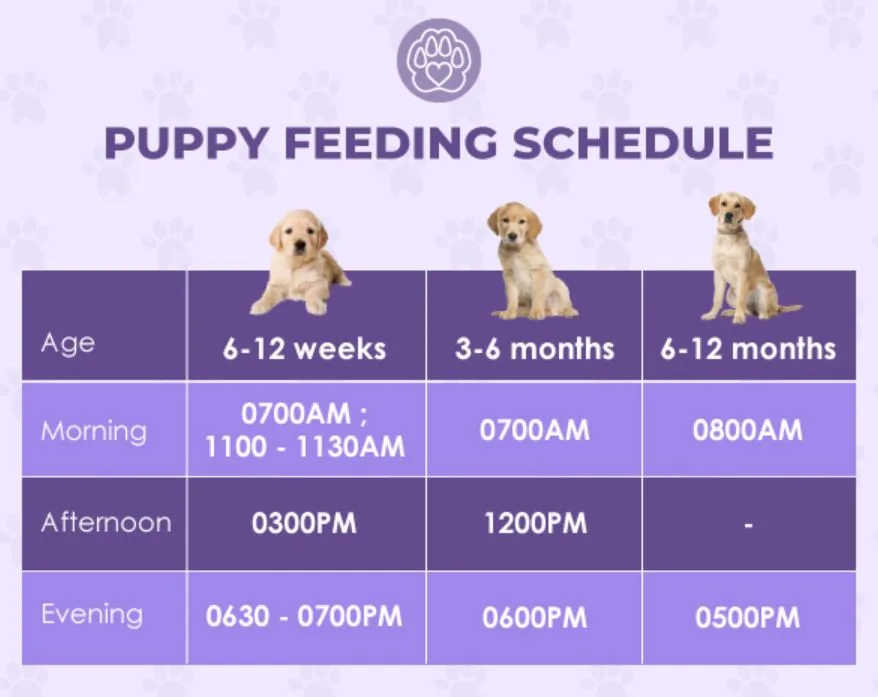
Image source: Web (Bing) / animalia-life.club (Web image (fair-use with source credit))
Why the “12-Month Rule” Falls Apart for Toy, Large, and Giant Breeds
The old “switch at a year” advice is a rough average, not a rule. It ignores how wildly growth rates differ between breeds. A Chihuahua is fully grown long before its first birthday.
A Newfoundland is still building bone at 18 months.
Here’s the if/then logic. If your dog reaches adult body condition early, the growth formula has done its job. If your dog is still growing, cutting the growth diet too soon can leave gaps.
Growth plates are the key. These are the soft areas at the ends of bones where length gets added. They close at very different ages depending on breed size.
- Toy breeds: growth plates close around 6 to 8 months
- Large breeds: closer to 12 to 18 months
- Giant breeds: often 18 to 24 months
Feed a giant breed puppy an adult maintenance diet at 10 months, and you risk underfeeding calories and key nutrients during a critical window. That can affect joint development. If your dog is a fussy eater at mealtimes, that adds another wrinkle on top of the timing question.
So the honest answer to how long a dog eats puppy food is this. The right time to switch depends on when your dog reaches physical maturity, along with breed size, growth rate, body condition, and nutritional needs. Age alone can’t tell you that.
Breed-Size Puppy Food Timeline: Toy, Small, Medium, Large, and Giant
Breed size is the single biggest factor. Our research across manufacturer guidelines and veterinary nutrition guidance points to these typical switch windows.
| Breed size | Example breeds | Typical switch window |
|---|---|---|
| Toy | Chihuahua, Pomeranian | 8 to 10 months |
| Small | Beagle, Shih Tzu | 9 to 12 months |
| Medium | Border Collie, Bulldog | 12 months |
| Large | Labrador, German Shepherd | 12 to 18 months |
| Giant | Great Dane, Newfoundland | 18 to 24 months |
Treat those numbers as guide rails, not deadlines. A slow-maturing dog in any category may need longer on the growth diet. A fast-maturing one may be ready sooner.
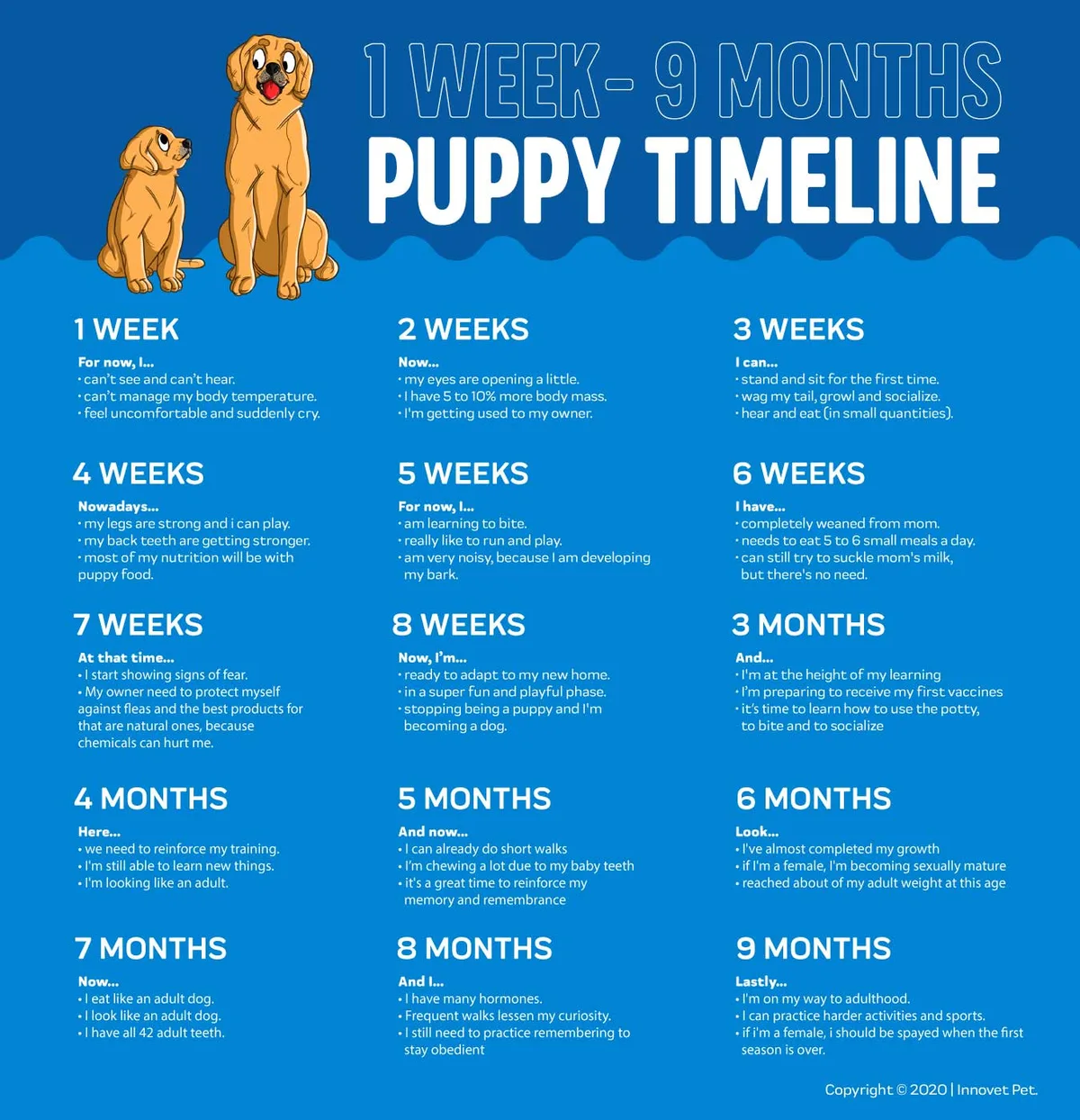
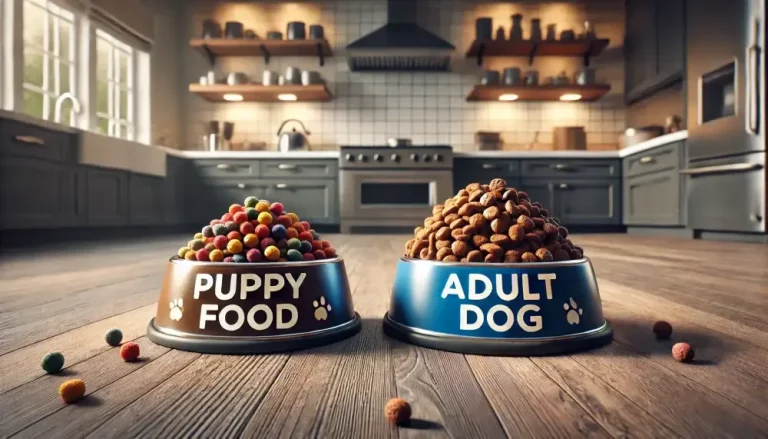
Image source: Web (Bing) / innovetpet.com (Web image (fair-use with source credit))
Large and giant breed puppies usually need a formula built for them. These recipes restrict calcium and control calories on purpose. Feeding a standard puppy food to a Great Dane puppy can push growth too fast.
That raises the risk of developmental orthopedic disease.
If you’re unsure where to start, a solid growth formula matched to your dog’s adult size is the safest baseline. Breed-specific feeding plans can help too, especially with dogs that mature slowly.
Growth Rate, Body Condition, and Spay/Neuter: What Changes the Timeline
Two puppies of the same age and breed can need different switch points. Body condition is how you tell them apart. Protein levels vary widely between formulas, so the food itself matters here too.
Body Condition Score and Muscle Condition Score
The body condition score (BCS) is a 1 to 9 scale that measures fat cover. A score of 4 to 5 is ideal. You check it by running your hands along the ribs.
You should feel the ribs easily without seeing them. If you can’t feel them, the puppy is carrying extra weight. If they’re sharp and visible, the puppy is too thin.
The muscle condition score (MCS) tracks muscle mass over the spine, shoulders, and hips. Both scores together tell you more than the bathroom scale does.
Spay/Neuter Timing and Calorie Needs
Spaying or neutering lowers a dog’s energy needs. Many puppies gain weight fast after the procedure. If your puppy was neutered recently, watch portions closely and recheck body condition every couple of weeks.
Talk to your vet about timing as well. The procedure can shift when a dog is ready to move to adult food. A dog that was neutered at six months may need its portions trimmed before the diet switch even happens.
Reading Puppy Food Labels: AAFCO Growth, All Life Stages, and Large Breed Formulas
Labels tell you more than the front of the bag. The AAFCO statement is the line that actually matters. It’s usually printed in small text below the guaranteed analysis.
AAFCO Statements That Matter
When choosing puppy food, look for a complete and balanced nutritional statement showing that the food is appropriate for growth or all life stages. Look for “for growth” or “for all life stages” on the label. Both meet puppy needs.
“Adult maintenance” means the food is not built for a growing dog.
The statement also tells you how the claim was verified. Feeding trials are stronger evidence than formulation alone. If you want to understand how kibble is made, that process affects nutrient retention too.
Calcium, Phosphorus, and Ca:P Ratio for Large Breeds
Large-breed puppies need carefully controlled calcium, phosphorus, calories, and overall nutrient balance. Choose a food specifically formulated for large-breed growth rather than trying to adjust nutrients yourself.
Manufacturer specs confirm these numbers on the guaranteed analysis panel. Compare them across bags before you buy. The FDA regulates pet food labeling in the US, and AAFCO sets the nutrient standards behind it.
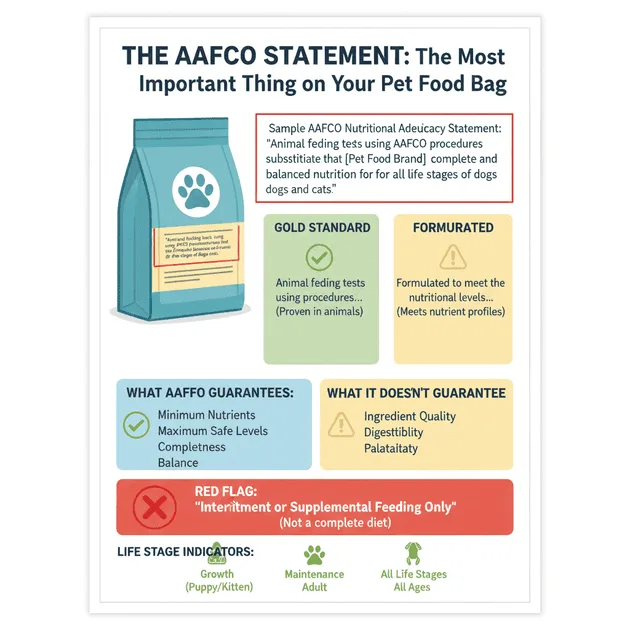
Image source: Web (Bing) / petmealplanner.com (Web image (fair-use with source credit))
The FDA regulates pet food labeling in the US, and AAFCO sets the nutrient standards behind it. If a bag doesn’t carry a clear life stage statement, put it back. You have no way to verify what’s inside.
One more label tip: “all life stages” formulas meet puppy needs, but they don’t always suit large breed puppies. Those dogs do better on a recipe with controlled calcium and calories. When in doubt, match the formula to your dog’s adult size, not the picture on the front.
How to Transition from Puppy Food to Adult Food Without Digestive Upset
A slow switch protects the gut. Plan for 7 to 10 days, mixing old and new food in shifting ratios. Rushing it is the fastest way to trigger loose stools.
Follow these steps:
- Days 1-2: 75% old food, 25% new
- Days 3-4: 50/50
- Days 5-6: 25% old, 75% new
- Days 7-10: 100% new
Watch the stool each day. Firm and well-formed means you can keep going. Soft or watery means slow down and hold the ratio for another day or two.
A dog prone to a sensitive stomach may need a slower ramp.
If your puppy refuses the new food, don’t force it. A splash of warm water can make kibble easier to chew and boost the aroma. For a pup who turns his nose up at every meal, try mixing a little of the old food at the bottom of the bowl.
Call your vet if diarrhea lasts more than 24 hours or comes with vomiting or lethargy. If your dog is vomiting, know how long to wait before the next meal before you offer food. Skip the urge to fast a puppy without guidance.
Young dogs have different needs than adults here.
Keep portions steady during the switch. Don’t change food and feeding amount at the same time. If you do, you won’t know what caused a problem.
The FDA tracks pet food recalls that can affect any formula, so check before you commit to a new bag.
Common Mistakes That Can Lead to Obesity or Developmental Orthopedic Disease
Mistakes here aren’t small. They can shape a dog’s joints and weight for life. Here are the ones our research sees most often.
Overfeeding, Free Feeding, and Sudden Switches
Free feeding is the biggest trap. Leaving a bowl out all day makes portion control impossible. Puppies eat past full, and extra calories pile on fast.
Follow the bag’s guidelines as a starting point, then adjust to body condition. If the ribs vanish under a layer of fat, cut back. A sudden food switch is the other common error.
It triggers loose stools and hides whether the new formula actually works.
Ignoring Breed Size or Growth Charts
Treating a Great Dane puppy like a Beagle puppy is risky. Large and giant breeds need controlled calcium and slower growth. Pushing growth too fast raises the odds of hip dysplasia, elbow dysplasia, and osteochondrosis.
Growth charts give you a target weight curve for your dog’s breed and sex. Weigh your puppy weekly and plot it. If the line climbs above the curve, trim portions.
If it sits well below, talk to your vet before adding food.
A high-protein formula isn’t automatically better for a growing puppy. Balance matters more than raw protein numbers.
When to Ask Your Vet Before Changing Puppy Food
Ask your vet before the switch if your puppy has any health condition or is on a prescription diet. That includes allergies, joint issues, or digestive problems.
Talk to them sooner if you notice:
- Weight gain or loss that doesn’t match the growth curve
- Persistent diarrhea or vomiting
- Limping or stiffness
- Refusing food for more than a day
- Sudden coat or skin changes
Your vet can also confirm whether your dog’s breed matures early or late. Some lines within a breed grow at different rates. A quick weight check at the clinic settles the question fast.
If cost is a concern, know that help exists. Programs like food assistance for pet owners can ease the pressure of buying a quality growth diet.
FAQs About How Long a Dog Eats Puppy Food
How long should a dog stay on puppy food?
Most dogs stay on puppy food until they reach adult size. That’s typically 9 to 12 months for small breeds and 12 to 24 months for large and giant breeds. Body condition and growth plate closure matter more than a calendar date.
Your vet can confirm the right timing.
Can I switch my puppy to adult food at 6 months?
Only if your dog is a small or toy breed that has nearly finished growing. At 6 months, most puppies are still developing. Switching early can shortchange calories and key nutrients.
Wait for your vet’s go-ahead.
Is all life stages food the same as puppy food?
All life stages food meets AAFCO’s growth nutrient profile, so it’s suitable for puppies. It’s not always ideal for large breed puppies, though. Those dogs need controlled calcium and calories that many all-life-stages formulas don’t target.
What happens if I switch to adult food too early?
Switching to an adult maintenance food before a puppy has finished growing may not provide the nutrient profile needed for continued growth, particularly in large and giant breeds.
Do large breed puppies need puppy food longer?
Yes. Large and giant breeds often stay on a growth formula until 18 to 24 months. Their bones and joints take longer to mature.
A large breed puppy formula with restricted calcium supports that slower growth.
How do I know my dog is ready for adult food?
Your dog is ready when growth slows, body condition holds steady, and the ribs are easy to feel. Your vet can confirm growth plate closure. Once those signs line up, start the 7- to 10-day transition.