What Happens If a Dog Eats Cat Food?
Most of the time, what happens if a dog eats cat food is nothing dramatic. Your dog sneaks a few bites, you panic, and the vet tells you to watch for vomiting and diarrhea over the next couple of days. Cat food isn’t toxic to dogs.
It’s just richer than their bodies are built to handle.
The numbers explain why. Per AAFCO nutrient profiles, cat food typically runs 30 to 45 percent protein and 15 to 25 percent fat on a dry-matter basis. Most dog food sits closer to 18 to 25 percent protein and 8 to 15 percent fat.
That gap is what drives the stomach upset, and occasionally something worse.
Quick Answer
A dog that eats cat food usually gets an upset stomach, not poisoning. Cat food is far richer in fat and protein than dog food. Most dogs vomit or have diarrhea within 12 to 72 hours.
Small amounts often cause no symptoms at all. Large amounts can trigger pancreatitis, which needs vet care.
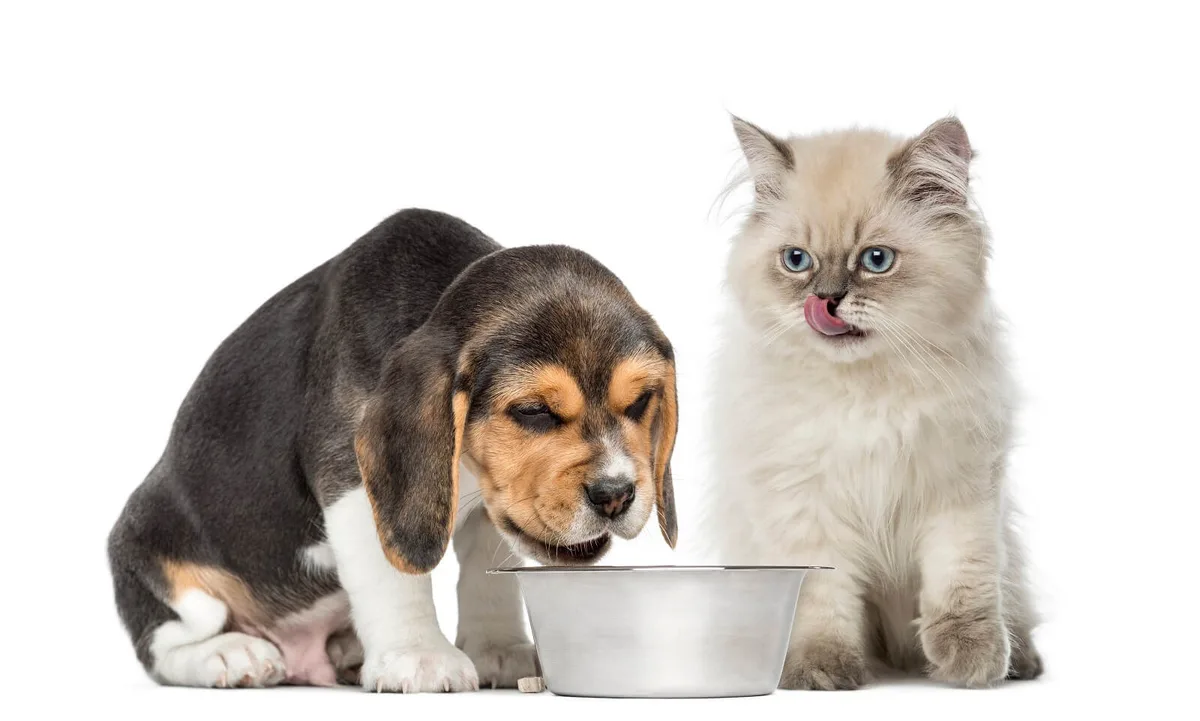
Image source: Web (Bing) / pawmaw.com (Web image (fair-use with source credit))
What Happens When a Dog Eats Cat Food? The Short, Honest Answer
Cat food isn’t poisonous to dogs. There’s no toxin in it that causes seizures or organ failure. What you’re dealing with is a dietary mismatch, and the fallout depends on how much landed in your dog’s stomach.
Why cat food isn’t poison but isn’t dog food either
Cats are obligate carnivores. They need meat-heavy food packed with nutrients their bodies can’t manufacture. Dogs are omnivores with a much more flexible metabolism.
So cat food isn’t dangerous to your dog, it’s just concentrated. Picture a person eating a stick of butter instead of a slice of toast.
The real trouble starts when a dog eats a lot of it, or eats it regularly. Rich, fatty food hits the pancreas hard. That gland releases digestive enzymes, and a sudden flood of fat can set off inflammation.
The three things that decide how sick your dog gets
- How much they ate, measured in grams, cups, or cans
- How big your dog is
- Whether they already have a sensitive gut or a pancreatitis history
A 70-pound Labrador who licks a spoon of pate is fine. A 6-pound Chihuahua who empties a gravy pouch is a very different situation. If your dog already does best on a gentle formula for touchy guts, treat any cat food theft as a bigger deal.
Cat Food vs Dog Food: Fat, Protein, Taurine, and the Pancreatitis Risk
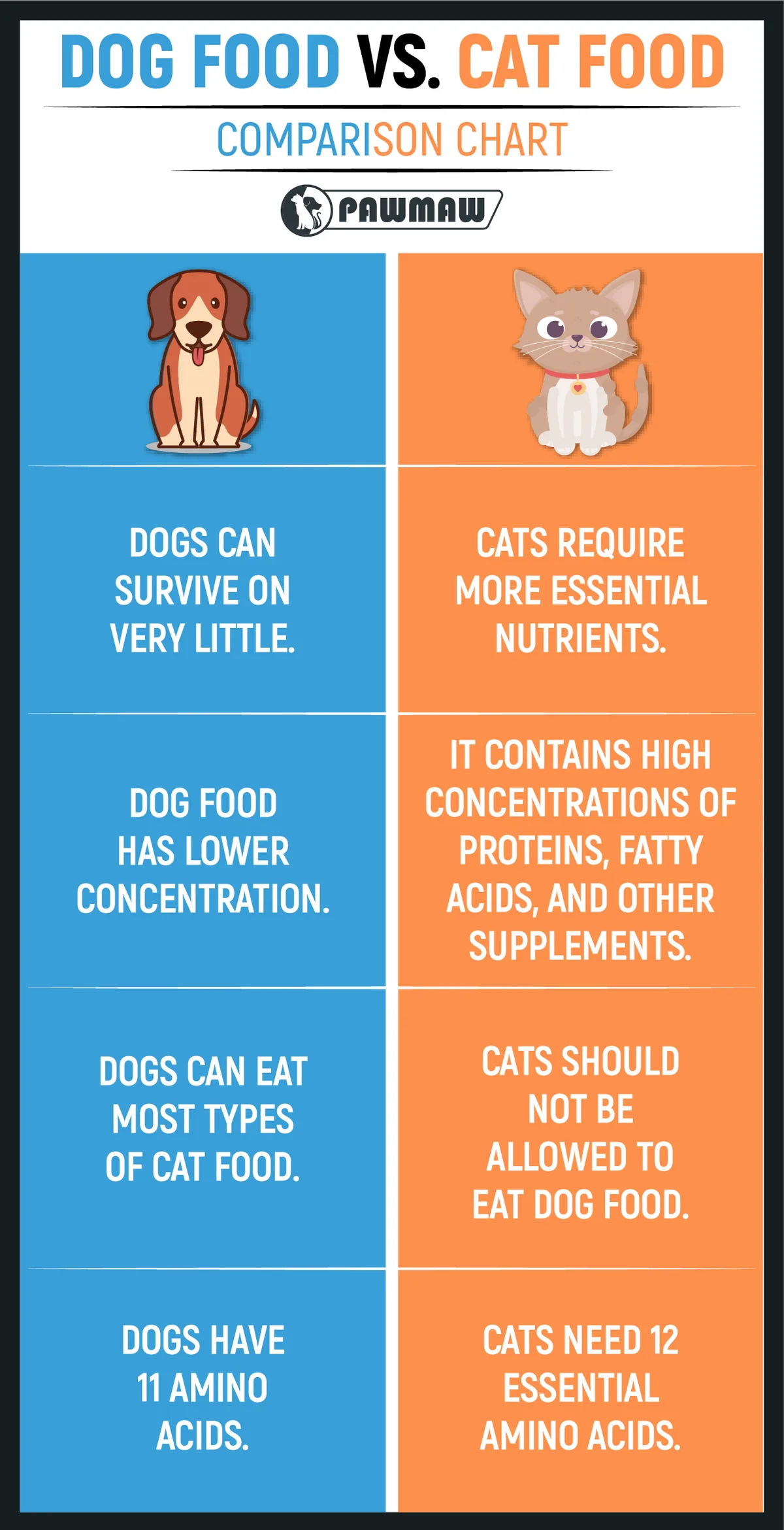
Image source: Web (Bing) / pawmaw.com (Web image (fair-use with source credit))
What’s actually in cat food that dogs don’t need
Cat food contains nutrients cats can’t make themselves: taurine, arachidonic acid, and preformed vitamin A. Dogs synthesize all three on their own. Extra taurine and arachidonic acid won’t hurt a dog in a single meal.
Vitamin A is only a concern with long-term overfeeding, not one stolen bowl.
Why high fat is the biggest concern for dogs
Fat is the headline risk. A sudden fatty meal is one of the most common triggers for canine pancreatitis, a painful inflammation that can land your dog in hospital. Dogs with a history of pancreatitis, diabetes, obesity, or Cushing’s disease are at much higher risk.
| Nutrient | Cat food (dry matter) | Dog food (dry matter) |
|---|---|---|
| Protein | 30 to 45% | 18 to 25% |
| Fat | 15 to 25% | 8 to 15% |
| Taurine | Supplemented | Not required |
| Vitamin A | Preformed | From beta-carotene |
Taurine, vitamin A, and arachidonic acid: real risk or rare edge case?
For a one-off snack, these are edge cases. The genuine danger is fat load and calorie density. If your dog is already on protein-rich diets for a specific reason, a bowl of cat kibble throws that balance off fast.
How Much Did Your Dog Eat? Size, Amount, and Health History Change Everything
Small dog vs large dog: why body weight matters
Body weight changes everything. A tablespoon of cat food is a snack for a Great Dane. For a Yorkie, it’s a full meal plus extra fat.
Vets generally use 1 to 2 grams of fat per kilogram of body weight as a rough threshold for concern.
Dry kibble vs wet food vs gravy: fat and calorie differences
Wet cat food in gravy is usually the worst offender. It’s fatty, calorie-dense, and easy for a dog to lap up quickly. Dry cat kibble is less rich per bite, but dogs tend to eat more of it.
Kitten food sits at the top of the scale for fat and calories.
Dogs with pancreatitis, diabetes, obesity, or allergies
If your dog has any of these conditions, call your vet rather than waiting. These dogs have less room for error. A dog that’s a picky eater normally may also be coaxing a picky eater back to normal food after filling up on cat chow.
| Dog size | Small amount (1 to 2 tbsp) | Large amount (full bowl) |
|---|---|---|
| Under 10 lb | Monitor closely | Call vet |
| 10 to 30 lb | Usually fine | Monitor closely |
| 30 to 60 lb | Usually fine | Monitor closely |
| Over 60 lb | Usually fine | Usually fine |
Symptoms to Watch For in the Next 12 to 72 Hours After Your Dog Eats Cat Food
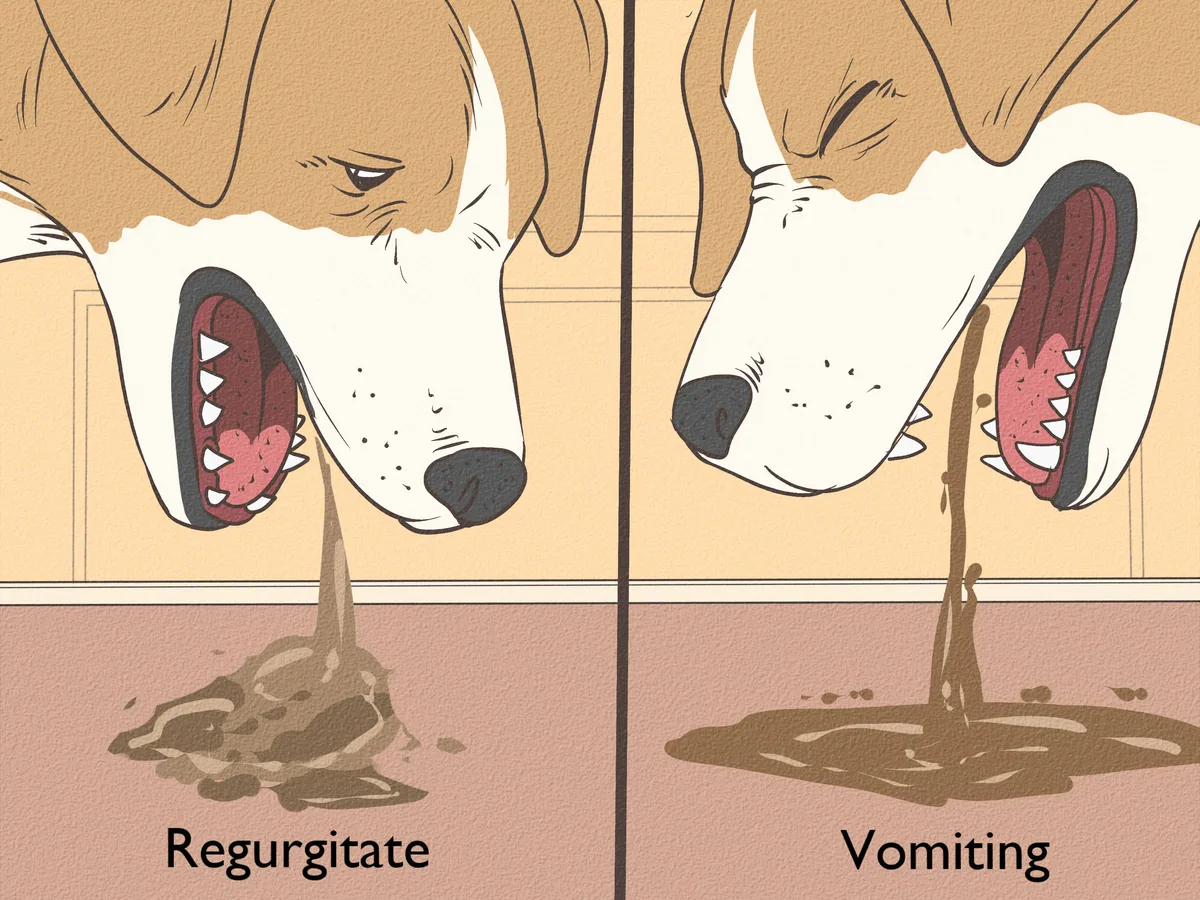
Image source: Bing (Web (fair-use with source credit))
Mild GI upset: vomiting, diarrhea, gas, and belly pain
Mild signs show up within a few hours to two days. Expect soft stool, one or two vomits, gas, and a slightly grumbly belly. These usually settle on their own with bland food and water.
If you’re unsure about settling an upset stomach, a short fast often helps.
Severe signs: pancreatitis, dehydration, lethargy, and refusal to eat
Watch for repeated vomiting, a hunched posture, painful belly, or a dog who won’t eat at all. Lethargy and dehydration are red flags. These point toward pancreatitis or gastroenteritis and need same-day veterinary care.
When symptoms show up later than you expect
Pancreatitis symptoms can take 24 to 72 hours to appear. Some dogs seem fine the first day and crash on the second. Keep watching for at least three days, even if the first 24 hours look normal.
What to Do Right After Your Dog Eats Cat Food: Step-by-Step
Check the label, estimate the amount, and note the time
- Grab the cat food container and read the guaranteed analysis.
- Estimate how much is missing, in cups, cans, or grams.
- Write down the time you think your dog ate it.
Call your vet or pet poison control, what info to have ready
Have your dog’s weight, the amount eaten, the fat percentage, and the time ready before you dial. The ASPCA Animal Poison Control Center at aspca.org can advise on whether the amount is a concern. Your own vet knows your dog’s history, which matters more.
Home monitoring vs vet visit vs emergency hospital
If your dog is bright, drinking, and not vomiting, home monitoring is reasonable. If they’re vomiting repeatedly, painful, or flat, go in. If you can’t reach a vet, an emergency hospital is the safe call.
Do not induce vomiting unless a vet tells you to
Never make your dog throw up on your own. It can cause aspiration pneumonia or make things worse. The FDA’s Center for Veterinary Medicine at fda.gov also warns against giving human medications without veterinary guidance.
Preventing a repeat
Feed your cat in a separate room or behind a baby gate. Pick up cat bowls between meals. If your cat is the thief instead, keeping the bowls apart solves both directions.
And skip table scraps in general, since what’s safe off your plate is a much shorter list than most owners think.
When a Dog Ate Cat Food and Needs Emergency Vet Care
Red-flag symptoms that mean go now
Head to an emergency hospital if you see repeated vomiting, a belly that’s painful to touch, or a dog who won’t stand up. Panting, drooling, and a hunched back are also warning signs. These point to pancreatitis, severe gastroenteritis, or dehydration.
If your dog is small, elderly, or has a chronic condition, lower your threshold for going in. Don’t wait for symptoms to peak overnight.
What the vet will check: bloodwork, cPLI, ultrasound, fluids
Your vet will start with a physical exam and a weight check. Bloodwork typically covers a CBC, a chemistry panel, and a canine pancreatic lipase immunoreactivity test, known as cPLI. That test is the most specific marker for pancreatitis in dogs.
If packaging was swallowed, expect X-rays. An abdominal ultrasound can confirm pancreatic swelling. Treatment is usually supportive: IV fluids, anti-nausea drugs, pain relief, and a gastroprotectant.
Severe cases get hospitalized for one to three days.
Costs, timelines, and what recovery usually looks like
A basic exam plus bloodwork often runs $200 to $500. Hospitalization for pancreatitis can climb past $1,500 to $3,000 depending on region and length of stay. As of 2026, those figures vary widely by clinic.
Mild cases bounce back in 24 to 48 hours on a bland diet. Pancreatitis recovery takes longer, often one to two weeks, with a strict low-fat diet going forward.
Common Mistakes, Prevention, and Multi-Pet Feeding Fixes
Mistakes owners make after a dog eats cat food
The biggest mistake is inducing vomiting without veterinary instruction. That can cause aspiration pneumonia and makes a bad situation worse. Another is assuming a “wait and see” approach is fine for a dog with a known sensitive gut.
Some owners also feed extra food to “settle” a nauseous dog. That just adds more fat to an already inflamed pancreas. Water is fine.
Food can wait.
How to stop counter surfing, food guarding, and cat food stealing
Train a solid “leave it” cue and reward it heavily. Keep cat food off counters and out of reach between meals. If your dog guards the cat’s bowl, feed the cat in a closed room.
A baby gate or a cat-only shelf solves most of these problems. Puzzle feeders for your dog also reduce boredom-driven scavenging.
Separate feeding stations, baby gates, elevated cat bowls, and training
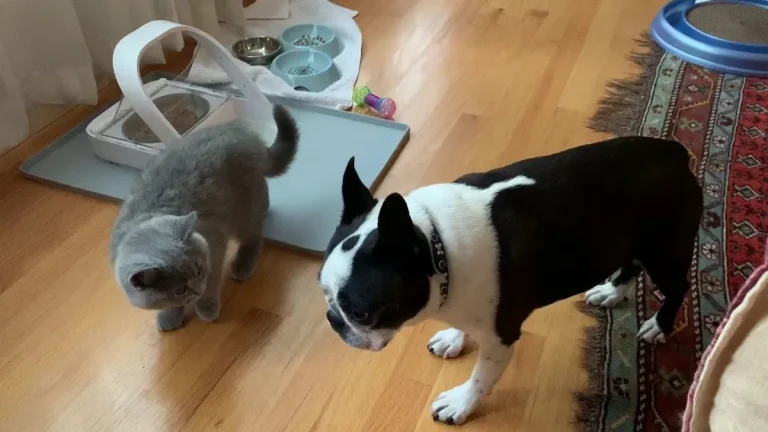
Feed cats and dogs in different rooms at the same time. Pick up all bowls once mealtime ends. An elevated cat bowl or a microchip-activated feeder keeps the dog out of the cat’s dinner entirely.
For dogs on a special diet, a budget-friendly dry option can keep them satisfied without the richness of cat food. Consistency beats drama every time.
Frequently Asked Questions
Is cat food toxic to dogs?
No, cat food isn’t toxic to dogs. It’s just much higher in fat and protein than dogs need. The risk is digestive upset and, in some cases, pancreatitis.
Small amounts rarely cause serious problems.
Will my dog get pancreatitis from one bite of cat food?
Most dogs won’t. One bite is unlikely to trigger pancreatitis in a healthy dog. The risk rises with large amounts, repeated access, or a dog who already has a history of the condition.
How long until symptoms show?
Symptoms usually appear within 12 to 72 hours. Vomiting and diarrhea often start on day one. Pancreatitis can take up to three days to show.
Keep watching even if the first day looks normal.
Should I induce vomiting?
No, never induce vomiting unless a vet tells you to. It can cause aspiration pneumonia and doesn’t help with fatty food. Call your vet or a pet poison hotline first.
Can I just feed cat food if I run out of dog food?
Only for a single meal in a pinch. Cat food isn’t balanced for dogs long-term. It lacks the right fiber, mineral, and fatty acid profile.
Refill your dog’s food soon.
When should I call the vet?
Call your vet if your dog vomits more than twice, seems painful, or refuses food and water. Call immediately if they’re lethargic or their belly looks swollen. When in doubt, make the call.