Is Air Dried Food Good for Dogs? Pros & Cons
You love your dog. You want the best food for them. But the pet food aisle is overwhelming.
Bags, cans, pouches, freeze-dried chunks. And then there’s air-dried.
So the question is simple: is air dried food good for dogs?
The answer isn’t a simple yes or no. It depends on your dog’s health, age, and your budget. In our research, air-dried food is a solid middle ground between raw and kibble.
It’s minimally processed and retains more nutrients than standard dry food. But it’s not right for every dog. As of 2026, the AAFCO (American Association of Feed Control Officials) sets strict standards for “complete and balanced” pet food.
Let’s walk through the decision together.
Quick Answer
Air-dried food is good for many dogs, but not all. It offers high protein and low processing. It can be a great alternative to raw without the bacteria risk.
However, it’s calorie-dense and expensive. Always check the nutritional guarantee.
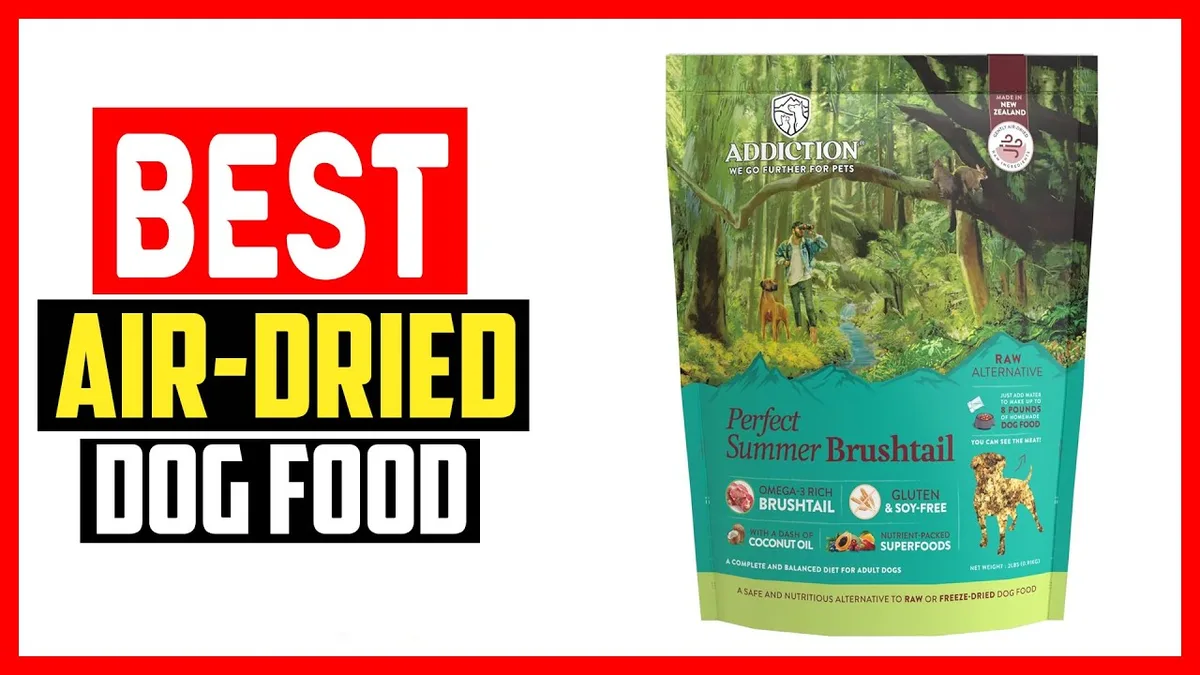
Image source: YouTube / The Pets Products (YouTube thumbnail (fair-use with source credit))
What Air Dried Food Actually Is (And How It Differs From Kibble, Freeze-Dried, and Raw)
Air-dried dog food starts with fresh ingredients. Meat, organs, vegetables. They’re slowly dried at low temperatures (around 140, 180°F).
This removes moisture but keeps most nutrients intact.
Compare that to kibble. Kibble is cooked at high temperatures (over 200°F) using a process called extrusion. That destroys more vitamins.
Freeze-dried food uses cold temperatures and a vacuum to remove water. It’s even less processed than air-dried, but it’s also more fragile and expensive. Raw food is never heated at all.
It must stay frozen.
So air-dried sits right in the middle. Safer than raw (heat kills pathogens), more nutritious than kibble (less heat damage), and more convenient than frozen raw (shelf-stable).
The texture is unlike kibble too. It’s softer, chewier. Some dogs love that.
Others, especially small or senior dogs with dental issues, may need it rehydrated.
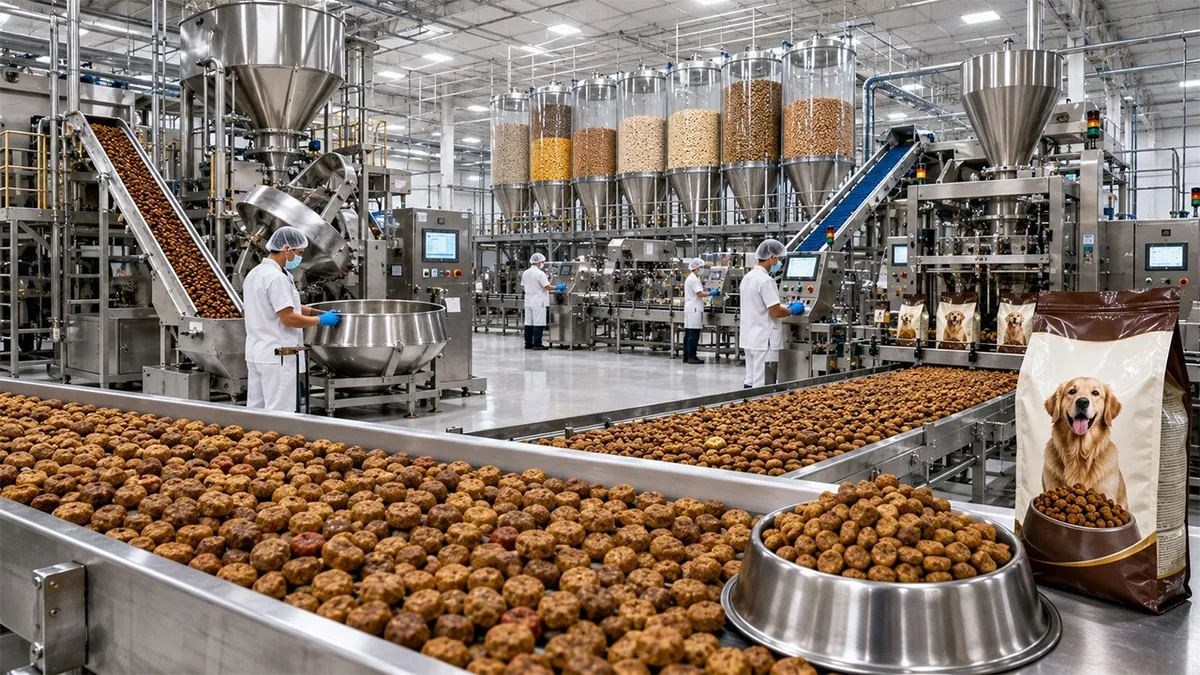
Image source: YouTube / Food Tech Today (YouTube thumbnail (fair-use with source credit))
For a deeper look at the wider choice between wet and dry, our guide on is dry food or wet food better for dogs covers the trade-offs.
The Decision Tree: 4 Key Questions to Ask Before Choosing Air-Dried
You don’t need to be a nutritionist. Just ask yourself these four questions. Your answers will tell you if air-dried fits your dog.
Question 1: Does Your Dog Have a Health Condition?
Answer it directly: If your dog has kidney disease, pancreatitis, or needs a prescription diet, air-dried probably isn’t the right choice.
Many air-dried foods are high in protein and fat. That can stress kidneys or trigger pancreatitis. Always talk to your vet first if your dog has a chronic condition.
Most veterinary prescription diets are not available in an air-dried format. Stick with what your vet recommends.
Question 2: What Life Stage Is Your Dog In?
Answer: Puppies, adults, and seniors have different needs.
Puppies need precise calcium and phosphorus for bone growth. Many air-dried foods are labeled “all life stages” but check the guaranteed analysis. Some are too high in calcium for large-breed puppies.
For seniors, the calorie density can be a problem. It’s easy to overfeed a less active older dog. Our guide on how much fresh dog food to feed your dog daily can help you estimate portions.
Question 3: Is Your Dog a Picky Eater or Has Food Sensitivities?
Answer: Air-dried is often a hit with picky dogs. It smells and tastes more like real food.
If your dog turns up their nose at kibble, air-dried might break that cycle. The simpler ingredient lists also help dogs with food allergies. Many brands offer single-protein recipes.
That makes elimination diets easier. If you’re struggling with a picky dog, check out our advice on why won’t my dog eat food.
Question 4: What’s Your Budget and Convenience Priority?
Answer: Air-dried costs more than kibble but less than frozen raw.
Expect to pay $10 to $25 per pound. That’s roughly 3 to 5 times the cost of standard kibble. The convenience is high: no refrigeration, easy to travel with.
But the feeding amounts are small (about 1 to 2 cups per day for a 30-pound dog). If you’re on a tight budget, air-dried might not work. For a cost comparison with other fresh food services, read what does farmer’s dog food cost.
Pros and Cons – An Honest Breakdown
Every food has trade-offs. Here’s the real picture for air-dried.
Pros
- Higher nutrient retention. Less heat means more vitamins stay intact.
- No artificial preservatives; the drying itself preserves the food.
- Highly palatable, Most dogs gobble it up.
- Safe handling, No raw meat bacteria risk.
- Shelf-stable, No freezer needed.
- Simple ingredients, Good for dogs with sensitivities.
Cons
- Expensive, easily three times the price of kibble.
- Calorie dense, Easy to overfeed, leading to weight gain. Our article on what is the best weight control dog food in 2026 might help if your dog needs to slim down.
- Hard texture, can be tough for small or senior dogs without soaking.
- Limited variety: Fewer brands and flavors than kibble.
- Not for all health conditions, High protein and fat can be risky.
Common Mistakes Owners Make (And How to Avoid Them)
I’ve seen these mistakes over and over. Here’s what to watch for.
Mistake 1: Switching too fast.
Your dog’s stomach needs time. Air-dried is richer than kibble. Mix it in gradually over 7 to 10 days.
Start with 25% air-dried, 75% old food. If you rush, expect diarrhea. For a detailed plan, see how to transition dog to raw food step by step, the same principle applies to air-dried.
Mistake 2: Not checking the label for completeness.
Some air-dried products are treats, not complete meals. Look for the AAFCO statement that says “complete and balanced” for your dog’s life stage. If it says “supplemental” or “treat”, it’s not a full diet.
Mistake 3: Ignoring water intake.
Air-dried has only 10- 15% moisture. That’s much less than wet food or raw. Your dog needs to drink more.
If they don’t, they risk dehydration. Always provide fresh water. Some owners rehydrate the food with warm water.
That’s a smart move.
Mistake 4: Feeding without weighing portions.
The “cup” measurement can be off. Air-dried is dense. A cup might have way more calories than you think.
Use a kitchen scale to weigh the food based on the package’s feeding guide. Your dog’s waistline will thank you.
Mistake 5: Assuming all brands are equal.
They are not. Some air-dried foods use lower quality ingredients or lack essential nutrients. Check the guaranteed analysis.
Look for protein around 30% to 45% dry matter, fat 15% to 30%, and fiber under 5%. If the numbers seem off, pick another brand.
For guidance on feeding amounts and adjusting for weight, refer to the official AAFCO guidelines at aafco.org. They set the baseline for pet nutrition.
That covers the core evaluation. Next, we’ll walk through the step-by-step transition process, discuss real scenario examples, and give you a final decision guide.
Step-by-Step: How to Transition Your Dog to Air-Dried
Switching foods too fast is the number one reason owners give up. Air-dried is richer than kibble. Your dog’s digestive system needs time to adjust.
Here is a safe 7-day plan based on veterinary transition protocols.
Days 1, 2: 25% air-dried, 75% current food.
Mix them together. Add a splash of warm water to soften the pieces. This helps digestion and makes the new smell less intense.
If your dog has a sensitive stomach, start with just 20%.
Days 3, 4: 50% air-dried, 50% current food.
Watch the stool. It should be firm and well-formed. Soft stool means go back a step.
Loose stool means your dog is reacting poorly. For a deeper dive on managing digestion changes, our guide on will changing dog food cause diarrhea covers exactly what to do.
Days 5, 6: 75% air-dried, 25% current food.
At this point most dogs are doing fine. If your dog is still hesitant, try soaking the air-dried pieces for 10 minutes in warm water. It turns them into a soft, stew-like texture.
Some picky dogs prefer that.
Day 7: 100% air-dried.
You are now fully transitioned. Keep monitoring the stool for another week. If everything looks good, you have a new diet.
If not, your dog may need a different approach.
One extra step for puppies and seniors:
Always soak the food until soft. Hard air-dried pieces can be tough on young teeth or aging gums. Add enough water to cover the pieces and wait 5 to 10 minutes.
When Air Dried Food Is a Bad Idea (Safety and Risk Factors)
Air-dried is not a universal solution. There are clear cases to avoid it.
Your dog has kidney disease.
High protein puts stress on damaged kidneys. Most air-dried foods have 35 to 45 percent protein on a dry matter basis. That is too high for dogs with compromised renal function.
Always check with your vet first. For senior-specific concerns, see what makes senior dog food different.
Your dog has pancreatitis or a history of it.
Air-dried food tends to be high in fat. Many recipes hit 20 to 30 percent fat content. Fat triggers pancreatitis flare-ups.
Low-fat diets are safer here.
Your dog is overweight or sedentary.
Air-dried packs 400 to 600 calories per cup. That is roughly 30 to 50 percent more calories than the same volume of kibble. If your dog is already carrying extra weight, this food can push them over the edge.
Portion control is critical.
Your dog needs a veterinary-prescription diet.
There are very few air-dried prescription diets on the market. If your vet has put your dog on a specific therapeutic food for urinary crystals, heart disease, or allergies, stick with that. Do not substitute.
The food is labeled “supplemental” or “treat.”
Not every bag of air-dried food is a complete meal. Read the label. If it does not say “complete and balanced” with an AAFCO nutritional adequacy statement, it is not a full diet.
Use it as a topper, not a main course.
Safety recall history.
Air-dried is generally safe because the low heat kills pathogens. But no process is 100 percent foolproof. The FDA Center for Veterinary Medicine tracks pet food recalls.
Per their public records, air-dried products have had far fewer recalls than raw frozen foods. Still, always check the batch number when you open a new bag.
Cost, Calories, and Nutritional Specs (What to Look For)
Air-dried is a premium product. Here is what you are paying for and what you should expect from the label.

Image source: YouTube / AnimalDocRea (YouTube thumbnail (fair-use with source credit))
Typical cost breakdown:
| Factor | Air-Dried | Kibble | Frozen Raw |
|---|---|---|---|
| Price per pound | $10 to $25 | $2 to $5 | $4 to $12 |
| Daily cost (30 lb dog) | $2 to $8 | $0.50 to $1.50 | $1.50 to $4 |
| Shelf life | 12 to 18 months | 12 to 18 months | 6 to 12 months frozen |
What the guaranteed analysis should show:
- Protein: 30 to 45 percent on a dry matter basis. Look for named protein sources like chicken, beef, or lamb. Avoid vague terms like “meat meal.”
- Fat: 15 to 30 percent. Lower is better for less active dogs or those with weight issues. For dogs that need to gain weight, our guide on what food can I give my dog to gain weight has practical tips.
- Fiber: Under 5 percent. Higher fiber can cause loose stools.
- Moisture: 10 to 15 percent. That is low, so your dog will need extra water.
- Calories: 400 to 600 kcal per cup. Check the specific brand because it varies widely.
What to look for beyond the numbers:
- An AAFCO statement for your dog’s life stage. “All life stages” is fine for most families, but check calcium and phosphorus if raising a large-breed puppy.
- A short ingredient list. Whole meat should be the first ingredient, not a meal or byproduct.
- Named fats like chicken fat or salmon oil, not “animal fat.”
Real Scenario Examples: Who Wins and Who Loses
Let us put this into practice with three common situations.
Scenario 1: The picky adult dog with chicken allergy.
Max is a 4-year-old lab mix. He refuses kibble. He has a known chicken allergy.
His owner switches to a single-protein air-dried food made with lamb. Max loves it. His skin clears up within two weeks.
His stool is firm. The cost is higher, but the owner is happy. Winner: air-dried.
Scenario 2: The senior dog with kidney concerns.
Bailey is a 12-year-old beagle with early-stage kidney disease. Her owner wants “better” food. Air-dried has too much protein.
It could accelerate kidney damage. The vet recommends a low-protein prescription diet. Air-dried is not suitable here.
Loser: air-dried.
Scenario 3: The active working dog on a budget.
Duke is a 2-year-old Belgian Malinois working on a farm. He burns 2,000 calories a day. Feeding him air-dried would cost over $12 a day.
His owner sticks with high-quality kibble and uses air-dried as a topper for variety. The compromise works. Partial winner: air-dried as a supplement.
These scenarios make one thing clear. The answer depends on your dog’s specific life stage, health, and your budget.
Final Decision Guide: Should You Try Air-Dried?
Here is a simple checklist. If you answer yes to three or more of these, air-dried is likely a good fit.
- Your dog is healthy with no chronic conditions.
- Your dog is a picky eater or has food sensitivities.
- You can afford the higher cost (about $2 to $8 per day).
- You want something more nutritious than kibble but safer than raw.
- Your dog is at a healthy weight or needs to gain weight.
- You value convenience (no thawing, no refrigeration).
If you answered yes to fewer than three, consider a different option. Kibble is fine for most dogs. Wet food adds moisture.
Raw works for owners who have the time and freezer space.
Still unsure? Start with a small bag. Your vet is always the best guide for making the switch safely.
For further reading on the basics of balanced nutrition, the official FDA pet food resource at fda.gov is a solid source.
Frequently Asked Questions
Is air-dried dog food healthier than kibble?
Air-dried retains more nutrients because it uses lower heat. It also avoids many artificial preservatives found in kibble. But “healthier” depends on your dog’s specific needs.
For most healthy dogs, it is a step up in quality.
Can I feed air-dried food to my puppy?
Yes, but check the label for large-breed puppy suitability. Some air-dried formulas have high calcium. That can cause skeletal problems in fast-growing large breeds.
AAFCO growth formulas are safe for small and medium puppies.
Do I need to add water to air-dried dog food?
You do not have to, but it helps. Adding warm water softens the pieces and increases your dog’s water intake. This is especially valuable for senior dogs, puppies, or dogs prone to urinary issues.
How long does air-dried dog food last after opening?
Most bags last 6 to 8 weeks after opening if stored in a cool, dry place. Seal the bag tightly after each use. Exposure to humidity can cause mold.
Some owners transfer it to an airtight container.
Is air-dried food safe for dogs with allergies?
Yes, many air-dried brands offer single-protein recipes. That makes elimination diets easier. Just read the ingredient list carefully.
Some recipes include multiple protein sources even if the front of the bag suggests otherwise.
Can I mix air-dried food with kibble or wet food?
Absolutely. Many owners use air-dried as a topper over kibble for extra nutrition and flavor. Mixing it with wet food adds moisture and variety.
Just adjust the total calorie count to avoid overfeeding.