How to get my dog to eat his food
Few things in dog ownership feel as personal as a full food bowl your dog refuses to touch. If you’ve been searching for how to get my dog to eat his food, you’re not alone. Almost every owner hits this wall at some point.
The good news is that most cases are fixable once you understand the cause.
As of 2026, veterinary guidance is clear: a healthy adult dog should not go longer than 24 to 48 hours without eating, and puppies need help much sooner. Before you change food brands or load up on toppers, let’s walk through what’s actually going on.
Quick Answer
To learn how to get my dog to eat his food, start with medical issues. Rule out emergencies like bloat or blockages first. Warm the food and use a set feeding schedule.
Remove uneaten food after 30 minutes. If he skips more than 24 hours, call your vet.
First Things First: When Not Eating Becomes an Emergency
No home trick matters if your dog needs urgent care. Some causes of appetite loss are genuinely life-threatening, so rule those out before you experiment with warm broth or new bowls.
Watch for red flags that demand immediate veterinary attention:
| Red flag | Why it’s serious | What to do |
|---|---|---|
| Repeated vomiting with no eating | Possible blockage or pancreatitis | Call your vet now |
| Bloated, painful, or distended belly | Could be bloat, a medical emergency | Go to the nearest emergency vet |
| Lethargy, pale gums, or weakness | Possible infection or organ failure | Seek care immediately |
| No eating for 24 hours in adults, 12 hours in puppies | Risk of low blood sugar and liver issues | Contact your vet the same day |
As the American Veterinary Medical Association points out, bloat is one of the fastest-moving emergencies in dogs. It can kill within hours. The same goes for a suspected foreign body obstruction.
If your dog is vomiting, straining to poop, or seems painful, skip the online research. Make the call.
Otherwise, use this rule of thumb: a dog who skips one meal but otherwise acts normal gives you a little time. A dog who refuses two meals, barely drinks, or sleeps nonstop does not.
The Real Reason He’s Ignoring His Bowl: Medical vs. Behavioral
Once you’ve ruled out an emergency, the next step is figuring out which category you’re dealing with. In our research, most cases fall into one of two buckets: medical causes and behavioral causes.
Here’s how to tell them apart:
- If he skips one meal but still wants to play, drink, and beg for treats: likely behavioral.
- If he refuses two or more meals and seems tired, dull, or withdrawn: medical workup needed.
- If he drools, paws at his mouth, or flinches when chewing: dental pain or an oral problem.
- If he eats treats and human food but ignores his bowl: often a learned behavior issue.
The honest answer is that medical problems can look like pickiness. A dog with early kidney disease might eat chicken but refuse kibble. A dog with acid reflux may associate his bowl with nausea and back away.
That’s why the quick answer is always the same: ask your vet to check for the hidden stuff first.
Your vet may recommend bloodwork, a dental exam, or a fecal test to find parasites. It’s not overkill. Many appetite problems are tied to conditions that don’t show up until a dog stops eating.
Catching those early makes treatment easier and cheaper.
Silent Medical Causes Owners Overlook
Some medical causes are obvious, like vomiting or diarrhea. Others hide in plain sight. The most common one we see is dental disease.
Dental pain is a huge appetite killer. Cracked teeth, infected gums, and heavy tartar make chewing genuinely hurt. Many senior dogs don’t stop eating entirely, they just eat slower, drop kibble, or switch to licking wet food.
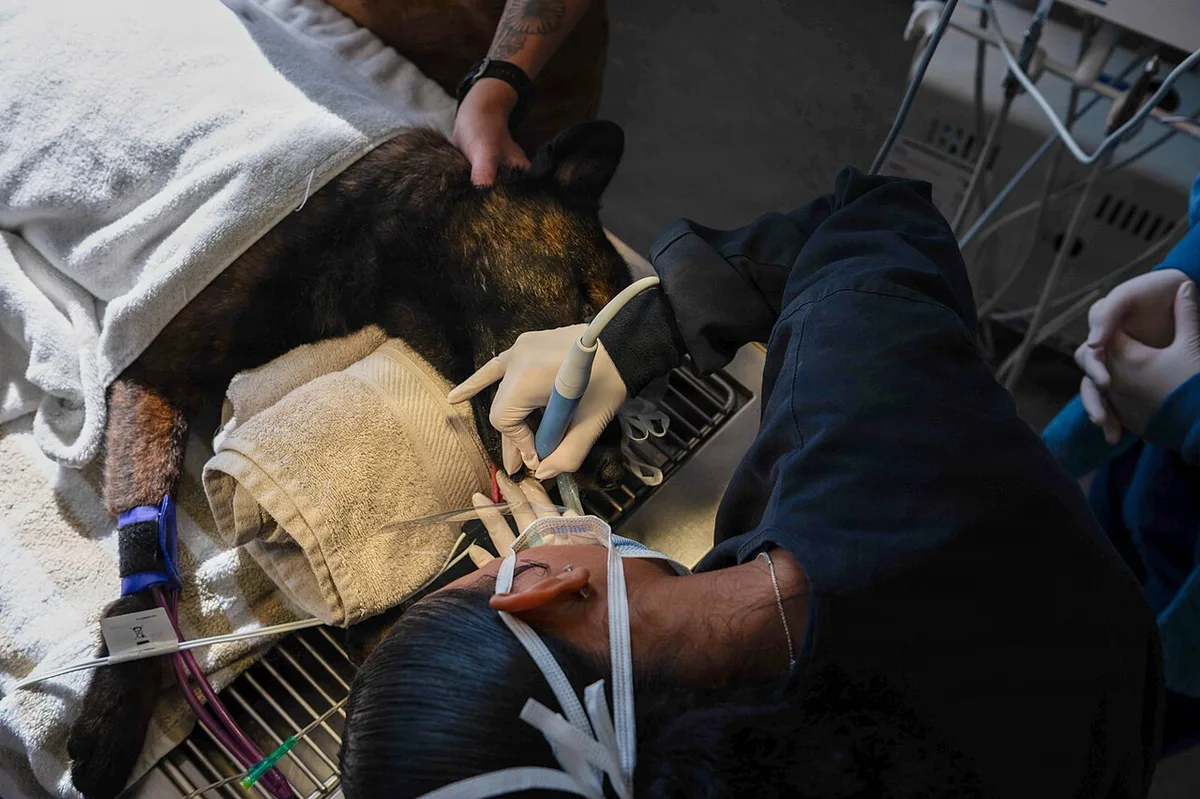
Image source: Wikimedia Commons / U.S. Air Force photo by Airman 1st Class Kacie Ramos
If your dog has yellow-brown tartar, red gums, or stinky breath, that’s worth addressing even if he’s still managing to eat. A dental cleaning under anesthesia might be the thing that brings his appetite back. For dogs with painful mouths, switching to softer texture options can help while you schedule the vet visit.
Nausea is another silent culprit. Dogs get nauseous for all sorts of reasons: acid reflux, pancreatitis, inflammatory bowel disease, or even a change in medication. A nauseous dog may drool, lick his lips, swallow a lot, or simply walk away from food.
If that sounds familiar, talk to your vet about gentle wet formulas that are easier on the stomach.
Medication side effects matter too. Antibiotics, pain meds, and some anti-seizure drugs can kill appetite. So can chemotherapy.
If the refusal started right after a new prescription, ask your vet whether an appetite stimulant or a different medication makes sense.
Age plays a role as well. Older dogs lose their sense of smell, which makes food less appealing. Warming the food and adding a strong-smelling topper often helps more than switching diets.
And in senior dogs with conditions like chronic kidney disease, appetite loss can be the first noticeable symptom. Kidney-friendly diets are designed to taste good while supporting organ health, which is why they’re worth exploring.
Behavioral and Environmental Factors That Kill Appetite
If your vet gives him a clean bill of health, the problem is probably behavioral. That’s actually good news. Behavior is something you can fix at home with consistency and patience.
Free-feeding is the biggest cause of picky eating. When kibble sits out all day, your dog learns to graze. He eats two bites, walks away, comes back an hour later.
There’s no real hunger, so there’s no real motivation. The fix is to create defined meal times and pick the bowl up after 20 to 30 minutes.
Treat overload is just as common. A few extra biscuits before dinner can completely kill motivation. If your dog is getting snacks during the day, those count as food.
His stomach is full, and he’s not being stubborn, he’s genuinely not hungry.
Stress and anxiety also shut down appetite. New homes, new babies, loud construction, or even a change in your work schedule can do it. Some dogs are so sensitive that a moved food bowl is enough to weird them out.
If your dog seems nervous, overwhelmed, or extra clingy, look into anxiety-related appetite loss and ways to lower his stress level.
Food aversion is another piece of the puzzle. If a dog has a bad experience with a specific food or bowl, he may refuse it later. Maybe he ate too fast and vomited.
Maybe you accidentally fed him something too hot. His brain now associates that bowl or that kibble with discomfort. Switching bowls, moving eating spots, or changing the food itself can reset that association.
Step-by-Step Home Troubleshooting Guide
Once you’ve ruled out medical issues, work through these steps in order. Don’t change five things at once or you won’t know what worked.
- Confirm with your vet. If he’s gone more than 24 hours without eating, get a checkup before trying home fixes.
- Check his mouth. Look for broken teeth, redness, swelling, or sores.
- Set a consistent feeding schedule. Feed at the same times every day. Dogs thrive on routine.
- Warm the food slightly. A few seconds in the microwave or a splash of warm water releases aroma. Aim for body temperature, not hot.
- Add a safe, strong-smelling topper. Plain canned pumpkin, unsalted broth, or a little fish oil can spark interest.
- Give him a time limit. Put the bowl down, wait 20 to 30 minutes, then remove it until the next meal.
- Try a slow feeder bowl. Some dogs get overwhelmed by a deep bowl or a mountain of kibble. A flat or puzzle-style bowl can change the experience.
- Track his weight and appetite. Weigh him once a week and keep notes. If he starts losing weight, that changes the conversation.
Portion size matters more than most owners realize. Too much food at one meal can be intimidating, especially for small or senior dogs. Check our portion guidance by weight to make sure your serving size matches his needs.
If you have a puppy, the timeline is different. Puppies need more frequent meals and can’t go as long without food. A proper puppy meal timing plan covers age-appropriate schedules.
For younger dogs, skipping meals can lead to drops in blood sugar, so don’t wait as long before calling the vet.
And if you’re feeding an adult dog, remember that nutritional needs shift with age. A dog who loved puppy kibble may go off it when he’s ready for adult food. Understanding adult transition timing can help you make the switch before the refusal starts.
One more thing. Check the food itself. Stale kibble, rancid fats, or a batch that was stored improperly can absolutely turn a dog off.
Open a fresh bag and see if that changes his response. You can also check the FDA’s pet food recall page if you suspect a problem with a specific brand or batch.